Hollywood, jolted by COVID-19, is running again.
This year, the U.S. film business has been sending clear recovery signals through one hit after another.
As audiences return to theaters, the mood across the industry has changed.
A box office boom is about more than numbers; it is a return of market confidence.
However, it is still too early to say how far this rebound will go.
When the lights come back on, where is Hollywood headed?
This year, the American film industry looks very different from the one people saw just a few years ago.
After a long slump that followed the pandemic, big releases are finally drawing crowds again and changing the tone around Hollywood.
Empty seats and delayed opening dates, once signs of crisis, are now being read as signs of recovery speed.
This shift is not explained by one hit movie alone.
Hollywood's recovery means the whole chain is moving again: production, distribution, exhibition, and spending.
Audiences are buying tickets again, studios are revisiting their investment choices, and the market is taking a deep breath after years of strain.
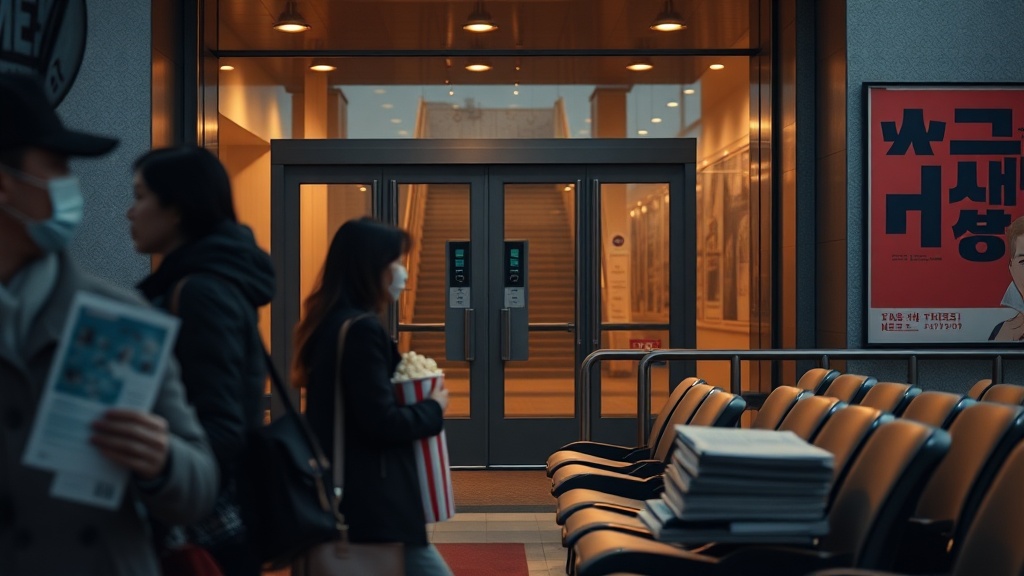
At its core, this rebound is also a story about psychology.
People got used to watching movies on home screens, but they never fully gave up the thrill of laughing, gasping, and reacting together in a dark theater.
The rebound in theatrical box office is both a win for content and a return of shared experience.
Recovery is about mood, not just math
That much is clear.
For American readers, the picture is not hard to recognize.
After the pandemic, cultural spending shifted back and forth between online and offline life, and movie theaters were among the first places to feel the pain.
Now Hollywood is pulling people back in, showing that a downturn is not a permanent fate.
The key point is not the size of one box office number.
What matters is the pattern: several films succeeding in a row, lifting the temperature of the whole market.
When viewers start booking tickets again, when release dates start creating anticipation again, and when revenue forecasts start making sense again, the industry can finally move forward.
The heart of recovery is the return visit.
When audiences come back, production comes back.
When production comes back, money follows.
In the end, a film industry's strength begins with one ticket.
Meanwhile, this moment also reminds people of Hollywood's still-powerful brand.
For decades, the studio system has shaped box office trends far beyond the United States, and the pandemic only shook that center temporarily.
It did not erase it.
This year's boom is best understood as proof that the core still has life in it.
The case for cheering the boom
The optimistic reading is easy to see.
First, a recovering movie business creates a wide economic ripple.
Studios benefit, but so do theaters, advertisers, neighborhood businesses, and workers tied to production and promotion.
Second, strong results show that big franchises and star power still matter, which reaffirms the competitiveness of U.S. entertainment.
Third, there is the cultural side.
Theaters are not just places to consume content; they are places where families, friends, and couples share time.
When those spaces fill up again, it says something about the broader public mood.
The warmth of recovery often shows up in places that macroeconomic language cannot easily measure.
In a recovery phase, markets tend to reward bold investment more than caution.
When a hit is confirmed, studios line up sequels, cash flow improves, and schedules move faster.
Hollywood's strength has always been its ability to turn one success into the next.
That machine is working again.
Seen more broadly, the boom also helps lift public confidence.
After long stress, people want signs that life is stabilizing.
When those signs appear on the screen before they appear anywhere else, the future feels a little less fragile.
Box office is a number, but it is also a signal of collective mood.
Why audiences are coming back
It is not complicated.
People are not only returning for new titles.
They are trying to recover the rhythm of daily life that was thrown off for so long.
The movie theater is one of the fastest places to feel that rhythm again, and Hollywood knows how to wake that demand up.
Today, event value matters more than ever.
With streaming, online classes, and video meetings now part of everyday life, audiences are looking for experiences they cannot quite duplicate at home.
That makes a theatrical release feel special again.
A big movie becomes more than entertainment; it becomes a cultural event.
For studios, a recovery signal also means stability.
When debt and cash pressure are high, predictable revenue matters a lot.
A string of strong openings eases investor anxiety and can even reduce the pressure around repayment and financing across the industry.
But is box office success enough?
There is a more cautious view, and it has real weight.
It is too soon to say Hollywood is fully back.
A few strong titles can lift the mood, but they do not automatically solve the industry's deeper problems.
For one thing, the competition between theaters and streaming is still very much alive.
Viewers have gotten used to the convenience of staying home, and going to the movies is no longer an automatic habit.
In that kind of market, success can get concentrated in a few genres or franchises, leaving a gap between what looks like recovery and what actually is recovery.
There is also the issue of diversity.
Big-budget films are often built around safe formulas because studios want to protect their investment.
That can push aside mid-budget films and newer voices.
Just as a hot housing market can crowd out everyone except the top buyers, a hit-driven movie business can make the middle feel invisible.
And culturally, high box office does not always mean high value.
A movie can sell a lot of tickets without saying much, and it can be widely watched without lasting very long in public memory.
If success depends too much on spectacle or shock, the win may be fast but shallow.
To judge recovery, we need to ask not only how many people came back, but what kind of stories came back with them.

That concern is not simple pessimism.
If the industry wants real stability, it cannot depend on a few huge winners alone.
The ecosystem has to widen: new faces, more genres, mid-sized films, and a distribution strategy that can last.
Otherwise, the boom may end up feeling like a temporary luxury.
What lasting recovery requires
This is the key point.
Long-term health does not come from one or two megahits.
It comes from balance: production and distribution, theaters and streaming, wide programming and audience choice.
If the recovery is real, it should not depend too heavily on any one blockbuster.
Studios also need to accept how audiences have changed.
Today, moviegoers expect more than fast pacing or big action.
They want emotional honesty, stories that feel connected to real life, and a reason to care.
If Hollywood keeps repeating old formulas, it may get short-term results but lose strength over time.
In the end, adaptation is the real test.
Recovery is not a return to the past.
It is a rebuild under new conditions.
When theaters stay appealing, content stays strong, and viewing habits are treated as part of the new normal, Hollywood can build a more stable box office system.
Hollywood between recovery and caution
This year's box office surge in the American film industry clearly matters.
The market that froze after the pandemic is moving again, audiences are returning, and confidence is recovering.
That is both a sign of economic revival and a restoration of cultural spending.
Still, it would be wrong to call this full normalization.
The pressure from streaming, the concentration of hits, and the narrowing of diversity are all still there.
So the most accurate way to read Hollywood right now is as a business enjoying a celebration while also carrying a long to-do list.
Box office can spark applause, but structure decides the future.
Audiences have reopened their wallets, and the market atmosphere has changed.
Now the question is simple:
Is this only a short rebound, or the beginning of a new Hollywood?
