TXT is opening an exhibition to mark its seventh debut anniversary.
The show runs from August 13 to September 6.
In Seoul's Seongdong district, fans will get to step back into the group's shared past.
A celebration is never really the end. It is the start of the next chapter.
The event is also a snapshot of where K-pop archiving stands right now.
When the number 7 walks out of the concert hall
TXT's seventh-anniversary exhibition is hard to treat as just another event.
It brings together the time the group has built, the memories fans have held onto, and the way the music business turns remembrance into something you can buy, visit, and post online.
News that it will run from August 13 to September 6 in Seongdong, Seoul, shows how a milestone date can be reshaped into a full cultural experience.
Seven years is an interesting point in an idol group's life.
For the public, it is long enough to look back and short enough to still expect fresh momentum.
That is why this exhibition matters.
Music moves on, but records stay behind, and records create new bonds.
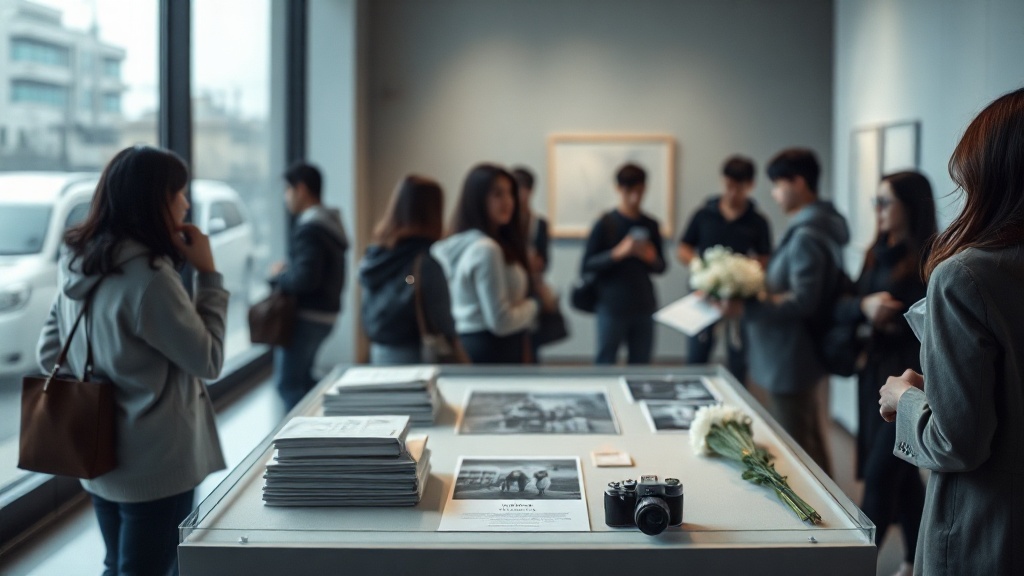
Fans may seem like they are always consuming the present, but in truth they are also preserving the past together.
An album, one stage, one interview line can become a marker in time.
An exhibition turns those markers into a physical space.
So this is less about looking at objects and more about revisiting a shared story.
Why exhibitions become bigger stories
An exhibition organizes things.
It takes fast-moving concert moments, selects them again, and joins images, objects, and words into one clear line.
In that process, a group's growth, its shifts, and its relationship with fans all become easier to see.
For TXT's seventh anniversary, that line will likely feel even sharper.
In the K-pop world, exhibitions, pop-ups, and archives are no longer side projects.
They are now central tools for helping music last in memory.
Years ago, albums and concerts were the main events. Now the surrounding experience is also part of the story.
Space becomes value, and time gets sorted into neat entries like a household budget.
In that sense, an exhibition is not just extra decoration. It is a machine for shaping memory.
There are always two ways to read an event like this.
One side says it is a gift fans have waited for. The other says it is a polished form of commerce.
However, neither view is entirely wrong.
Popular culture has always grown through a mix of emotion, repetition, affection, and spending.
The real question is not the exhibition itself, but what it makes people remember.
Events end, but the time they bring back can stay for years.
That is why celebration always holds on to both the past and the present.
For fans, the exhibition is a reward
It is simple.
For fans, an exhibition is a tangible reward after years of waiting.
Images and messages that once lived only in larger venues can be seen up close, and the phrase seventh anniversary stops being abstract and becomes something you can actually stand inside.
K-pop fandoms are especially good at this kind of memory work. They do not only consume the result; they remember the process too.
In that sense, the exhibition is efficient.
It brings together album eras, turning points, and changes in the group's identity in one place.
Fans can trace the history of their support, and the artists can show how that support has built up over time.
This relationship does not end quickly like a bill payment. It unfolds slowly, more like retirement planning or a long-term health routine.
Event exhibitions also create a shared memory inside fandom culture.
When people who lived through the same era can stand in one room and look at the same images again, the effect is stronger than it sounds.
Fans who have followed a group's growth often want proof of that journey, much like parents keep records of a child's milestones.
That is why this kind of event offers more than emotion. It also gives a community a sense of stability.
It can also be read as business expansion
On the other hand, the industry sees something very different.
From a business angle, an exhibition is a carefully planned expansion move.
Music streams quickly. An exhibition creates dwell time, which simply means the time people choose to stay and look around.
More dwell time usually means a deeper experience, and deeper experience often becomes brand loyalty.
This is a familiar K-pop strategy.
When albums, concerts, merchandise, and online content are joined by an exhibition, the artist's story becomes more three-dimensional.
At a time when seven years carries clear symbolic weight, a project framed as archiving can feel more convincing than a plain promotional campaign.
Even if it looks like investment logic, popular culture works best when that logic does not clash with feeling.
Companies know this. They want to understand fans' emotions while still protecting business efficiency.
An exhibition is a good way to do both.
It does not require the scale of a concert, yet it still brings fans into a real-world space.
Unlike online content that gets skimmed quickly, an in-person exhibition asks people to slow down and remember longer.
Still, this growth is not always harmless.
If commercialization goes too far, a celebration can start to feel like a sales pitch.
As fans see more and more similar events, the exhibition may stop feeling special and start feeling routine.
At that point, the issue is not how many events exist, but how much care and depth each one has.

The thin line between celebration and consumption
The debate around TXT's exhibition comes down to two very different readings.
Supporters talk about the right to remember. Critics worry about the style of selling that comes with it.
Both sides touch a real nerve in modern pop culture, so neither can be brushed aside.
The supportive view is easy to understand.
For fans, an exhibition is a place to see the results of their support in front of them.
It does not just show albums and stages. It also organizes years of change and progress into something visual.
Because a seventh anniversary proves continuity, many people feel a celebration like this is not optional but necessary.
Fans are not just customers. They are participants who helped build the story, and the exhibition gives that role some respect.
There is also a cultural record here.
When images and stories that might scatter across the web are gathered into one space, they become more than a short-lived event. They become an archive (a kept record of the past).
That matters for the group's future too.
Even after tastes change, people can still look back and see how the work was built.
Like a medical checkup that records the body's condition for the next decision, an exhibition preserves the current artistic state and prepares the next step.
Just as important, celebrations help steady people.
In fast-moving work and daily life, seven years can seem like a small number, yet it is also a time that is hard to build at all.
A community that remembers that time together gains a sense of grounding.
From that angle, supporters see the exhibition as more than a display. It becomes a way to keep relationships alive, a kind of cultural insurance, and a healthy form of repetition inside fandom.
The critical view is also practical.
An exhibition can be beautiful, but it can also function as a highly polished way to encourage spending.
The stronger the emotions in a fandom, the harder it can be to say no, which means the structure itself can push people to open their wallets.
A commemorative exhibition may be sincere and profitable at the same time, but if the balance shifts too far, the event can start to look like commerce first and tribute second.
Access is another issue.
Seongdong in Seoul is fairly convenient for fans in the capital area, but it is still a real barrier for people from other parts of Korea or overseas.
If there is no strong online option, the celebration can widen the gap between those who can take part and those who cannot.
The cost of travel, time, and scheduling can shape the experience as much as the event itself.
There is also the problem of repetition.
What feels fresh at first can become just another entry on a crowded calendar.
When that happens, excitement can turn into fatigue, and fatigue can become cynicism.
The more celebrations there are, the lighter each one can feel.
That is why critics are less interested in rejecting exhibitions than in asking how genuine they really are.
In the end, one side sees connection and record, while the other sees consumption and weariness.
One reads the exhibition as proof of growth. The other suspects a market package.
This is not just a TXT issue. It is one of the central questions facing K-pop today.
Where does gratitude end, and where does the product begin?
What remains after the event ends
TXT's seventh-anniversary exhibition shows how time can be used.
The same seven years can look like a number passed by, or like a memory carefully gathered and stored.
The difference comes from planning, from fan feeling, and from the way culture handles time.
This exhibition may only occupy a space in Seongdong for a short period, but the memory inside it can stay much longer.
What matters is not whether the event is large or small, but what it leaves behind.
Fans leave with proof of support. The group leaves with a clearer story. The industry leaves with a preview of what form could come next.
That is why an exhibition looks like a finished product, even though it also functions as a beginning.
Celebration is about holding on to what has passed, while still leaving the door open for what comes next.
So this is not just a seventh-anniversary event.
It also reflects the energy of fandom, the strategy of the culture business, the value of records, and the modern habit of turning milestones into experiences.
Set outside the stage, this exhibition brings TXT's name back into focus and quietly asks what kind of time people choose to remember.
Would you see it as a gift of memory, or as a tool of consumption?
