In June 2026, BTS set off another global wave with a new world tour.
The energy in the arenas went beyond screaming and applause.
Then came Arirang, the Korean folk song, sung back by fans from around the world.
In that moment, a traditional melody became the language of a global fandom.
It also raised a bigger question: how far has Korean culture gone, and what happens to tradition along the way?
When Arirang rises, does the world feel like one?
On June 11, 2026, a short news item from Seoul foreshadowed a memorable scene.
BTS was on the road with a new world tour, meeting fans across continents, and Arirang was part of the moment.
That single detail means more than noise in a stadium.
It means a song crossed borders, moved through many mouths, and came back alive in voices from different languages.
This is not just a concert story.
A Korean folk song, long tied to history and emotion, was carried onto one of the most modern stages in pop music.
Fans did not treat it like a museum piece.
They joined in as participants.
In that sense, the scene was not about real estate or finance, the kind of asset you can count easily.
It was about cultural trust, the kind that grows when people feel they belong to something larger than themselves.
People came for BTS, but many left with Arirang in their memory.
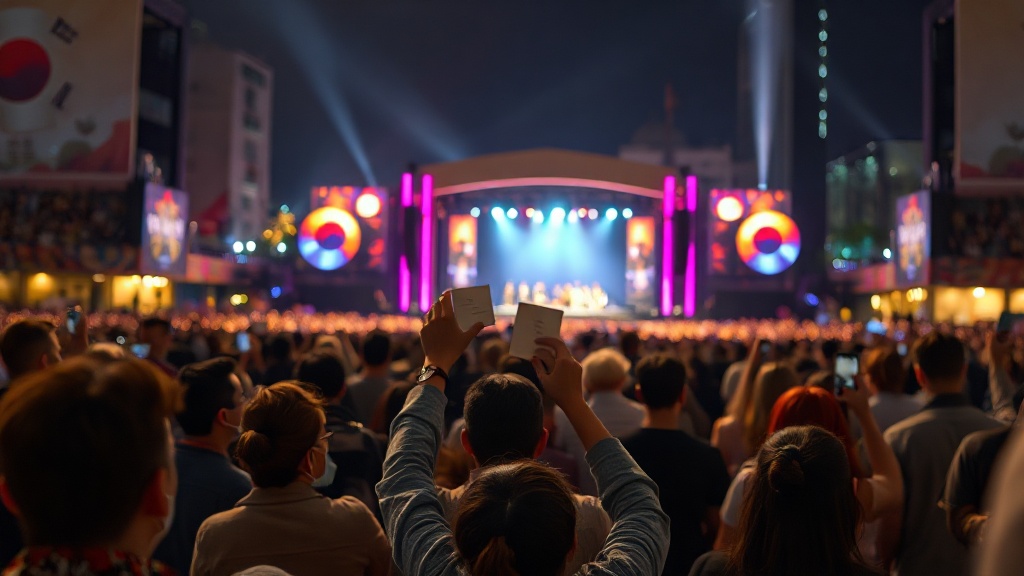
What makes the scene so striking is that tradition and the present did not push each other away.
Arirang is old, but under the lights of a world tour it did not feel stale.
Instead, it gained fresh life as fans from many countries sang it in their own accents and with their own feeling.
Culture often gets trapped between preservation and spread.
This time, both moved in the same direction.
Should tradition stay in a museum, or walk onto the stage?
A living tradition
Arirang is short, but it carries a deep weight.
It did not stay inside a textbook or a ceremonial program.
BTS brought it to younger listeners and to fans overseas, and many of them chose participation over distance.
What mattered most was not perfect pronunciation, but the will to sing together.
That kind of response is not learned slowly in a classroom.
It is felt immediately, in the room, through shared sound.
From the supportive point of view, this is a clear win for Korean culture.
It is rare for a traditional folk song to become part of a major global pop performance.
When foreign fans sing Arirang, it shows that Korean culture is no longer being consumed only at home.
BTS has also turned Korean pop into a space where grief, joy, and shared feeling travel together.
This scene fits that larger story.
The benefits are easy to see.
First, global fans experience Korean emotion directly.
Second, tradition is remembered through action, not just explanation.
Third, a concert becomes more than entertainment; it becomes cultural diplomacy (the use of culture to build goodwill between countries).
A single chorus can leave a stronger national impression than a stack of promotional slogans.
When people sing together, culture becomes present tense.
This kind of moment does more than slow the fading of tradition.
For a new generation, Arirang stops being a line in a schoolbook and becomes a song they can actually sing.
Even when life conditions differ, whether it is rent, mortgages, or daily pressure, music lowers the barrier between people.
That lowered barrier may be one of globalization's most practical gifts.
But not everyone sees the same meaning
The risk of becoming too small
Still, the picture is not simple, and that makes it worth thinking about.
One concern is that the scene can become too event-driven.
It is good when traditional culture gets a global spotlight, but if the context is not clear, Arirang can be reduced to a tool for atmosphere.
Then what remains is applause, while history and local meaning fade into the background.
From the critical side, cultural spread is not the same as cultural understanding.
A fan may sing along without knowing the song's origins, its grief, or the many regional versions that exist across Korea.
One listener may remember only the chorus.
Another may remember only the powerful melody.
Popular culture can travel widely, but that wide travel often comes with the risk of shallowness.
There is also the problem of star-centered symbolism.
Because BTS has such enormous influence, people may remember the BTS moment more than Arirang itself.
In that case, the tradition becomes background music instead of the main subject.
And global fandom, strong as it is, does not guarantee lasting curiosity.
A burst of excitement is powerful, but it is not the same as long-term learning.
So this side asks a harder question: what lasts?
Short-term buzz is easy.
Deep cultural exchange is not.
It takes time, patience, and care, much like paying down debt or keeping a household budget in order.
Bringing tradition to the world is easier to start than to sustain.
There is another concern as well.
On the world stage, tradition can be flattened into a simple image.
Arirang is rooted in sorrow, memory, and community.
But for some overseas listeners, it may become only a dramatic sing-along.
Then Korean culture is visible, but its emotional depth is less clear.
That leaves a final question hanging in the air: is being known the same as being understood?
Wider empathy, or thinner meaning?
Success on the edge
The honest answer is that both views carry truth.
This story is not easy to reduce to one winner.
Korean culture's global reach has clearly advanced, yet that progress always brings interpretation with it.
BTS has done something innovative by bringing tradition inside a modern pop stage instead of leaving it outside.
However, innovation always pushes us to ask where the edges of tradition now begin and end.
What is needed here is neither exaggeration nor gloom.
If the mix of tradition and modern performance is going to work well, the emotion of the concert has to be followed by explanation and context.
Short clips online are not enough on their own.
Learning and conversation have to come next.
Only then does Arirang remain a cultural experience instead of just another piece of content.
Seen in practical terms, this kind of moment can ripple into many fields, including jobs, tourism, education, startups, business, and even taxes.
Culture does not stay trapped in feeling; it becomes industry, and industry reshapes how the world sees a country.
Along with that comes responsibility.
The real question is not only what to show, but how to tell the story.
In the end, the Arirang sing-along shows something simple and powerful: one human voice called out to another.
Different countries, different languages, same song.
That simple fact still has the power to move people today.
It also proves that culture is still alive.
When people sing together, tradition travels farther
BTS's world tour and the Arirang chorus show that Korean tradition can still move on a global stage.
Supporters see this as proof of cultural spread and shared emotion.
Critics worry that the deeper meaning of tradition can get washed out.
What matters most is not fame alone, but the understanding and relationship that follow it.
The story leaves one final question behind.
Does tradition last longer when it is carefully preserved, or when it is sung by many voices?
The answer is probably somewhere in between.
A culture that is remembered is often a culture that has passed through many mouths and been born again.
