On December 6, FKJ will meet fans at Hall 2 of Kintex in Goyang, just outside Seoul.
The news alone adds momentum to a performance already charged with curiosity.
FKJ, the French producer known for blending jazz, R&B, electronic music, and soul, brings more than a setlist to the stage.
His collaborations with Jennie and DEAN widen the sense of what this concert could become.
At the same time, the show puts live music, ticket prices, and how we consume culture under the same spotlight.
Why this December 6 show feels bigger than a date
An overseas concert announcement can feel small on paper and huge in real life.
December 6, Hall 2 of Kintex, Goyang city: the details are specific enough to create an image before a single note is played.
That is part of why FKJ's Korean concert is drawing attention.
It is not just a schedule update.
It is a sign that global music today does not stay online for long; it lands in a real place, with real people waiting in line.
FKJ's name carries weight because he is already connected to artists many listeners know.
Jennie of BLACKPINK and DEAN are two names that help frame his reach.
For longtime fans, those collaborations are proof of range.
For new listeners, they are a quick introduction to why his sound matters.
Music may begin as audio, but a live show tells a fuller story.
It shows where the music has traveled, who has touched it, and how it changes in front of a crowd.

This is also a snapshot of the concert business in Korea.
The country is no longer a distant stop for overseas acts.
As soon as an announcement drops, fans start mapping routes, comparing seats, and thinking about timing, budgets, and travel.
In that sense, FKJ's Kintex show is not only about one artist visiting one venue.
It is also about how live culture now works: fast, social, organized, and highly anticipated.
Is live music still special, or just expensive?
The case for the stage
Short answer: live music still matters.
Its biggest strength is that it cannot be duplicated in full.
A streaming track is always available.
A concert exists only on that night, in that room, with that crowd.
That is especially true for an artist like FKJ, whose music moves between jazz, R&B, electronic textures, and soul.
Those layers often feel deeper in person, where tiny shifts in timing, touch, and improvisation are easier to hear.
A fan does not go only for volume or applause.
People go for the details that recordings can miss: the swing of a groove, the pressure of a hand on keys, the risk of a live decision.
That is why a concert can feel less like a purchase and more like proof that music is alive.
In that moment, the stage becomes a place where art is not just heard, but physically sensed.
There is also a cultural benefit.
Live shows create exchange.
The audience gets a direct look at an artist's present energy, and the artist gets an immediate read on the crowd.
Collaborations matter here too.
When FKJ is linked to Jennie and DEAN, the concert feels like a meeting point between different listening cultures.
That kind of overlap is valuable in a market where music travels across borders faster than ever.
For many people, concerts also serve a practical emotional role.
Work, school, family, money, and deadlines can flatten the week into routine.
A strong live performance can break that cycle for a few hours.
It can reset the mood, sharpen attention, and remind people that life is not only about tasks and output.
Sometimes a room full of music changes a person's state faster than any advice can.
The cost is real
However, the other side is just as real.
Concerts are not held together by excitement alone.
They require money, time, and movement.
Ticket prices, transportation, food, and the hours spent getting to and from the venue all add up.
For many fans, an overseas concert is not a casual outing but a major spending decision.
If a person is already managing rent, loans, savings, insurance, or daily expenses, the show can start to look less like leisure and more like a luxury item.
There is also the problem of concentration.
Popular concerts can pull a huge wave of attention toward one artist, which is good for visibility but not always healthy for variety.
When fandom becomes the center of the experience, music itself can fade into the background.
Then the event is no longer about listening deeply.
It becomes about being there, posting about it, and keeping up with the crowd.
That is not automatically bad, but it does raise a question: are people buying music, or buying the feeling of participation?
Venue access matters too.
Kintex is a large exhibition complex, which helps it host major events, but ease of attendance is not the same for everyone.
Some fans will have a short trip and a smooth night.
Others will face long transit, crowded routes, or expensive logistics.
In the real world, cultural access is never evenly distributed.
One person's dream night can be another person's out-of-reach expense.
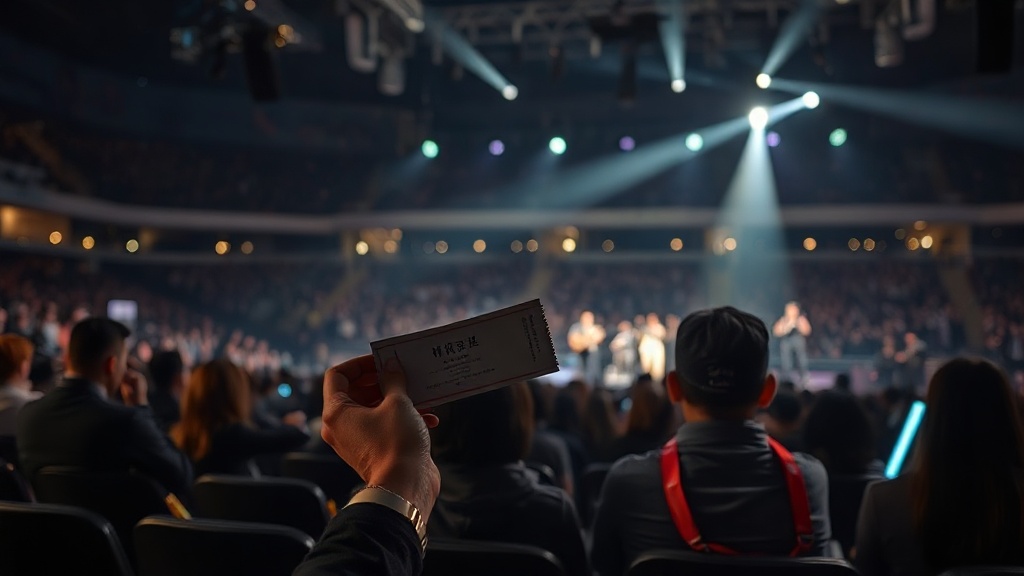
That is why a thoughtful view does not reject the concert.
It asks what kind of value the concert actually offers.
Is it music, atmosphere, status, memory, or a mix of all four?
The clearer the answer, the less likely the choice is to become pure impulse.
A good cultural habit is not to consume less for the sake of it, but to choose more carefully.
What this says about young audiences
Enthusiasm is a signal
For younger listeners, concerts often mean more than entertainment.
They are a way to test taste, claim identity, and find other people who hear the world in a similar way.
Listening alone on a phone is different from standing in a crowd and feeling that shared pulse.
That is why live music can become a kind of social language.
It says, without many words, who you are and what moves you.
This is especially true in a culture shaped by online streaming and short video clips.
The internet can make music feel endless, but also isolated.
A concert cuts through that loneliness.
It creates a temporary community of strangers who may have nothing in common except the same songs.
That shared moment can be powerful, even unforgettable.
At the same time, it would be too simple to romanticize that feeling.
Concerts are both art and business.
They are created by artists, supported by teams, shaped by venues, and funded by audience spending.
None of that makes them fake.
It only means they are more complicated than a pure emotional rush.
If anything, that complexity is what modern culture looks like.
So the right attitude is not blind excitement and not dismissive skepticism.
It is judgment.
Enjoy the fact that FKJ is coming to Korea.
Also think about why the show matters to you, and what you are willing to give for it.
When culture leaves room for both excitement and discipline, it tends to last longer in memory.
What one concert leaves behind
FKJ's December 6 concert at Kintex will likely be remembered for more than its headline.
It brings together expectation, collaboration, live performance, and the realities of spending.
His work with Jennie and DEAN makes the show feel familiar before it even begins.
The date gives that expectation a concrete form.
But the bigger story is the one underneath: how we value live music, how we pay for it, and how we decide what kind of cultural experience is worth our time.
If the concert feels like an opportunity, that makes sense.
If it also feels like a careful choice, that makes sense too.
Both reactions are honest.
The real question is not whether the show is good or bad in the abstract.
It is what the show means to the people who go, and what it says about the way we listen now.
