The 8th Jeonju African Film Festival widens the circle of cultural understanding.
It invites audiences to see Africa not as a faraway place, but as a neighbor in todays connected world.
However, if a film festival ends as a one-time event, its value feels incomplete.
Its meaning deepens when dialogue, interpretation, and follow-up continue.
This years event asks a fresh question in an age of diversity: how do we really see one another?
What does it mean to say, I saw Africa in Jeonju?
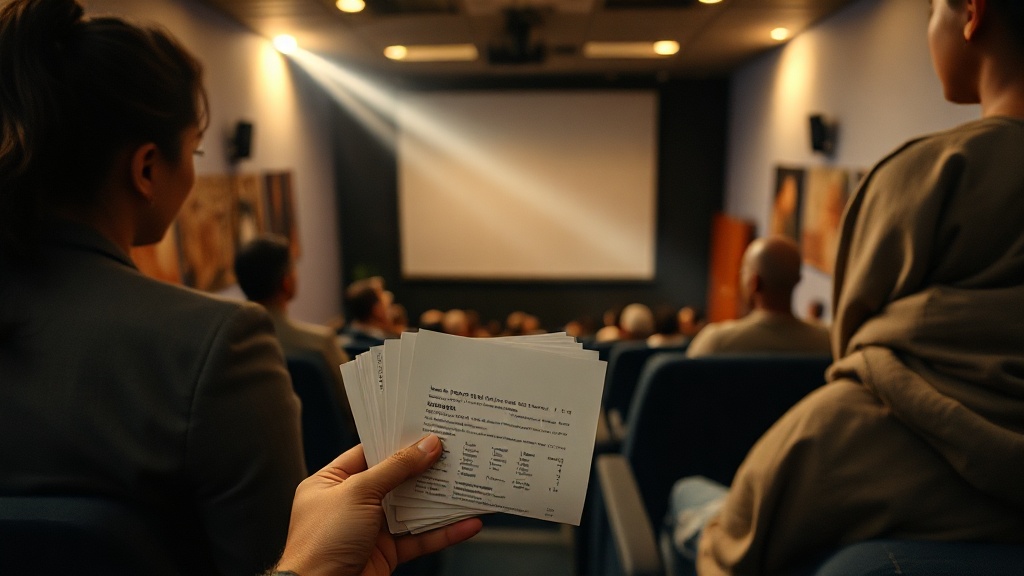
On the 11th, the 8th Jeonju African Film Festival opened in Jeonbuks city of Jeonju.
Jeonju Digital Independent Cinema serves as a bridge, bringing a distant continent closer to local viewers.
The four-day screening schedule is more than a calendar item. It is a chance to look slowly at Africas present, one story at a time.
This event is not just about watching films. It asks what kind of world we are willing to learn about.
A film festival is one of the gentlest ways to reduce cultural distance.
Images arrive before explanations, and emotion moves before analysis.
That is why an African film festival can start cultural exchange in a way that lectures or exhibitions sometimes cannot.
It begins with feeling, then moves toward understanding.
And the fact that it happens in Jeonju matters, because it shows how a regional city can open its doors to the world.

Why it feels close
Prejudice often comes first.
Many people think of Africa as if it were one single place with one single story.
But the continent is vast, its societies are complex, and daily life cannot be captured in one face or one image.
This is where a film festival can shake up simple assumptions.
To see Africa through film is to see human life as it is lived.
That means more than war or poverty, though those are part of the picture. It also means family laughter, the rhythm of city streets, generational conflict, and the energy of young artists.
In that sense, the festival is not just a cultural outing. It becomes a form of education that changes how people look at others.
It also shows that universities, online learning, and local cultural events are not separate worlds. Together, they can expand a persons understanding.
Jeonju is already known as a city with a strong film culture and a respect for independent cinema.
When the African Film Festival joins that landscape, residents do not just consume world culture from a distance. They experience it up close.
Culture lasts longest when it awakens curiosity.
That is why events like this do more than entertain. They build civic sensitivity and add depth to a citys character.
What supporters see
The case for the festival is clear.
First, it lowers the barrier to understanding another culture.
Second, it gives local residents a way to connect with the wider world.
Third, it uses the emotional force of cinema, which often says more than a lecture ever could.
Most important, it helps weaken stereotypes.
When people keep hearing the same narrow version of a place, their view of the world shrinks.
Film interrupts that habit. When a viewer sees a countrys history, mood, and daily life in visual form, layers appear that headlines alone cannot provide.
That may not deliver an immediate benefit like a financial tip or a consumer guide, but it builds the mental and social base a community needs in order to live together.
As a local festival, it also matters because it spreads cultural experience beyond major capitals.
Even without a huge international scale, a city like Jeonju can host a space where the world feels reachable.
Audiences encounter foreign languages, history, social issues, and moral questions without leaving town.
In that process, multicultural awareness stops being an abstract slogan and becomes lived experience.
The festival makes that possible.
What the critics worry about
There are limits, of course.
No one can claim to understand an entire continent after a single festival.
Africa includes many countries, histories, religions, languages, and contrasts between city and countryside.
So if viewers rush to judgment after only a few screenings, they may strengthen the very stereotypes they meant to question.
That concern is realistic.
People often consume cultural events and still miss the context.
They remember a striking image or an emotional scene, but overlook the social structure behind it.
If that happens, the festival becomes less a window into understanding and more a display case for exotic images.
From this point of view, critics are not rejecting the event. They are asking for learning that lasts beyond the applause.
There is also the risk that a cultural event becomes mainly a tool for local promotion.
If the screenings end and nothing follows, no discussion, no education, no continuing exchange, then only a brief burst of interest remains.
Art should not end with a passing moment of feeling.
Its value is complete only when the audience leaves with questions still alive.
That is why caution does not oppose the festival. It asks how to make it deeper.
An event is a starting point, not the finish line.
That is the heart of the critical view.
If interest in Africa ends as a one-off attraction, the original purpose fades quickly.
So the concern is not the festival itself, but the silence that may come after it.
The larger question it leaves behind
The real issue is not how many films were shown.
It is how we choose to understand another culture.
The African Film Festival is not a place to consume a foreign trend. It is a place to meet different ways of seeing the world.
That makes it a question of ethics as much as taste.
We often judge the world only by efficiency.
Topics that connect directly to daily life, such as loans, savings, pensions, or insurance, clearly matter.
But a community also needs emotional strength.
Learning to watch other lives, hear other languages, and understand other histories makes society safer and more stable.
A film festival is one doorway into that kind of experience.
It also matters for younger audiences.
Future life is not shaped only by college admissions or career choices.
What stays longer is the kind of person one becomes, and the kind of world one learns to understand.
African films can help the next generation move beyond the bias of online information and see real human lives more clearly.
Cultural understanding is not just knowledge. It is a way of living.
What Jeonju adds to the story
Location matters.
Jeonju has long built its identity on local strength.
It is a city where tradition and modern life, tourism and daily routines, center and periphery all overlap.
That makes the African Film Festival especially symbolic, because it reminds us that global exchange does not begin only in capital cities.
Here, Africa is not an abstract continent.
It enters the viewers daily route.
The encounter may seem small, but it lasts.
It can shape dinner-table conversations, workplace talk, and classroom discussion.
Those small questions slowly influence the tone of a community.
That is why a cultural event can matter so much to social ethics.
This kind of movement cannot be explained only through tourism or consumption.
When a city welcomes different worlds, it becomes more than a destination. It becomes a place of learning.
The African Film Festival helps make Jeonju that kind of place, and that change lasts far beyond opening day.
Between understanding and distance
Balance is essential.
Support is not blind optimism, and caution is not cynicism.
This festival clearly has meaning, but it needs tools that help that meaning grow.
When interpretation, conversation, education, and civic participation continue, Africa becomes not just an event, but a relationship.
That is why the key difference is between seeing and understanding.
Seeing is easy.
Understanding takes time.
No matter how good a festival is, its impact fades if the audience leaves without questions.
But when a framework for interpretation exists, even one film can change a way of life.
The core idea is simple.
The African Film Festival should not be a place to consume Africa. It should be a place to understand it.
And that understanding is completed not in one screening, but in a conversation that lasts longer than the credits.
The more questions audiences carry home, the stronger the festival becomes.
So what does the festival change?
The 8th Jeonju African Film Festival is a scene that invites people in one local city to see the world again.
Supporters emphasize cultural exchange and the easing of prejudice. Critics warn against shallow understanding and one-time consumption.
Both views have merit, which is why deeper planning and continued exchange are needed.
This years event shows the possibility of turning Africa from a distant name into a shared subject of understanding.
Culture becomes relationship the moment we begin to learn it.
That is the festivals greatest gift.
May these four days in Jeonju not end as a local memory alone.
What kind of experience would you choose first if you wanted to understand a culture different from your own?
