At the heart of this year’s event is a program lineup that brings film and live performance together.
In particular, the section called Singing in Nature makes its eco-friendly mood unmistakable.
When the way we look at nature changes, culture itself grows deeper.
This column looks at both the promise of that shift and its limits.
On September 18, 2026, the 11th Ulsan Ulju Mountain Film Festival is set to begin.
It may look like a simple date on a calendar, but inside it sits a clear crossing of film, performance, and the natural world.
When mountains and forests, people and stages, audiences and landscapes all meet in one place, the event becomes more than a screening series. It expands into a full cultural environment.
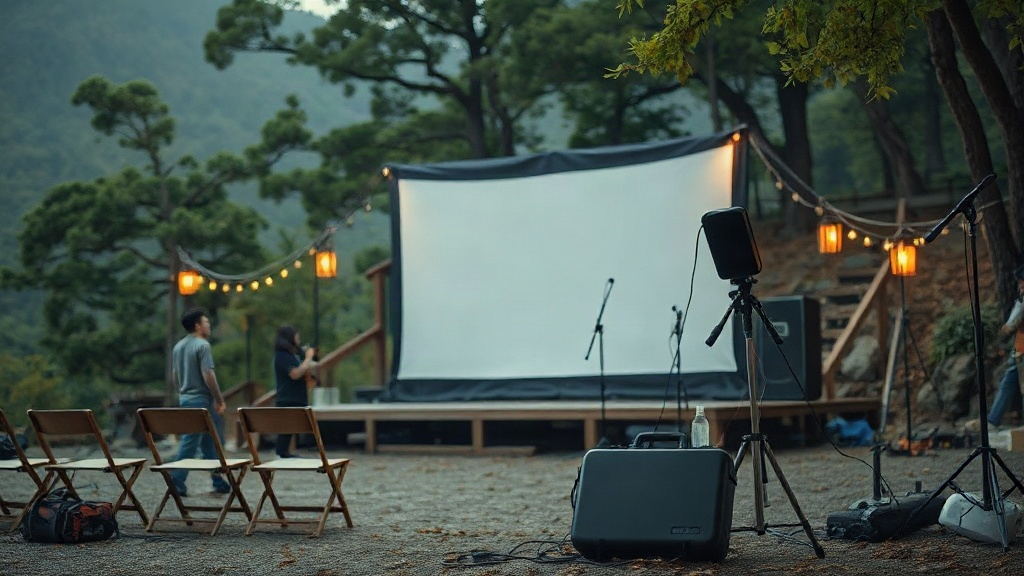
One of the most noticeable parts of this year’s festival is the program titled Singing in Nature.
The name suggests something more than using nature as a pretty backdrop. It evokes breathing, listening, and feeling together inside nature itself.
That is where the Ulsan Ulju Mountain Film Festival builds its identity.
It reaches beyond commercial appeal and pushes harder on theme, place, and audience participation.

Every film festival faces a choice.
Should it chase broad appeal and try to pull in as many viewers as possible? Or should it stay loyal to its original theme, even if that means staying narrower?
A mountain film festival makes that question sharper.
Once mountains and nature become the center, the program can grow wider, but its direction must become more disciplined.
A festival asking what happens in nature
Nature is not a backdrop
Simple as that.
Nature is not a backdrop.
The Ulsan Ulju Mountain Film Festival turns that idea into the mood of the entire event.
The tension of people climbing mountains, the images that capture wind and light, and the music and performances layered on top of them do not stop at using nature. They invite people to read nature again.
That is one of the festival’s strengths.
At a regular film festival, landscapes often remain just scenery or a filming location. Here, nature becomes the subject itself.
Audiences come for a story and end up thinking about the ground they stand on, the air they breathe, and the season around them.
That kind of shift is a good sign of a healthy cultural experience.
To appreciate nature is, in the end, to change human attitude.
That sentence captures the festival’s deepest strength.
People often treat cultural events as a break or a form of consumption, but a festival like this trains the senses.
It makes people see mountains, water, wind, and shade they once passed by without thinking.
It helps them hear a hidden order and a hidden beauty inside those things.
When performance is added, the meaning grows wider.
Film stirs the eye, music moves the heart, and place leaves a memory.
In the end, the audience experiences not just seeing and hearing, but staying.
That quiet feeling of presence may be the festival’s most memorable cultural asset.
As festivals grow, what matters most?
Operations shape dignity
And here is the hard part.
Operations shape dignity.
No matter how good the idea, trust fades quickly when the real-world execution slips.
That is especially true for a festival built around nature.
As attendance rises, practical concerns come to the front: trash, noise, crowd flow, and safety.
From the supportive side, this festival has clear advantages.
First, visitors can enjoy film and performance in one place, which widens the experience.
Second, the nature-centered theme leaves a strong impression.
Third, it helps build the cultural image of Ulsan and Ulju.
Fourth, it can boost tourism and local business.
In that sense, the mountain film festival is not just an event. It is a tool for building a regional brand.
More broadly, culture should be judged not only by how it gathers people, but by how it changes them.
If a viewer leaves with a new way of seeing nature after one film, one performance, or even one walk between venues, then the festival has already achieved half its purpose.
And that change can spread into home, work, school, and daily life.
One reason culture matters is that it quietly changes habits.
Still, the criticism cannot be ignored.
When a program gets larger, its original message can blur, and the event itself can become an one-off spectacle.
If a festival claims to honor nature but operates in ways that harm it, the result is the opposite of what it promised.
To say you love mountains and forests while crowding and straining them is to create a gap between words and reality.
Another concern is that expansion can weaken focus.
People assume more programs automatically mean a better festival, but when the theme is spread too thin, identity becomes fuzzy.
Even if the audience has fun, the event can lose its shape.
That is why the mountain and nature core must stay firmly in place.
Why the support sounds convincing, and why the doubts remain
The upside is clear
The upside is clear.
The idea of singing in nature broadens the senses all by itself.
Stepping away from the fast rhythm of the city and listening to art in the middle of mountains and wind is more restorative than many expect.
This is not just comfort. It feels closer to a way of reordering life.
Supporters see the festival as something culturally necessary.
Modern life breaks people into schedules and numbers: work, loans, bills, savings, and deadlines.
In that world, art and nature can look like luxuries. But often they are the opposite.
They help the mind rest, widen the view, and recover a healthy sense of feeling in the middle of stress.
It also matters for young people and families.
At a time when many narrow their thinking around college, jobs, and future plans, a festival like this shows how many ways human life can be lived.
Film helps us understand other lives. Performance helps us feel the rhythm of a community.
Culture and education are deeply connected.
On the other hand, the opposition is practical.
The more a nature festival emphasizes growth, the more demanding its environmental standards must be.
In reality, visitor convenience and operating efficiency can easily take priority.
As a festival gets bigger, so do the problems: vehicle traffic, energy use, waste handling, fire prevention, and safety management.
If those are not handled well, the phrase nature friendly quickly loses meaning.
There is also the limit that many regional festivals face.
Attention gathers around opening week, but long-term continuity is harder to maintain.
A one-time visit may leave a memory, yet not always a lasting change.
So the criticism is not just criticism. It is a question about what it takes for a festival to last.
In truth, a good festival becomes stronger when support and doubt exist together.
A venue that only receives praise can become lazy. A venue that only receives criticism can turn cynical.
The Ulsan Ulju Mountain Film Festival will be remembered longer if it finds balance in the middle.
The bond between nature and art is powerful, but power lasts only with restraint and careful management.
So the debate around this event is not simply about whether people like one festival or not.
It is really a question of whether we consume culture, or let culture change the way we live.
As the way we look at mountains changes, so should the way we look at festivals.
Only when pleasure grows into responsibility does a festival become a true asset to the community.
What Ulsan and Ulju can build together
Longevity is the answer
Not the shortest lesson, but the clearest one.
Longevity is the answer.
The number 11 means trust has been building over time.
What matters more than one dazzling year is the power to make people look forward to the next one.
That is how local cultural events survive.
First, the identity must be clear.
Second, the operations must be steady.
Third, there must be a reason for audiences to stay.
Fourth, local residents must feel that the festival belongs to them.
When those pieces fit together, the event stops being just a schedule item and becomes part of a city’s memory.
Local culture may not look huge at first, but it can last a long time.
That is what makes a mountain film festival interesting.
It may not have the immediate blast of a giant commercial event, but a story that links nature and art keeps bringing people back.
And that steady return can spread into tourism, education, environmental awareness, and community pride.
For that reason, this festival should not be read as just something to watch.
It is a case study in what kind of culture a city chooses to hold onto and what kind of memory it wants to leave behind.
Festivals do not only create consumption. They create relationships.
Relationships between nature and people, art and region, viewers and community.
If the Ulsan Ulju Mountain Film Festival deepens that sense of connection, then Singing in Nature becomes more than a program title. It becomes a way of seeing.
The way we look at nature, the way we listen to art, and the way we treat community all begin to change together.
Such change may look small, but it lasts.
And in the end, what lasts is what culture is made of.
So what does this festival give us?
The 11th Ulsan Ulju Mountain Film Festival is a cultural event that asks people to see nature differently through film and performance.
Singing in Nature symbolizes that direction and offers audiences more than simple viewing.
At the same time, it carries real tensions: broad appeal versus environmental care, program variety versus thematic focus.
In the end, the value of the festival depends less on how big it looks and more on how deeply it stays with people.
A nature-centered cultural festival is never completed by good intentions alone.
Only when restraint in operations, participation from the community, and sustainable management all support it does the meaning become clear.
What do you think is the greatest value a festival like this leaves behind for a region?
