Preorders for the Galaxy Z Fold8 and Z Flip8 have begun.
America's big wireless carriers often do the same thing: dangle perks and fine print to win customers.
Consumers hope for bigger savings, but the comparison gets harder by the hour.
In the end, this is less about phones than about how we make choices.

On July 28, 2026, the preorder race heated up again.
As the Galaxy Z Fold8, Fold8 Ultra, and Z Flip8 took center stage, the three major carriers moved quickly with promotion offers.
The opening week of any major phone launch follows a familiar pattern. Hype runs ahead, perks chase behind, and shoppers end up doing the math in the middle.
At the heart of this race is not the device itself, but who can make the purchase feel cheaper.
A preorder is not just a waiting list.
It is a market test that reveals who gets the first pick, who stays patient, and who can present the most convincing deal.
So this story is not only about a new phone. It is also about the psychology of competition.
When perks come first, judgment comes late
Preorders always seem to favor the fast.
That is often true. The most popular colors, storage options, and plan bundles tend to disappear early, while carrier gifts and partner offers are framed as rewards for being quick.
Once a premium foldable enters the picture, the mood gets even more intense.
Buying the newest device first can feel like more than a purchase. It can feel like membership.
However, the excitement hides a harder calculation.
What looks generous on the surface may come with plan requirements, contract terms, service add-ons, or rules for using partner points.
A perk has little value if it does not fit the way you actually spend.
That is why a preorder campaign is both an impulse stage and a cold comparison test.
The real question is not which ad sounds loudest.
It is whether the total cost matches your actual use.
Start with what you will really pay, not with the freebie that looks biggest.
Why competition can help buyers
Supporters of this kind of race make a straightforward case.
When three carriers fight over the same device at the same time, the consumer is usually the one who wins. That argument has merit.
During preorder season, discounts, gifts, accessories, insurance-like services, data bonuses, and partner points often show up all at once.
The pattern is different from a simple price war, but the logic is similar: sellers improve their offers because buyers have options.
Meanwhile, the competition gives shoppers more room to choose.
If one carrier's package does not work, another one might.
Add unlocked phones and smaller low-cost carriers to the mix, and the buyer's leverage grows even more.
Instead of accepting a nearly identical offer, shoppers can compare plan costs, card rewards, and monthly bills with far more precision.
That process can make people more aware of their own habits and budgets.
For an expensive device like a foldable phone, lowering the upfront burden matters.
If a promotion helps someone get the device they need without stretching into debt, then the purchase becomes a matter of planning, not just spending.
For some buyers, a new phone improves work. For others, it supports online classes, multitasking, or family communication.
In that sense, better access to technology can be a real benefit.
Competition can also protect consumers in a very practical way.
If one side pushes too far on price, another side can pull it back.
The market does not become perfect, but it does become less likely to drift into total one-sided control.
That is why preorder promotions can function as more than marketing. They can keep the market honest.
Even in a world where many people buy unlocked phones or choose lower-cost plans, this logic still matters.
The more the carriers compete, the more information buyers see.
The more information they see, the easier it becomes to save money and avoid regret.
Good competition does not only reduce prices. It expands judgment.
Why the fine print can work against buyers
Critics see the picture differently.
On the surface, the deal looks rich. In practice, though, the terms can be so complicated that many buyers cannot tell whether they are actually saving money.
Perks are listed like prizes, but not every prize is easy to claim.
Some require a set number of months on a plan. Others depend on partner use, service retention, or timing.
This creates information asymmetry, which means one side understands the deal better than the other.
People who have time and experience may decode promotions carefully. Busy shoppers often cannot.
So many buyers end up focusing on the largest number first.
At that moment the offer seems like a win, but a few months later the bill can tell a different story.
Preorder season can also trigger impulse buying.
Limited colors, limited stock, and phrases like only today or while supplies last can push people to move fast.
Then spending starts to follow speed, not need.
That is a problem because haste can damage financial health.
For households already carrying rent, mortgages, student loans, insurance premiums, or child care costs, extra device spending is not a small issue.
And with a premium foldable, the pressure is stronger still.
Its technology and status make it easy to believe that now is the only time to buy.
However, a newer phone does not automatically mean a better life.
The rush of a preorder can leave buyers tired before they even sign up.
The more perks there are, the more choices there are.
The more choices there are, the easier it is to get worn out.
That fatigue often leads people to decide too quickly and regret the choice later.
For that reason, critics do not call preorder promotions evil.
They simply argue that the system pushes too much of the burden onto the shopper.
If buying a phone starts to feel like reading an insurance policy, everyday life gets more stressful than it needs to be.
Choice lives between desire and restraint
This debate is not really about whether someone should buy a phone.
It is about what counts as a smart choice and what counts as an emotional one.
The Galaxy Z Fold8 and Z Flip8 may be attractive products.
But attractive is not the same as necessary.
For someone who uses a phone for work, messaging, multitasking, or online learning, a foldable could be genuinely useful.
For someone who mainly makes calls, sends texts, and takes a few photos, it may be more phone than needed.
In the end, the key is not the badge on the device. It is the shape of the buyer's life.
The same is true for household finances.
Some people know how to combine credit card rewards with carrier perks and come out ahead.
Others chase benefits and end up with more debt.
Spending always sits between desire and restraint.
Desire moves fast. Restraint moves slowly. But stability usually belongs to the slow side.
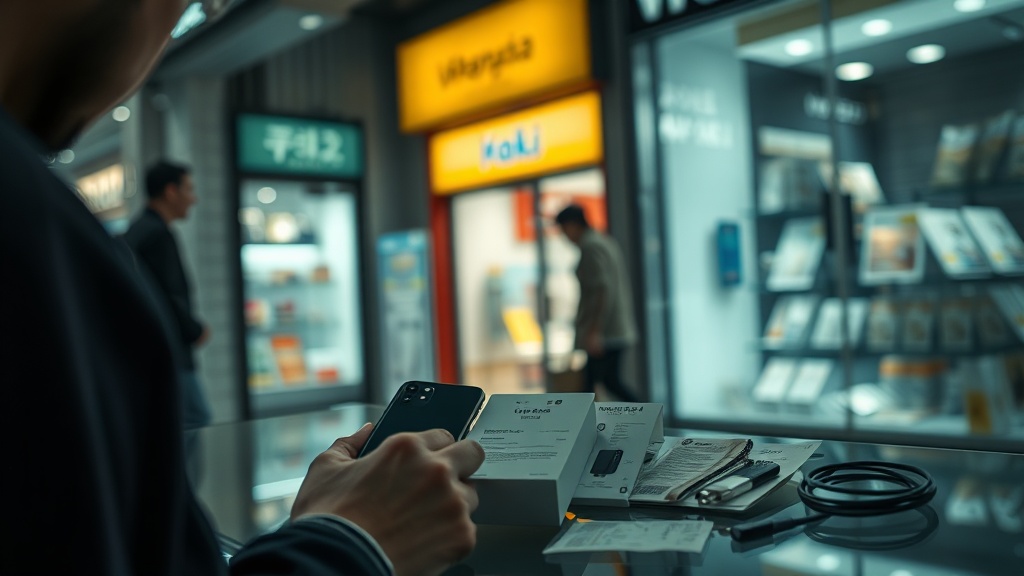
The carrier race will keep happening.
Every new model will arrive with sharper language, brighter promises, and more ways to sign up.
However, real choice is possible only when you know your own 기준, or personal standard.
If that standard is clear, preorder season can still be useful.
Stepping back makes the picture clearer
In the end, this story is simple.
Carriers compete for customers, and consumers try to find the best deal inside that competition.
From one angle, the market looks lively. From another, it looks too complicated.
Both views make sense.
The real issue is whether you are ready to handle the details.
Checking a monthly budget, thinking about long-term savings, and asking whether today's purchase might become tomorrow's burden is not exciting work.
But it matters.
Good perks do exist.
Yet even good perks can become a bad fit when the timing is wrong.
This preorder race asks a simple question.
Are you choosing the device you truly need, or just following the buzz?
The person who pauses before answering is the one most likely to enjoy the reward and avoid the regret.
Otherwise, the biggest discount can still turn into the most expensive choice.
Conclusion: bigger perks, quieter choices
The preorder campaign for the Galaxy Z Fold8, Fold8 Ultra, and Z Flip8 shows how sharp carrier competition can be.
Consumers gain more options, but they also have to decode more conditions.
Supporters point to the benefits of rivalry. Critics point to the complexity and the risk of impulse buying.
In the end, the best decision is not the one with the largest perk. It is the one that fits your needs and your budget.
A smartphone should be a tool that helps life run better.
When the tool starts acting like the boss, spending gets shaky fast.
If this preorder season teaches anything, it is that the smartest choice is often the calmest one.
