A new drama set to debut next month puts a married couple on the edge of divorce.
Starring Lee Min-jung and Kim Ji-seok, the story looks less like a soap-opera gimmick and more like a mirror held up to real life.
Marital conflict is not just an emotional problem; it can shake the entire structure of a life.
That is why this story stretches beyond entertainment and into bigger questions about marriage, family, and faith.
At the point of collapse, the line between what must be protected and what must be released becomes painfully clear.
Why does the line, I want a divorce, linger?
One word stands out first.
Divorce can sound like a single decision, but in real life it is usually the result of many days, many disappointments, and many failed attempts to stay connected.
According to Yonhap News, the drama will feature Lee Min-jung and Kim Ji-seok as a couple in crisis who have already decided to end their marriage.
The reason a short news sentence hits so hard is simple: almost everyone has seen some kind of fracture in a close relationship.
Marriage is often harder to maintain than to begin.
At first, love and hope hold everything together. But as time passes, daily life moves in too: bills, children, work, debt, and family expectations.
Then marital conflict stops being a small misunderstanding and starts touching money, health, mental strain, and even job performance.
So divorce becomes not only a legal term, but a name for a life in pieces.
Conflict does not arrive all at once
It builds slowly.
Most couples do not begin with a dramatic blowup.
Instead, conversation gets shorter, silence gets heavier, and tiredness turns into judgment.
Meanwhile, the pressure of mortgage payments, rent, debt, and credit-card bills creeps in and makes every argument sharper.
That is one reason stories about couples on the brink of divorce draw attention.
Viewers are not only chasing drama. They are recognizing familiar details.
Trying to balance a household budget, worrying about savings, arguing over child-rearing, or feeling anxious about retirement are all ordinary pressures that can turn into one long conflict.
People marry for love, but life often turns marriage into a test of endurance.
On the other hand, relationship crises are not caused by money alone.
Loneliness, pride, wounded self-respect, and repeated disappointment can dry love out from the inside.
That is why counseling matters, apology matters, and sometimes the courage to break silence matters too.
Recovery is less a feeling than a practice.
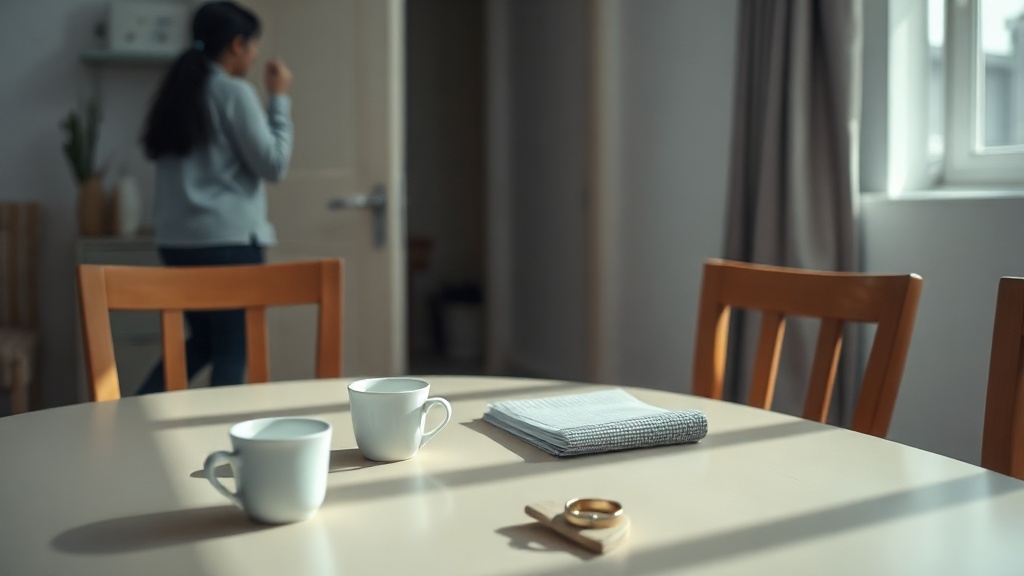
The case for holding on
It is not easy.
Marriage is often talked about as the result of love, but in reality it is a system of responsibility.
That is why some people argue that couples should fight to preserve the bond no matter how hard things become.
From that view, divorce can look less like freedom and more like an early surrender.
This argument also connects with the Bible.
Genesis 2:24 speaks of becoming one flesh, and Matthew 19:6 says that what God has joined together should not be separated by human hands.
In that reading, marriage is a covenant, not a mood.
A covenant is not a promise kept only when feelings are strong. It is a commitment that asks people to stay when things become uncomfortable, unequal, or exhausting.
For many couples, what they need first is not divorce but adjustment.
Marriage counseling, pastoral counseling, communication training, rebuilding a household budget, and reshaping parenting duties can all help a home stay intact.
Often, the smallest acts of care become the start of something bigger: eating breakfast together, pausing before lashing out, or asking about the other person's exhaustion before speaking in anger.
Staying together is not an old-fashioned virtue; it is a skill that protects human life.
From this perspective, there is also concern that making divorce too easy leaves only convenience behind.
Marriage is not a product you simply trade in when it gets difficult. It is a place where people learn to live, adapt, and persevere together.
When couples do endure and find understanding, children often gain stability and communities are reminded that continuity still matters.
The case for letting go
There is another side.
Some argue that protecting people must come before preserving a relationship at all costs.
If violence, emotional abuse, repeated betrayal, control, or fear have gone on for a long time, then the problem is no longer just conflict.
In that setting, telling someone to simply endure can become neglect dressed up as virtue.
From this angle, divorce is not failure but survival.
Mental health, like physical health, can be damaged in ways that are easy to overlook until the whole life is shaken.
When children are involved, a home filled with tension, criticism, and cold silence may hurt them more than a separation that finally brings safety and care.
A house that looks intact on the outside is not always the healthiest place to grow up.
Reality is also more complex than theory.
For some people, divorce is escape. For others, it is a restart.
As more adults gain financial independence and family structures change, the moral conversation around marriage has also become more layered.
A marriage lasting on paper does not automatically mean the relationship is healthy.
That point matters in religious conversations too.
Teaching that values marriage should never be used to excuse abuse.
Encouraging reconciliation is not the same thing as forcing oppression to continue.
Without safety, recovery cannot even begin.
How drama reflects society
It is striking.
Popular culture often asks questions before the rest of society is ready to answer them.
A couple in crisis on screen can look like a smaller version of real marriages, or even like a portrait of how society treats marriage itself.
People react to these scenes for more than the acting.
Marriage is both a personal choice and a social institution.
Taxes, pensions, retirement pay, insurance, savings, housing, loans, and leases all tie family life together in practical ways.
That means divorce is not just an ending on paper. It is a social event that reshapes money, caregiving, and daily responsibility.
When a couple falls apart, work performance drops, health suffers, and plans for children can be thrown into confusion.
That is why a drama like this does more than entertain.
It pushes viewers to examine their own relationships, consider the possibility of repair, and better understand people who choose separation.
The deeper question is simple: what do we still need to learn in order to keep love alive, and how do we protect people after a home has broken?
Faith speaks more in care than in condemnation
This matters.
The Bible does not treat marriage lightly, but it also does not treat people like disposable parts.
Across passages such as Matthew, Ephesians, Colossians, and Malachi, the repeated themes are responsibility, humility, patience, and love.
Those words are less about winning an argument and more about learning how to live together.
The church has a clear role here.
Rather than rushing to judge families facing divorce, it should offer counseling, intercession, and protection.
If there is a real chance of healing, the church should help create it.
If abuse and destruction are severe, then safety and separation should be supported.
Before drawing moral lines, the first task is to help people survive.
In the end, the message faith should carry is not a simple ban.
Marriage begins with grace, but it takes discipline to sustain. When a relationship breaks, healing is needed, not just blame.
That is why this story asks us not to see divorce as pure evil, but to see the wounds and responsibilities that come before it.
Real love does not romanticize a relationship; it protects the person inside it.

How should we see a broken marriage?
The core issue comes down to three things.
First, marital conflict is not only about emotion; it affects every part of life.
Second, preserving marriage matters, but it cannot be demanded in ways that destroy safety and dignity.
Third, faith communities and the wider society should build conditions for restoration, not just condemnation.
When that balance is kept, divorce can be understood not as simple abandonment, but as a serious and responsible judgment.
Stories about couples in crisis are always uncomfortable.
But that discomfort is exactly what forces us to face the realities we often avoid.
A relationship tied to family, work, children, health, mental strain, and money does not recover easily once it starts to crack.
That is why it matters to speak sooner, listen more deeply, and offer help more carefully.
Protecting marriage and protecting people are sometimes the same thing.
Other times, they pull in different directions.
Wisdom is needed to know the difference, in families and in churches alike.
What 기준 do you use when deciding where a relationship ends and where a new beginning should start?
