A quiet American suburb in the 1980s turns into a hunting ground for dinosaurs overnight.
The moment a familiar place becomes strange and deadly, the audience feels the pressure in its own breath.
This story blurs the line between horror, disaster, and monster movie spectacle.
It asks how quickly the life we think is safe can fall apart.
That unease lingers long after the screen goes dark.
When a Quiet Street Starts to Collapse, Where Does Fear Begin?
The setup of a 1980s American neighborhood turning into a dinosaur hunting ground carries more weight than a simple creature feature.
Even the title alone suggests a world built on ordinary comfort, then pulled apart piece by piece.
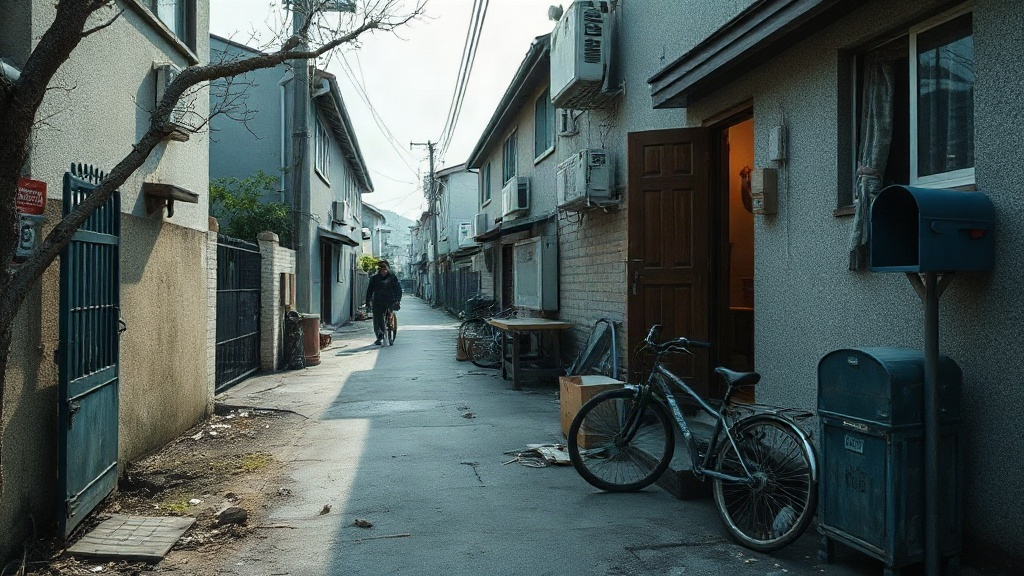
A block once seen as a symbol of safety, with fences, porches, and front yards, becomes a place where people run for their lives.
The stronger that contrast gets, the deeper the fear cuts and the longer it stays in memory.
When everyday life breaks, fear begins.
We usually think of disaster as a storm far away or a war on the horizon, but the shock here comes from something much closer.
Living rooms, garages, driveways, and sidewalks are supposed to be private, ordinary spaces.
When they suddenly become the stage for a chase, viewers do not just jump once and move on. They start asking how safe their own lives really are.

The strength of this story is not only in its wild premise.
In fact, the gentleness of the opening makes the terror sharper.
A normal neighborhood, a family dinner, a neighbor calling out across the street. Those ordinary details make the threat feel more brutal when it arrives.
That is why the title works as more than a monster tale. It becomes a warning about how fragile normal life can be.
Is Safety an Illusion, or a Necessity?
Safety Can Break
Safety is never as fixed as people want to believe.
Supporters of this kind of story begin here.
When people settle into comfort, they often miss the first signs of danger, and trouble tends to arrive when everything seems calm.
So a fantasy about dinosaurs in a suburban neighborhood ends up reflecting something real.
In family life, health, work, or money, plans can slip fast.
Peace without preparation is the most fragile kind of peace.
That is what makes the story effective.
While viewers are watching a horror setup, they are also thinking about their own lives.
Skipping a budget check, delaying savings, or ignoring a loan payment schedule may not feel dramatic, but small oversights can turn costly fast.
Sometimes insurance is useful only after it is needed, and sometimes a delayed checkup turns into a much harder hospital visit.
The dinosaurs are fictional, but sudden threats in real life are not.
Meanwhile, the premise also tests the idea of community.
Who steps up first? Who protects the vulnerable? Who freezes, and who keeps moving?
Disaster stories and monster stories are not only about the monster itself.
They reveal fear, responsibility, values, and moral choices all at once.
That is why a line like neighborhood turned hunting ground sounds sensational, yet still points straight at a real social anxiety.
The story feels convincing because it is unreal, and its realism comes through that very unreality.
Once people accept that a peaceful place can change overnight, the language of preparation becomes natural.
Saving, planning, maintaining, and preventing are just other words for survival.
Fear Can Be Too Much
Still, the exaggeration is obvious.
The other side argues that the premise is simply too loud.
Dinosaurs roaming a modern suburban street are striking, but that same force can weaken realism and depth.
If viewers react first to the absurdity, the characters and the larger meaning may get pushed aside.
Horror feeds on exaggeration, but when the exaggeration becomes the main attraction, the message can disappear behind the image.
From this angle, the story risks becoming easy to consume and easy to forget.
People may remember the shock but miss the questions underneath it.
The breakdown of a family, the fragility of a job, the weakness of a citys safety net, and the ethics of a community can all get buried under the visual punch of a dinosaur attack.
And when fear is too intense, the audience may walk away saying only that the movie was intense, not that it was thoughtful.
That concern matters even more if the story is used in teaching or preaching.
Using a non-Biblical film as an illustration can work, but only if the point stays clear.
If the setup becomes more memorable than the lesson, the application grows thin.
If people remember the chase scenes more than the warning about vigilance and preparedness, the deeper meaning gets lost.
So the real question becomes this: does a shocking premise lead to reflection, or only to a short burst of adrenaline?
Shock can last a while, but insight has to last longer.
To value this story properly, you have to read the structure that the fear reveals.
Without that reading, all that remains is a strong image.
What the Thriller Shell Leaves Behind
What makes this story interesting is not just the dinosaurs.
It is the way it shows how easily the line between daily life and crisis can vanish.
A neighborhood that once felt stable can be shaken, and a family that thought it had a solid financial plan can crack under pressure.
Words like mortgage, insurance, retirement, and pension may seem far away from a monster story, but in real life they are all connected.
The fear in a suburban neighborhood always circles back to management.
What do people know, and what do they ignore? What risks do they prepare for, and what risks do they push aside?
The same is true at work.
Job security may look solid until a layoff or a downturn exposes how little control anyone really has.
That is why people save money, track expenses, write down budgets, and sometimes choose cash over a credit card.
This story touches that reality directly.
The dinosaurs are fiction, but the anxiety is not.
For parents, child safety matters most. For older adults, care and support matter most. For younger people, education and continuity matter most.
In a world that can fall apart, the question of what we protect and how we live is not just a horror question. It is a life question.
In the end, the story leaves two feelings at once.
One is the instinctive fear of what if that really happened?
The other is the quieter question, how prepared am I?
That is why the true stage is not the street outside, but the viewer's own mind.
What the Final Image Means
In short, this is a horror story about an ordinary place turning into a survival zone overnight.
A neighborhood turned dinosaur hunting ground is unrealistic, but that is exactly why it shakes the illusion of safety so sharply.
Supporters see a strong genre experiment that opens up questions about readiness and shared responsibility.
Critics see a premise so exaggerated that it may hide more than it reveals.
Even so, the story stays in memory for a reason.
People always want safety, but life does not promise it.
That is why we schedule checkups, review insurance, watch debt, and pay attention to the cracks in work and home alike.
Fear does not end on the screen. It stays behind as an attitude of readiness.
In the end, the real threat is not the monster. It is the lack of preparation.
The block may collapse first, but the deeper collapse happens inside habits and assumptions.
If ordinary life can turn strange in an instant, what should we examine first?
