Seven years is a long time.
At the end of that stretch, Lee Sora is returning with a new song.
This feels less like a comeback than a fresh start.
Years of waiting can become the reason a new song matters.
Fans are not just waiting for one track. They are hoping for what comes next.
On June 29, 2026, news broke that singer Lee Sora will release a new song next month.
By itself, a song after seven years is already a big deal.
But the weight of the news goes beyond a release date.
Stepping back to the microphone after so long becomes an event in its own right.
For music fans, it is welcome news. For the wider public, it is a sign that a familiar voice is opening a new chapter.
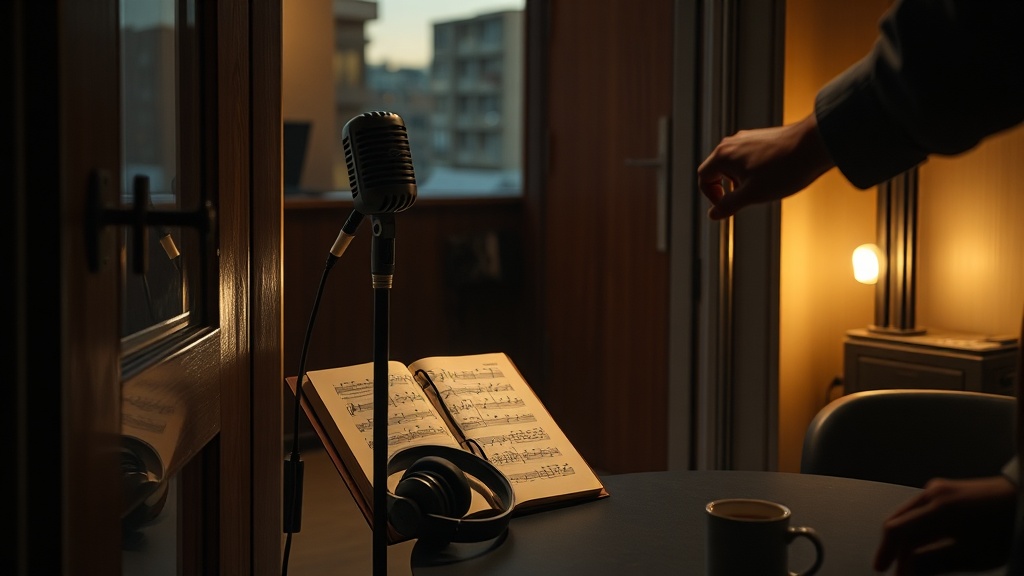
Lee also said she plans to sing more in the future.
It is a short sentence, but it carries movement, intent, and a sense of duty to the music.
A new song is always an ending and a beginning at the same time.
That is why this announcement is not only about looking back on a great career. It is also about asking where that career goes next.
Why does one return feel so large?
The answer is simple.
When a voice has been quiet for a long time, people hear it more intensely when it returns.
Listeners do not hear only the melody.
They hear the silence before it, the waiting, the pause, and the decision to start again.
That is why this news reads as more than a song release. It reads as a signal that activity is picking back up.
The music business moves fast.
Every day brings a new name, and every platform pushes people toward the next short burst of attention.
In that world, seven years is an especially long gap.
However, for some artists, a long break is not empty time. It is time to gather force.
Some wait to say the right thing. Others wait to keep their voice true. Silence can sometimes be part of the work.
Is waiting a burden or an asset?
Waiting can be heavy.
The longer fans wait, the more they hope.
The more they hope, the more room there is for disappointment.
If a new song arrives after seven years, people will naturally ask why it took so long.
In a market built around speed, the comeback lane is narrow.
However, waiting can also become an asset.
The fact that people kept waiting is proof that the voice still matters.
For an artist like Lee Sora, who is known for a distinct tone and a rare way of delivering emotion, a long pause often leaves behind resonance rather than absence.
Audiences do not remember only what is easy to consume.
They also hold on to voices that feel irreplaceable, voices that seem to carry a mood no one else can fully copy.
A long pause can build expectation instead of weaken it.
Still, expectation has to be earned again.
The song itself must carry the weight of the return.
So this release is not judged only by the fact that it exists.
People will ask what kind of present it gives to the name Lee Sora.
They will listen not only for the gap, but for the meaning that bridges it.

From the supportive side, this is easy to understand.
A long-awaited song is not just fan service. It is an artist reappearing in the present tense.
Music is not only a product. It is also a record of time.
When that record starts again, fans are not only revisiting memory. They are receiving a new feeling in the present.
And in everyday life, that kind of feeling can be a real comfort.
But long gaps bring real risks
There is another side to this story.
Not every return ends well.
Public taste changes, and the platforms that shape music have changed too.
In the past, a comeback could hold attention for a long time. Now attention moves quickly, and the next headline is always waiting.
Because expectations are so high, disappointment can feel even sharper if the song does not land.
Critics will also point out that one release can carry too much symbolism.
When the return story becomes bigger than the song, the music itself can get pushed aside.
That is a real risk.
A new release should be heard as music first, not only as a sign of comeback.
If the public focuses only on the headline, the track may end up judged by the story around it instead of by its own sound.
There is also the question of follow-through.
Lee’s comment about singing more often suggests a broader return, but only time will show how far that plan goes.
One release can create excitement. Real activity, though, takes repetition.
In other words, the song is the starting line, not the finish.
A comeback gets its real meaning from what comes after it.
That is why skepticism matters too.
If the return is sincere, it will show up not just in one article, but in more songs, more stages, and more moments with listeners.
The real measure is not the announcement. It is the rhythm that follows.
Why Lee Sora still matters
Some names age differently from others.
For some artists, a new song is just another release.
For others, one sentence can shift the mood in the room.
Lee Sora belongs closer to the second group.
That is why a seven-year gap does not feel like a simple delay. It feels like a test of whether the name still lives in the present.
People often think of music in market terms, but trust matters just as much.
Over time, trust is built through consistency, identity, and the feeling that an artist knows exactly who they are.
A singer does not need to release constantly to remain meaningful.
Sometimes a long silence can make the next appearance even more powerful, because it reminds listeners that art is not only about volume. It is also about timing.
There is also a human side to this story.
Work is not always a straight line.
Some people slow down. Some step away. Some return when the time feels right.
That does not always mean failure. Sometimes it means adjustment.
Seen that way, Lee Sora’s new song is not just a music headline. It is a reminder that a calling can continue even after a quiet season.
- Waiting shapes the listener’s emotion.
That emotion makes the return feel bigger. - A gap can be risky, but it can also create meaning.
Meaning is what people remember. - A comeback is not complete when it is announced.
It becomes real only when the singing continues.
So what have we really been waiting for?
This story comes down to one simple fact.
Lee Sora will release a new song next month, and she wants to sing more going forward.
Inside that one announcement are comeback, expectation, judgment, and a fresh beginning.
From one angle, it is a welcome return.
From another, it is a high-stakes step into a changed music world.
Yet both views point to the same truth.
An artist’s return is never explained by one result alone.
It matters why she stepped away, and it matters even more why she is coming back.
It also matters what kind of pace follows after the first song arrives.
This is where the story now opens up.
In the end, a song after seven years is not just a reappearance.
It is the end of one waiting period and the start of another kind of time.
Whether the long pause becomes a strength or a burden is still to be seen.
But one thing is clear: Lee Sora is still very much part of the present.
Will this return feel like a reward for waiting, or the start of a bigger test? That question now belongs to the listeners.
