From December 2 to 12 next year, Changdong in Seoul will host 2027 FANOMENON.
This event puts K-pop at the center of a broader K-culture push.
The plan to link Seoul and Los Angeles turns the festival from a local event into an international stage.
However, the bigger the fan event, the louder the questions about commercialization, safety, and cultural imbalance become.
In the end, this festival becomes a test case for the future of Hallyu, or the Korean Wave.
A festival that starts in Changdong and reaches the world
The announcement that a large K-culture festival called 2027 FANOMENON will run in Changdong, Seoul, from December 2 to 12 next year is more than a date on a calendar.
The name itself feels bold and unusual, and so does the concept: K-pop at the center, with performances, awards, and fan-driven programs woven into one cultural experience.
Add the idea of a follow-up festival in Los Angeles the next year, and the event takes on a meaning far beyond South Korea.
In simple terms, it becomes an experiment in how far Korean pop culture can travel.
Big cultural festivals always have two sides.
On one side, they open new markets, energize a city, and remind people just how powerful K-pop has become.
On the other, they raise familiar concerns: too much commercial pressure, overheated fandom competition, and a sense that the event may be aimed more at consumers than at communities.
FANOMENON stands right on that line.
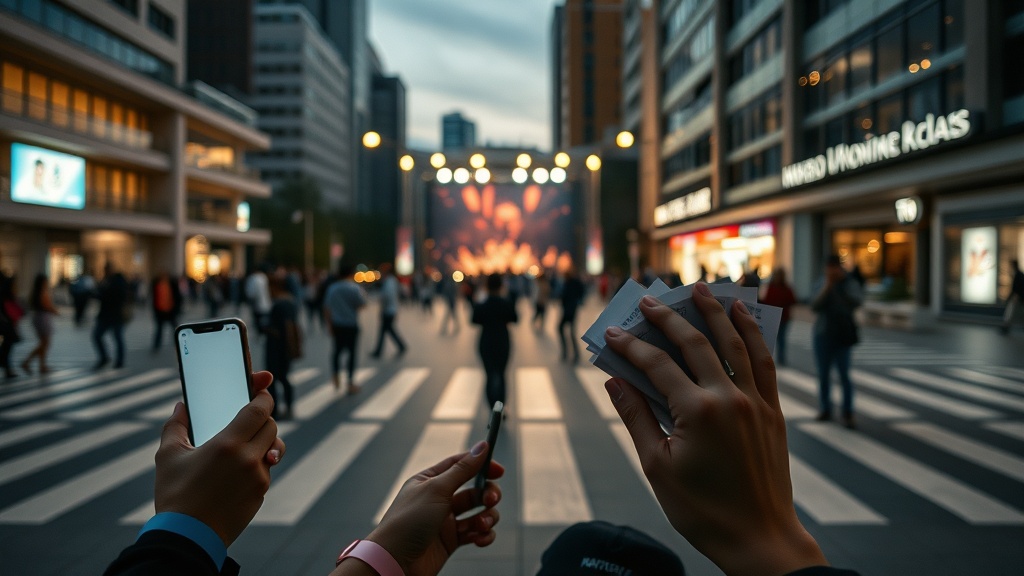
The core of this festival is not just performance, but connection.
Seoul and Los Angeles, local fans and overseas fans, the stage and the awards ceremony, spending and experience all get tied together.
That is why FANOMENON is not simply a concert series with famous artists.
It is a stage for showing how Hallyu speaks to the world.
Still, it is worth asking who that conversation includes, and who it leaves out.
Expansion or another commercial spectacle?
The case for expansion is strong
Clear enough.
K-pop is no longer just a music genre. It is an industry, a brand, and a global language of sorts.
FANOMENON appears to be the next step in that growth.
Changdong matters too.
Large cultural events do not only benefit central business districts. They can affect neighboring areas through more foot traffic, higher hotel demand, stronger transit use, and more spending at restaurants and shops.
If a district comes alive, city finances can gain room to breathe, and culture becomes more than a product. It becomes a resource that moves a community.
The Los Angeles plan carries symbolic weight as well.
When culture that started in Seoul is extended to LA, it signals more than overseas promotion. It asks whether Korean culture can connect directly with English-speaking audiences on their own ground.
International festivals always carry that kind of promise.
Culture grows when it crosses borders, but it is also judged more harshly there.
Supporters also point to fan participation.
Fans are not passive buyers. They spread the content, shape the atmosphere, and help complete the event itself.
A festival that invites them to gather, cheer, and share the results of an awards ceremony can create a stronger sense of engagement.
In an era shaped by online learning and digital communities, many people want more than to watch. They want to take part.
If a festival brings people together and lets them see their tastes and emotions reflected in one place, that has real social value.
Seen this way, FANOMENON also looks like an investment.
Not just in short-term revenue, but in long-term brand value and international trust.
If Korean culture wants to stay visible on the world stage, it needs more than viral moments. It needs sustainable planning.
That is why supporters describe the festival as a step forward for K-culture, local revitalization, and international exchange all at once.
The pro side is simple.
The more a domestic event expands globally, the stronger its cultural reach becomes.
The city gains energy, fans gain experience, and Korea gains brand power.
This festival aims to prove that Hallyu is still a living, growing force.
However, power also brings responsibility.
The larger the crowd, the more important safety becomes.
The higher the expectations, the easier disappointment becomes.
For a massive fan event, crowd flow, order, accessibility, and coexistence with local residents are not side issues. They are the main issues.
If the operation beneath the bright lights is weak, culture can quickly turn into noise.
Good intentions are not enough
The hard questions come first
Sharp enough.
Critics and skeptics tend to begin with commercialization.
Awards and festivals should be about cultural recognition and shared enjoyment.
But once the scale gets large, sponsorships, ticket revenue, media exposure, and fan spending move to the front.
When that happens, the business model can become more visible than the content itself.
Culture then risks being reduced from an experience to a packaged product.
Fan energy is also a strength with a shadow side.
When support stays passionate, it is productive.
When competition and display take over, tension grows.
Large events can leave hidden costs even when there is no obvious financial burden.
Traffic jams, hotel strain, overheated shopping districts, and resident fatigue are the real-world faces of a festival that looks flawless on stage.
A sold-out event does not automatically mean everyone benefits.
There is also the issue of cultural imbalance.
K-pop is one of Korea's strongest exports, but that does not mean it is the only culture that matters.
If the success of one genre is emphasized too heavily, other art forms, other generations, and other tastes can be pushed to the edge.
Diversity should not be decoration. It should be the foundation.
Yet large events often spotlight the loudest and most visible elements while leaving the delicate ones in the background.
The international plan raises another question.
Seoul and Los Angeles are connected by imagination, but a format that works in one place may not land the same way in another.
Without local partnerships, cultural context, and long-term cooperation, a global event can fade into a one-time buzz.
In that sense, global reach looks simple from far away, but it actually demands more adjustment, more empathy, and more ethics.
True internationalism is built through care, not just movement.
That is why critics ask whether the festival is truly expanding culture or simply amplifying an already powerful K-pop industry once again.
The question is not cynical. It is cautionary.
As the stage gets bigger, issues like ethics, management, community agreement, and balance in fandom culture become more important, not less.
Careful planning matters more than blind confidence.
The concern is straightforward.
The bigger the scale, the easier it is for culture to become commercial.
The stronger the fan energy, the heavier the duty of safety and order.
A festival should shine, but its light should not hide the shadow.
At this point, what matters is not winning the argument.
What matters is asking what kind of cultural consumption we want, and what kind of city and community we hope to build.
Numbers like rising property values or tourism growth cannot explain everything.
At the same time, excitement and headlines cannot solve real-world problems either.
FANOMENON is the name of that balance test.
What will this festival leave behind?
Hope, but with conditions
That much is clear.
2027 FANOMENON will be a major stage for showing whether K-pop and K-culture can still capture global attention.
The plan to begin in Changdong and extend to Los Angeles symbolizes a wider international path for Hallyu.
But success will depend less on scale than on the quality of execution.
Only when safety, diversity, coexistence with the neighborhood, and a design that reduces excess all work together will the festival be remembered for the right reasons.
Supporters speak of expansion and energy.
Detractors warn of commercialization and imbalance.
Neither side is entirely wrong.
In fact, the event may become stronger precisely because both views exist at the same time.
Culture always gathers people.
Good culture also pays attention to the space between them.
In the end, what FANOMENON should leave behind is not just one dazzling night or one loud headline.
It should leave a deeper question for Hallyu itself: how far can culture expand, and what must be protected along the way?
So how should readers see this festival?
As a welcome leap forward, or as something that needs far more preparation?
