Gyeongnam's youth busking program has broadened since it began in 2023.
What started with songs now includes instrumental music and dance.
A small street performance is now a test case for local cultural policy.
Youth freedom of expression and the public's responsibility to manage shared space now sit side by side.
This shift raises a bigger question: how do you grow participation without losing balance?
Who Owns the Street Stage? Gyeongnam Youth Busking Hits a New Stage
The youth busking challenge launched in 2023 is entering a new phase in 2026.
Gyeongnam Province has changed the format so it now welcomes not just singing, but also instrumental performance and dance.
It may look like a small policy tweak. However, it says a lot about how the region thinks about youth support.
What a local government allows, encourages, and protects shapes the character of public space itself.
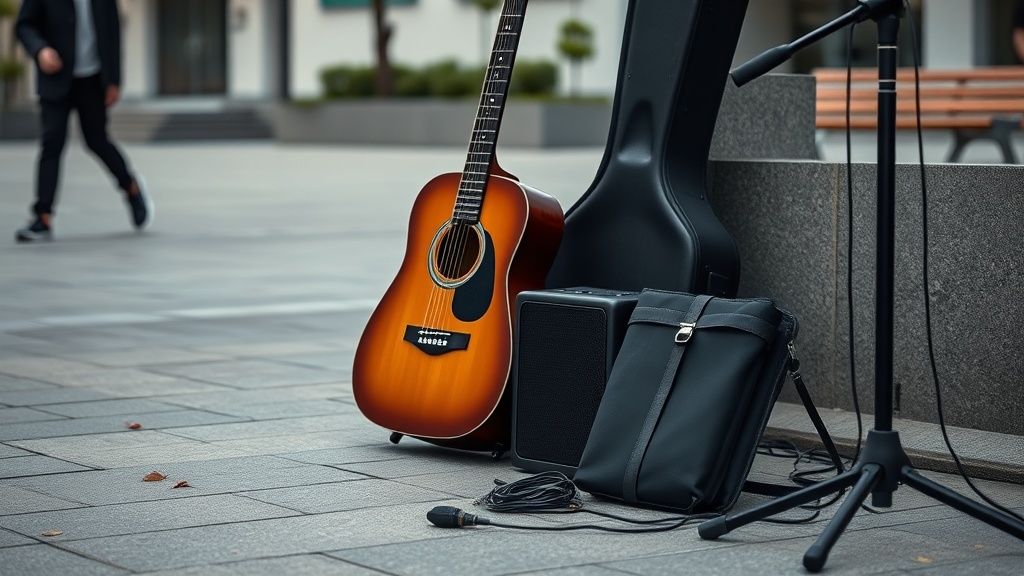
Busking is live performance in open places like streets, plazas, and parks, where artists meet audiences face to face.
Unlike a theater stage, it does not come with polished lights, heavy equipment, or strong buffers from the outside world.
That limitation is also its appeal. It feels immediate, raw, and alive.
For young people, that can mean a real chance to be seen. For a city, it can mean a burst of energy in an ordinary afternoon.
By widening the program, Gyeongnam is saying that youth talent deserves a wider stage and a wider definition.
The change matters because culture policy is never only about entertainment.
It is also about who gets to belong in public, and whose voice is heard in shared spaces.

However, every expansion brings a new set of questions.
Is the stage truly bigger, or has only the rulebook grown larger?
Allowing more genres sounds positive, but it can become empty symbolism if support does not follow.
That is why this policy is more than a cultural event. It is a measure of whether the government can turn good intentions into something lasting.
Not Just Singing: Why Diversity Matters
Diversity is a strength.
From the supportive point of view, this change makes perfect sense.
Young culture is not limited to one style. People express themselves in different ways on the street.
Some sing to share emotion. Some play instruments to shape the mood. Others use dance to fill the whole space with movement.
If the old system focused only on singing, it naturally narrowed the field of who could join.
Even talented young people could be left out if their strengths did not match the format.
So adding instrumental music and dance is not just adding more slots. It lowers the barrier to entry.
Youth support should not be about creating a stage for a few chosen performers. It should be about giving more people a first real chance to meet an audience.
Local communities also benefit.
When busking becomes more varied, people stay longer, stop more often, and enjoy small moments of surprise in daily life.
In a province like Gyeongnam, where cities are trying to strengthen both culture and tourism, youth busking can become a modest but effective cultural asset.
Students, office workers, and parents rushing through their day may all pause for a few minutes and breathe a little differently.
A policy that welcomes variety can return confidence and visibility to young people.
That matters because many young adults are under heavy pressure: job competition, rent, debt, and the constant feeling that they must keep up.
In that context, a stage is not just a hobby. It can be a way to recover rhythm, identity, and connection.
Seen this way, Gyeongnam's expansion is not only arts support. It is also a form of care for mental well being and social belonging.
There is another benefit as well: the local arts ecosystem.
When creation and performance happen locally instead of only in major national venues, young people gain real world experience earlier.
That experience can support later studies, lifelong learning, startup ideas, or career choices.
In other words, busking is not a one time show. It becomes a small training ground where talent, nerve, and taste are built over time.
What young performers often need is not a perfect stage, but a stage where they can begin.
Supporters make exactly that point.
Access first, polish second.
Possibility first, strict control second.
When public policy treats young people seriously, it often starts by lowering the threshold to participation rather than by demanding perfection from the start.
From that angle, Gyeongnam's broader format looks like a practical choice.
Is Expansion Enough? A Question of Staying Power
Reality is less forgiving.
From the skeptical side, the bigger issue is not the wider menu of genres but the quality of day to day operation.
It is relatively easy to say the program now includes singing, instruments, and dance. It is much harder to provide the right spaces, times, safety measures, staffing, and budget year after year.
So it would be premature to call the change a success just because the category list is longer.
Busking happens in public space.
That means it always comes with questions about noise, complaints, traffic flow, and safety.
As crowds grow, nearby businesses and pedestrians also feel the pressure.
Weather changes, seasonal shifts, and location differences can quickly complicate the schedule.
Even when young people are the stars, the administrative burden behind the scenes is very real.
There is also the risk of uneven attention.
Singing is broadly popular. Dance catches the eye. Instrumental performance may need more equipment and more space.
So a program that looks diverse on paper can still end up spotlighting only a few familiar formats in practice.
If that happens, the policy could narrow competition instead of widening opportunity.
Youth support can also sound bigger than it is.
If the government offers performance slots but no follow up, no training, no networking, no recording help, and no local promotion, the result may be just a single event.
Young performers need the chance to appear on stage, yes. But they also need the path that comes after the applause.
That is why expansion is only the beginning. Sustainable design matters more than a one time launch.
Money is part of the issue too.
Culture always competes with other needs.
Education, health, care, and welfare are all fighting for priority in public budgets.
No one is saying culture is a luxury. However, the public still has to ask how much support is realistic, how long it can last, and what kind of return it should produce.
For an expanded program to last, management has to come before celebration.
That is the core warning from the skeptical side.
Wider access does not automatically change lives.
For the policy to work, participation, safety, local fairness, and aftercare all have to be built in from the start.
Other places offer a useful reminder.
Some communities raised youth culture budgets but saw low turnout because venue booking and promotion were weak.
Others launched with great fanfare, only to cut the program a few rounds later because staffing was thin.
Those examples show that youth policy must be judged by structure, not by slogans.
So the concern is not simple resistance.
It is a demand for responsibility after the headlines fade.
A policy should not only create a performance moment. It should make continued participation possible.
Otherwise, what remains for young people may be fatigue instead of pride.
That is why this criticism is not just conservative pushback.
It is a practical check on whether the program can survive its own growth.
Young people bring the energy. Public institutions must provide the structure.
Only then does a street performance become part of a city's culture rather than a short lived scene.
Support and Management Must Stand Together
In the end, balance is the real issue.
Expanding the youth busking challenge is a positive signal.
However, for that signal to matter, the province has to match openness with depth: steady operation, equal access across regions, and careful safety management.
Culture policy always lives between freedom and regulation, possibility and limit.
Gyeongnam's choice may be remembered as a sign that it recognizes the diversity of youth culture.
At the same time, it is a test of how public institutions treat young people.
Young people are not just recipients of support. They are also people who can reshape a city.
When that fact is taken seriously, busking becomes more than a performance. It becomes part of a community's shared language.
Busking is, above all, about people.
A stage that brings together singers, instrumentalists, and dancers is also a place where different lives meet in one public square.
For that meeting to continue, young talent, public patience, and government responsibility all have to work together.
When they do, street music stops feeling like noise and starts sounding like the breath of a city.
The Question Left Behind
Gyeongnam's expanded youth busking challenge lowers the barrier to participation and points to a broader direction for local culture policy.
A stage that includes singing, instruments, and dance clearly carries more possibilities.
But those possibilities will only last if budget, management, safety, and follow up support move together.
That is when youth freedom of expression and public responsibility can truly meet in the middle.
So the final question is simple.
Will we give young people only one stage, or build a path where they can keep standing?
The answer could shape not only Gyeongnam's cultural policy, but also the direction other regions choose next.
Youth busking may look small, but it is one of the clearest mirrors of how a community sees its young people.
