This is his first official studio album in 13 years and arrives as BigBang marks its 20th anniversary.
T.O.P is reported to have taken the lead on production, presenting a collection of songs he has developed over many years.
Preorders begin March 20, and the album will be released on online music platforms at the announced time.
T.O.P breaks a long silence with Another Dimension
Quick summary.
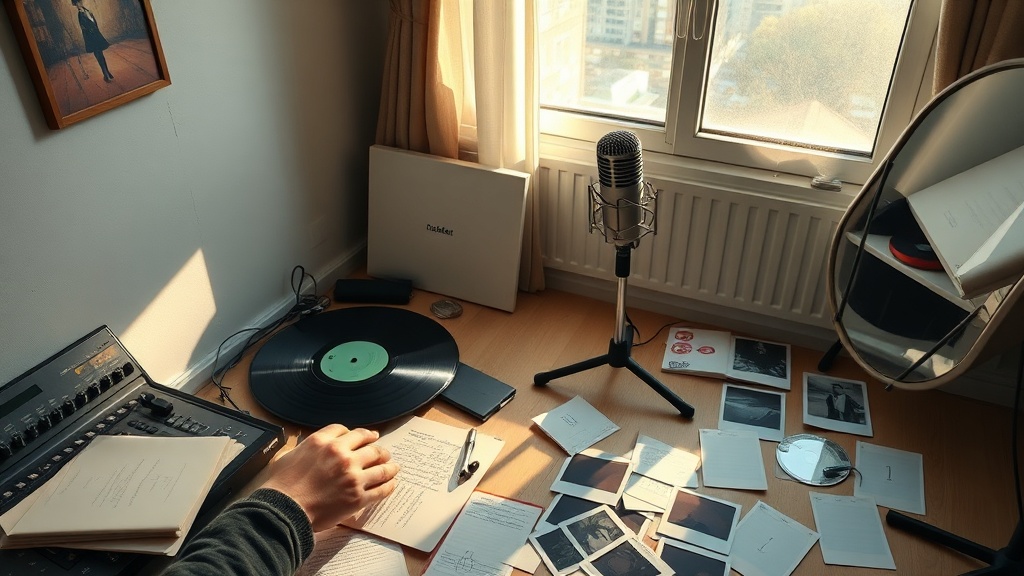
Most important is that he personally produced the material gathered for this single album.
Singer and actor T.O.P (born Choi Seung-hyun) will release his debut studio album, Another Dimension, on April 3, 2026, at 6 p.m. KST (Korea Standard Time).
The record is his first formal full-length release since the 2013 digital single "DOOM DADA," making this a 13-year gap between full studio efforts.
According to his team, T.O.P selected and refined a number of songs he had written over time and oversaw production himself.
This comeback coincides with BigBang's 20th anniversary and signals both a personal revival and a sense of responsibility.
The album title, Another Dimension, suggests a deliberate attempt to broaden his musical range and to reframe his public persona from multiple viewpoints.

The past provides the context.
"When I worked on music, I could only breathe in front of the microphone."
T.O.P's return is more than a resumption of activities.
He debuted with K-pop group BigBang in 2006 and has since built a career that includes music and acting.
However, after legal consequences in 2016 connected to marijuana use, his public activity slowed and he focused on acting and a more deliberate, private public presence.
Meanwhile, his appearance in Netflix's Squid Game season 2 (2024) marked a visible acting comeback, and around BigBang's 20th anniversary he began posting a short video that hinted at new music.
He also launched a new account and, through his company TOPSPOT PICTURES, started sharing album details in stages.
He produced the album himself.
As the credited producer, T.O.P's role goes beyond singing.
Sources say he reorganized and polished many tracks written in his studio over years, shaping them into a coherent album.
The release strategy prioritizes online music platforms, which aligns with how most listeners discover and stream music today.
On the one hand, this process reveals the artist's professional identity and creative choices.
On the other hand, designing a rollout that relies on online platforms is a practical recognition of the current music business, where streaming and digital campaigns are central.
There is reason for optimism.
Positive views are easy to find.
First, releasing a solo studio album during BigBang's 20th anniversary creates built-in attention from both a loyal fanbase and a wider audience.
Second, his direct involvement in production raises hopes for a distinct, focused artistic statement.
Moreover, material accumulated during a long break can reflect artistic maturity.
If the album ties into BigBang anniversary events and leverages the group's international legacy, it could attract both chart success and critical interest.
Strategically, the preorder and online release model aims to generate early consumption, which can produce immediate chart impact and support follow-up activities.
Strong fan mobilization might lead to concert demand or a tour, which would be important for a sustainable solo career.
T.O.P's musical return reads as a declaration of personal recovery and a bid to reconnect with fans.
There are real worries.
Past controversies could resurface.
Critics and skeptics remain.
The most practical concern is that the 2016 controversy may be recalled by the public and media.
Reentering the spotlight in entertainment often depends on public tolerance, and time does not automatically erase past disputes.
On the other hand, a longer-term challenge is whether a 13-year gap leaves him out of step with current musical trends and listener preferences.
The music market has shifted decisively toward global streaming platforms and fast-moving online marketing; if the album's sound does not meet current expectations, commercial results may lag.
Further, as a solo artist he no longer benefits from the collective infrastructure and promotional momentum that a major group provides.
That places pressure on his communication strategy, live performance draw, and the development of long-term revenue streams.
Therefore, the skeptical perspective frames this comeback as a test: can artistic achievement and commercial reality be balanced?
The critical question is whether T.O.P's songs will resonate with fans, critics, and the wider public.
Comparison helps put this in perspective.
T.O.P's release should be read as both personal artistic recalibration and a trial of his adaptability to the industry's current shape.
He has built a multifaceted public profile by working in music and acting, and this album continues that trajectory.
Comparing his path to other artists who returned after long absences is useful.
Successful examples typically combine clear storytelling, strong promotion, and musical novelty to meet expectations.
Conversely, returns that disappointed usually lacked creative depth or effective market strategy.
So T.O.P's outcome will likely depend on three connected factors: the album's artistic quality, the promotional plan that leverages online tools, and a sustainable career strategy.
If these elements align, this comeback may open a new phase rather than just mark a one-off recovery.
To summarize — and to ask you.
In short, Another Dimension is both a personal healing project and an artistic statement tied to BigBang's 20th anniversary.
Its strengths include T.O.P's hands-on production and the narrative weight of songs written over many years.
Its risks are the renewed attention to past controversy and the difficulty of bridging a 13-year gap with current music tastes.
The album's success depends on its musical quality and how well it reconnects T.O.P with listeners.
What follows next — music videos, live shows, interviews, and collaborations — will shape whether this is the start of a sustained solo chapter.
We ask readers: how do you evaluate T.O.P's return? Do you see this as a meaningful artistic comeback or a risky reentry?
