Its 20-year record and influence on the indie music scene are being reexamined.
The return after a downsizing controversy highlights a clash between the program's mission and production realities.
The coming lineup reads like a pilot testing the balance between public value and popular appeal.
"Back on stage," but questions remain
Started in 2004
The first concert opened in April 2004.
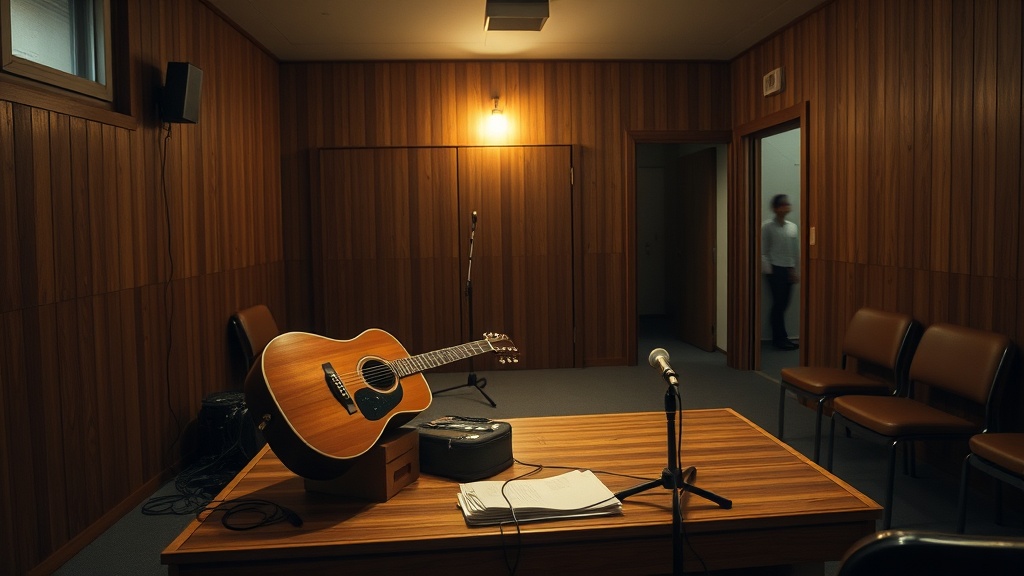
The venue's intimate layout brought musicians and listeners very close.
Over time, Space Gonggam built a reputation through ongoing experiments and careful documentation.
At the beginning, EBS remodeled a first-floor hall at its headquarters to create a roughly 300 m2 (about 3,200 ft2) venue.
Seating held only 151 people, and the distance from the stage to the front row was about 3 meters (10 feet).
That closeness was not merely convenient; it was a deliberate design choice to deepen the listening experience.
Space Gonggam used the benefits of a small space to combine live recording and video, developing into a standalone cultural broadcast asset.
The purpose is clear
Public interest stood at the program's center.
It kept distance from commercial metrics and favored musicianship and experimentation.
As a result, artists who were not yet widely known found attention and opportunity here.
Bands such as Guckkasten, Jang Kiha and the Faces, Romantic Punch, Daybreak, and Silica Gel expanded their careers after appearing on the show.
The broadcast therefore acted as more than a concert relay; it became a pillar of South Korea's indie music ecosystem.
Moreover, because EBS is a public broadcaster in Korea (a state-supported educational network), the program's value carries an added civic dimension.
How broadcasts and attendance work
Seats are assigned by lottery.
Fans sign up on the website and winners are drawn for each performance.
The show airs around midnight and reaches audiences again through on-demand replays and mobile apps.
That system reduces geographic barriers, but production costs and late-night scheduling remain constraints.
In particular, terrestrial broadcast slots are tied to ratings pressures, making it hard for public-interest programs to find a sustainable model.
EBS must therefore balance its identity as an educational broadcaster with the realities of popular culture programming.
Public good or practical reality — the core of the downsizing debate
Downsizing sparks debate
The decision to scale back the program caused a significant public reaction.
Reportedly, the shift to a once-weekly performance schedule stemmed from budget and ratings issues.
However, voices worried about cultural loss argued the move went beyond simple cost savings.
Changes to broadcast schedules may look like small managerial choices, yet their ripple effects are broad.
If a trusted platform in the indie scene shrinks, exposure opportunities and industry connections weaken.
Meanwhile, young musicians losing platforms means a social and cultural cost that goes beyond one show's cancellation.
Arguments for downsizing
Supporters point to production realities.
Broadcasters operate under limited budgets and constant ratings pressure.
When audience returns do not match costs, reallocating resources becomes inevitable.
Those in favor emphasize financial and operational efficiency.
They argue EBS should prioritize its core role in education and learning support, given its institutional mandate.
Also, because online streaming and on-demand services expand access, reducing the number of live broadcasts could be a rational choice.
From this viewpoint, allocating scarce resources to where they create the greatest public benefit makes sense.
For example, focusing budget on educational programming or investing in new digital platforms could reach more learners.
If online expansion succeeds, more viewers may encounter content than through limited broadcast slots.
Yet this calculation struggles to quantify cultural discovery and long-term artistic growth in monetary terms.
Arguments against downsizing
Opponents worry about losing public value.
Space Gonggam is cultural infrastructure that resists simple market valuation.
Downsizing risks weakening the indie ecosystem.
Critics place weight on public interest and cultural continuity.
Space Gonggam is not merely a TV segment but a system that discovers and documents new music.
If that system falters, career pathways for young musicians shrink and cultural diversity narrows.
Concrete examples show bands that accelerated after appearing on Space Gonggam.
These artists grew through a public-interest platform rather than mainstream industry channels.
If a public broadcaster abandons small-genre and experimental documentation, discovery will fall increasingly to the private market.
Moreover, low ratings alone should not be the sole measure of a program's worth.
Cultural assets are not well explained by short-term efficiency; they provide long-term learning and creative foundations.
From this perspective, institutional protections and diversified support may be preferable to simple budget cuts.
Below are practical operational suggestions related to resuming performances.
The dispute over cuts and restoration ultimately comes down to redesigning systems and reallocating resources.

There must be at least one paragraph of space between images, according to layout guidance.
That rule aligns with reading-flow principles that guide how a reader's eye moves through the page.
There are alternatives
A collaborative model can help.
Public broadcasters, local governments, and private sponsors should explore hybrid partnerships.
At the same time, full use of online platforms can diversify revenue and broaden access.
Specifically, rotating programs through regional cultural foundations can create a touring model.
Collaborations with universities and music schools could produce content for education and research.
In addition, revenue streams such as paid on-demand replays, premium video packages, and merchandise can be developed.
These steps move the conversation beyond mere broadcast frequency to long-term program resilience.
Policy support would amplify these effects.
Cultural policy that connects small venues and broadcast programs can share financial burden while preserving public goals.
Examples include archiving concert recordings, repurposing material for education, and local talent development initiatives.
These measures can align public value with practical funding solutions.
Conclusion: what do we lose and what do we keep?
The worth of Space Gonggam is hard to reduce to short-term ratings.
Yet budget realities directly constrain how the program operates.
Ultimately, decisions must balance public interest and sustainability.
A public broadcaster's role is not only to supply content but to protect a platform for cultural discovery
Preserving that role requires creative redesign of operations and funding priorities.
In short, the return of Space Gonggam is welcome, but it should be a question mark, not an endpoint.
Ensuring the program's future demands participation from producers, viewers, and policymakers.
To summarize: first, Space Gonggam has high value as a cultural public good.
Second, accept production constraints but pair that acceptance with innovative funding and partnership models.
Third, a hybrid approach that links online and offline activity can be a viable path forward.
Which option do you support?
We invite readers to share their views on Space Gonggam's future.
