Blackpink marked the release of their mini album DEADLINE with large-scale promotional events staged simultaneously in China and Japan.
YG Entertainment (Blackpink's agency) teamed up with Tencent Music Entertainment Group (TME), a dominant Chinese music platform, to light up 20 Chinese cities with giant billboards and pink-themed landmarks.
Meanwhile in Tokyo, a Shibuya pop-up store generated long lines and sold-out limited goods, signaling strong local demand.
This campaign blends live experiences and online listening into a single, multifaceted marketing effort.
Fandom's Large-Scale Campaign: Success or Excess?
Overview
In early 2026, Blackpink released their mini album DEADLINE. YG Entertainment and TME executed a major offline promotion tied to the launch.
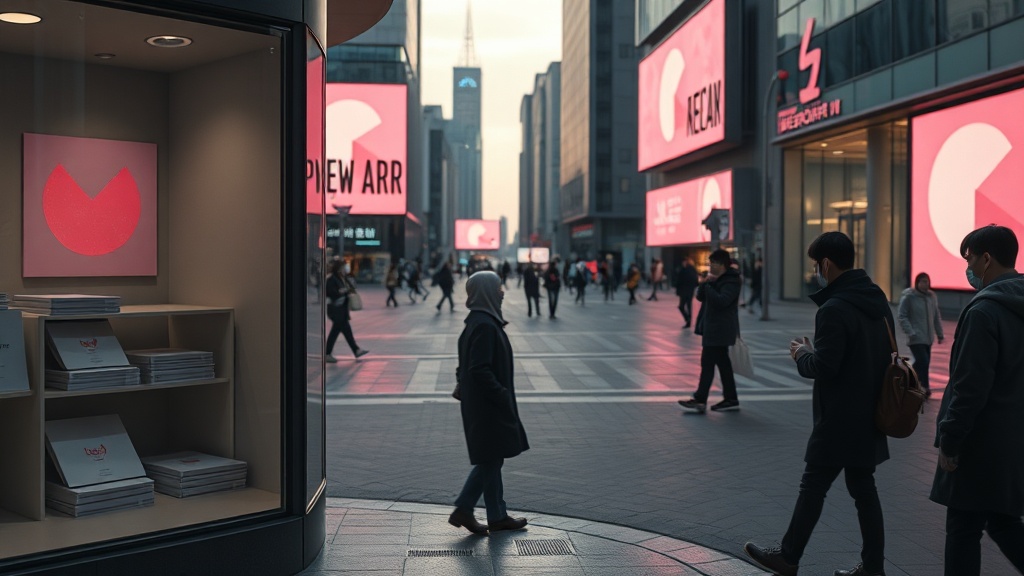
In China this became one of TME’s largest offline rollouts to date: Beijing, Shanghai, Guangzhou and other major urban centers saw public squares, shopping malls and skyline displays bathed in Blackpink’s signature pink.
The title track GO’s music video played repeatedly on oversized screens, and in Shanghai the Dolby House Shanghai hosted a Dolby Atmos-based immersive listening room (Dolby Atmos is a spatial audio format that places sound around the listener).
By contrast, Japan’s activity centered on a Shibuya pop-up that drew early-morning crowds and quickly depleted limited-edition merchandise.

The campaign went beyond simple publicity to link in-person experiences with commercial consumption.
It deliberately mobilized fandom behavior to drive on-site merchandise and content sales while also pushing streaming numbers and other digital consumption.
However, the effort also exposed operational, social and economic ripple effects that large public gatherings bring.
How the China Promotion Unfolded
The China leg stood out for scale and for the depth of local collaboration.
TME selected 20 cities and booked major billboards and mall displays to create synchronized visual impact across regions.
Each local activation was tailored to the city’s audience, leaving a coordinated, nationwide impression.
Notably, the Dolby Atmos experience in Shanghai moved beyond passive viewing to a designed, immersive listening event.
This framed the music itself as a premium, experiential product—not just a streamable track.
From a business viewpoint, partnering with a large local platform amplified cost efficiency.
TME’s distribution and media network magnified offline exposure and helped the campaign reach more listeners online through earned coverage and social sharing.
Moreover, city-level segmentation based on local spending power and fandom density suggested a higher potential ROI than a one-size-fits-all campaign.
Localized experiences strengthen fan loyalty and convert that loyalty into music and merchandise sales.
On the other hand, large crowds introduce tangible safety and operational burdens.
Staffing, crowd flow control, regulatory compliance, waste management and noise are immediate, concrete costs that scale with event size.
Reception in Japan
The Shibuya pop-up demonstrated that, even in a streaming era, a physical location drives attention and urgency.
Long opening queues and rapid sell-through of limited goods highlighted the value of in-person activation.
Visual merchandising and tightly timed drops created high short-term engagement and conversion.
Commercially, scarcity drove sales: limited-edition goods commanded immediate demand and allowed premium pricing.
However, sellouts also revealed the double-edged nature of scarcity: some fans enjoyed exclusive access while others experienced frustration over availability and perceived unfairness.
Supply-chain agility, local inventory control and decisions about restocks will shape fan sentiment going forward.
Successful on-site sales can be the first step toward broader brand growth.
Yet long lines and shortages also expose gaps in event operations.
Promoters must ask how to protect fan experience and fairness in future activations.
The Pro Case: Why Large Campaigns Make Sense
The arguments in favor are straightforward.
Supporters say that large-scale, offline promotions translate quickly into brand visibility and revenue.
In-person experiences create impressions that a simple stream or post cannot replicate.
In music, experience is differentiation.
Unlike a single click on a streaming platform, an event lets fans feel physically connected to an artist.
That connection can deepen loyalty and spur sustained music and merchandise consumption.
Local partners also help spread costs and raise effectiveness.
Companies like TME bring distribution, local media relationships and logistical know-how that accelerate market penetration.
For marketing budgets, that can mean more visible outcomes in a shorter time.
From a revenue perspective, on-site merchandise and limited goods often yield higher margins.
Scarcity lets promoters price items at a premium and capture direct profits, which can then fuel follow-up online campaigns and streaming growth.
Proponents view large activations as strategic investments that can pay off in visibility and market positioning.
They argue that the short-term costs are justified by long-term brand gains and clearer local standing for global acts.
The Con Case: Risks and Limits
Concerns are also substantial.
Critics argue that big offline shows can produce short-term spikes but leave longer-term problems.
First, public safety and community disruption.
Large crowds can disrupt traffic, generate noise and cause waste management issues, triggering conflicts with local workers, merchants and residents.
Second, financial uncertainty.
These campaigns require heavy up-front spending.
If public response falls short of expectations, the losses are immediate and significant.
Third, unequal fan experience.
Limited drops and open-run tactics favor highly committed fans while disadvantaging casual supporters, creating resentment and potential factional splits within fandoms.
Fourth, sustainability concerns.
Repeated large events can strain local resources, raise environmental footprints and eventually fatigue fan communities.
On that note, long-term viability depends on balancing commercial aims with environmental and social costs.
Sustainable campaigns must consider community impact and avoid short-term gains that leave lasting problems.
Industry and Social Implications
This promotion illustrates how artist brands now generate value beyond recordings—through merchandise, licensing and strategic partnerships.
As a result, entertainment firms now manage complex operations that include finance, legal compliance and risk management alongside creative work.
Local partnerships are essential but require careful navigation.
Working with regional platforms speeds market entry, yet it also demands sensitivity to local rules, tax regimes and cultural norms.
Corporate social responsibility emerges as a key measure of success.
Public order, environmental footprint and balance with neighborhood businesses are increasingly part of how campaigns are judged.
A truly successful campaign combines revenue growth with responsible community engagement.
Conclusion and Recommendations
In short, Blackpink’s DEADLINE activations in China and Japan delivered visible gains and reinforced fan-driven experiences.
At the same time, operational risks, social costs and questions of sustainability remain unresolved.
Future campaigns should embed local regulatory compliance, robust safety planning, equitable merchandise distribution and environmental considerations from the outset.
Policy-wise, clearer tax and legal frameworks for cross-border cultural goods would help.
Companies should develop financial plans and risk scenarios before launch and consult host communities early in the planning stage.
Large campaigns are strategic investments that require financial discipline, local partnerships and social consent.
Only then can they deliver lasting value rather than short-lived attention.
Finally, we ask readers: what conditions would make a large offline promotion beneficial for artists, fans and local communities at the same time?
