As if named by Park Bo-gum himself, the show promises warm, unhurried moments.
The first episode aired on January 30, 2026, and offered viewers a new kind of healing television.
Its unpolished, sincere reality prompted strong responses from both the local town and audiences.
Park Bo-gum brings scissors and a ready heart to the village
First steps in 2026.
The series debuted on January 30, 2026.
It airs on Friday nights and runs for ten episodes.
The cast and crew spent a year finding the site and remodeling the space.
That long preparation shows a clear production intent from the planning stage.
However, the program is not a simple entertainment gimmick.
It is a meeting place where beauty services and everyday conversation intersect.
Bogum is presented as a licensed barber (a national certificate holder in Korea), but he also works with his hands on camera.
That practice gives viewers a tangible sense of "real" service rather than staged performance.
On a small island in Muju.
The filming location is Aopseom (Front Islet) in Naedori, Muju-eup, Muju County, North Jeolla Province—known simply as Muju in Korea.
Meanwhile, the show has led to a noticeable increase in visitors to the area.
That change goes beyond short-lived trendiness and has measurable economic ripple effects.
Therefore, it will be important to watch how local businesses and residents are affected over time.
"The cast never stopped pouring themselves into the project."
What the name "Magiccal" carries
A short, firm promise.
The title is a phrase shaped by Bogum's own intent.
It fuses "magic" and "curl," signaling both small, magical changes and hair styling work.
In short, the name compresses the show's identity into a single image.
It sets the emotional and conceptual tone before viewers even enter the barbershop.
To emphasize authenticity, the production minimized scripted lines.
Cast members stick to their roles while revealing human mistakes and feelings.
As a result, viewers read sincerity in clumsy hands and warm conversations.
Sincerity is the program's strongest competitive edge.
Casting, role division, and the chemistry they build
Clear responsibilities.
Bogum serves as barber and shop owner.
Lee Sang-yi works the counter and handles nails.
Gwak Dong-yeon provides cooking and snacks, adding a homely warmth.
Their roles create emotional connections beyond job titles.
On the other hand, the lineup secures realism through practical tasks.
Viewers witness the technical details, mistakes, and learning process.
It is not just celebrity performance but a team at work and at school together.
Thus a new television aesthetic appears at the intersection of "occupation" and "care."

The stills and scenes make the program's mood concrete.
The set is unromantic and unglossed; it is a modest domestic space.
This modesty becomes the viewers' main point of sympathy.
The show's aesthetic arises from arranging people and time, not from big economic capital.
In favor: the power of authenticity-based healing
Authenticity works.
Supporters see the program's sincerity as its central value.
The cast's certificates and practical skills form the foundation for that realism.
In particular, Bogum's barber license (earned during military service) and his attempt at a cosmetology certificate add weight to the show's premise.
These elements show the project does not rely on star power alone.
Furthermore, the village barbershop setting preserves local context.
Barbershop visits create daily conversations with older residents and recreate a form of caregiving.
The services elders receive often deliver emotional comfort beyond mere grooming.
Those scenes draw attention to social isolation and gaps in care with a humane lens.
At the same time, the show produced positive local economic effects.
Increased visitors to Muju and higher sales for small merchants are real fallout from the broadcast.
Therefore, this case shows how media content can contribute concretely to a local economy.
Consequently, a program's cultural and economic value can be measured by regional revitalization as well as ratings.
Psychologically, the value of light healing content is considerable.
Amid modern stress and loneliness, the show offers small, steady consolation.
In terms of emotional care and prevention, brief human contact can create significant ripple effects.
Taken together, these factors explain why Bogum Magiccal widened its social reach.
Against: concerns about glorification and sustainability
There are legitimate worries.
Critics accept the show's positives but raise several concerns.
First, the risk of glorifying "reality."
Although scripts were minimized, editing and direction still shape the story.
Thus the visible "sincerity" may be a curated selection of moments.
Second, uneven local effects could occur.
Rising tourism can benefit certain businesses while pushing up living costs and causing inconvenience for residents.
A short-term boom does not guarantee long-term, equitable development.
Therefore, broadcast makers should consider their social responsibilities and work with local stakeholders.
Third, there are safety and role‑competency issues.
When nonprofessionals do hair, nails, and food, accidents or health concerns can arise.
Clumsy cuts or small mishaps coexist with touching scenes and carry real risk.
The program should publish clear safety protocols, training procedures, and emergency plans.
Fourth, the format's limits as a sustainable show are real.
Initial buzz is strong, but maintaining audience interest long term requires variation and depth.
If the show becomes repetitive or purely decorative, it can quickly lose freshness.
Hence the production should plan evolutions that preserve sincerity while deepening content.
Social agreement and ethical considerations
Balance is required.
The program affects a village and older residents, not just viewers.
Thus production ethics and local consultation are essential.
Broadcasting needs to respect residents' image rights and daily life.
Meanwhile, the community should participate in decisions about tourism management and benefit sharing.
Long-term value comes from agreements between the show, the town, residents, and the crew.
Moreover, services for elders must be seen as an extension of care, not momentary emotional consumption.
To that end, linking with local health resources—basic health checks or safety protocols—should be considered.
For example, basic monitoring systems or emergency response manuals are sensible safeguards (simple systems that check vitals or call for help in emergencies).
Such measures are practical ways the show can honor its social responsibility.
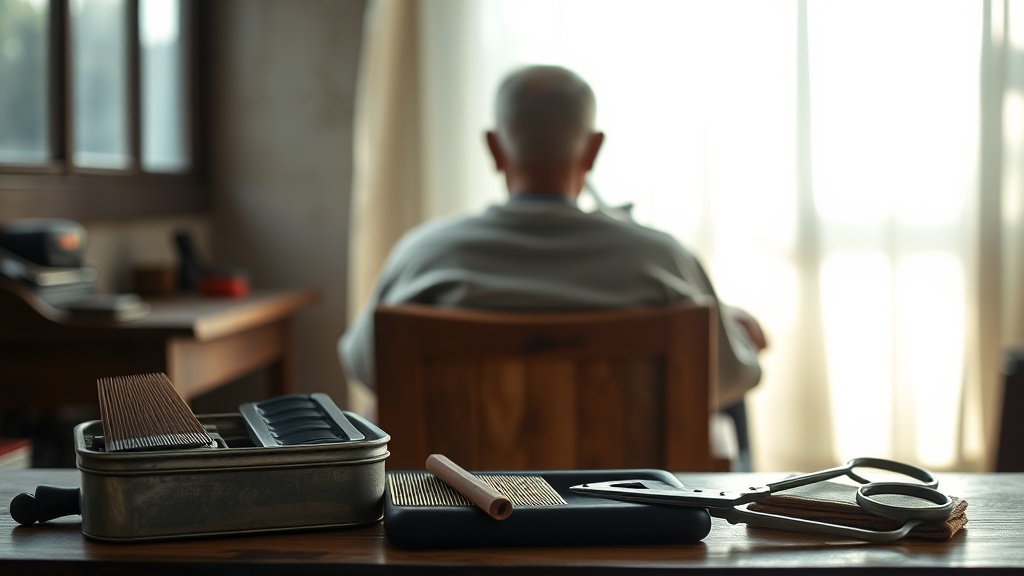
Picture placement strengthens emotional flow.
However, images are only part of the story.
The essential concern is the lasting change and ongoing discussion the program leaves behind.
Images must not become the goal in themselves.
Format scalability and institutional suggestions
Expansion is possible.
The Magiccal format could expand to other regions and services.
However, expansion should be tailored rather than copied wholesale.
Each place requires analysis of infrastructure and local needs to design a suitable program.
In that process, collaboration with regional authorities is indispensable.
At the institutional level, guidelines for broadcast–community partnerships are necessary.
Examples include post‑filming community return plans, resident safety measures, and revenue‑sharing models.
Also, broadcasters and local governments could jointly develop regional plans.
These kinds of institutional arrangements help ensure media contributes beyond short-term promotion to real local development.
Conclusion and outlook
In summary.
Bogum Magiccal introduces a new variety show landscape by combining sincerity with local connection.
The program creates layered effects: communication with elders, normalization of caregiving, and local economic impact.
Yet challenges remain, including the risk of glamorization, questions of sustainability, and safety concerns.
These are tasks for producers, local communities, and viewers to solve together.
In closing, the show moved the public debate beyond star-centered entertainment.
Going forward, the key task is turning early emotions into practical change.
That effort will require stricter production ethics, institutionalized local consultation, and clear plans for safety and sustainability.
There is no single correct answer; the path will be found through the participation of many stakeholders.
Which scene resonated most with you?
Among the show's effects on the town and elder care, which do you think matters most?
