On March 21, after a BTS comeback live at Seoul's Gwanghwamun Square, ARMY volunteers stepped forward to clean the area.
About 400 fans from around the world gathered through social media to pick up litter around the plaza and near the subway station.
The action was organized through fan chatrooms and a simple translation manual shared among participants.
It was not just a cleanup; it read as an expansion of civic awareness within a global fandom.
Fandom Cleans Streets: A New Mode of Responsibility
Scene overview
This was the scene on March 21.
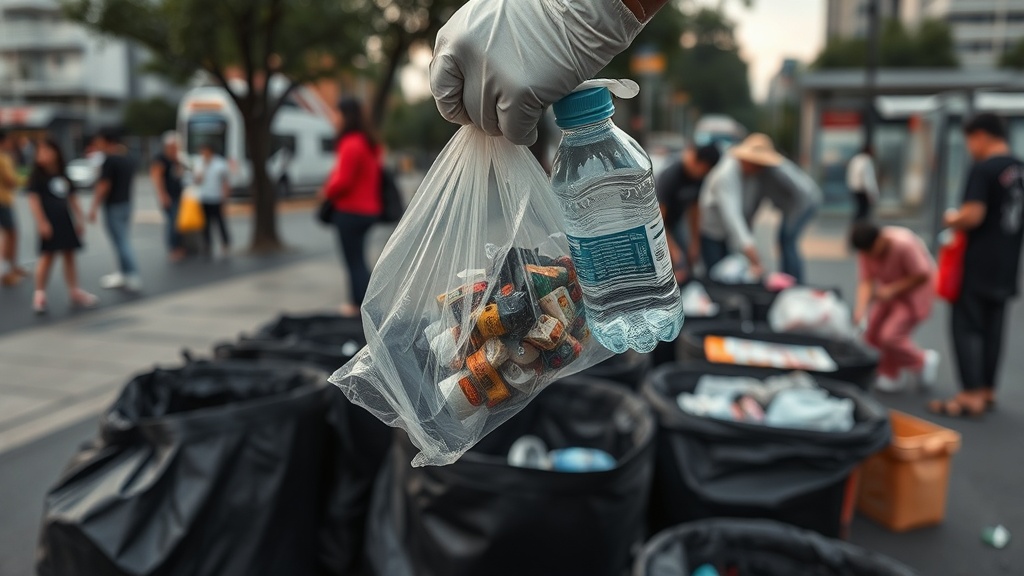
After the live performance, the plaza still held the traces of a crowd: discarded bottles, cans and food wrappers mingled with left-behind signs and banners.
Shortly after the show, a message asking who could help clean spread quickly on social media. Fans who did not have tickets still arrived, drawn by the urge to help.
Participants came from multiple countries, and with the translation guide in hand, fans from places like Japan and the United States joined in.
Volunteers divided the area from curbside lanes to the subway entrance and sorted bottles, cans and food waste carefully.
Some picked up a single can tucked away in an alley; others coordinated groups and checked assigned zones.
These small acts combined to leave the plaza cleaner than it had been before the event.
Organization and execution
The effort showed clear organization.
In fan group chats, participants reminded each other to watch their assigned zones, and roles were shared quickly.
Volunteer leaders distributed maps and the translation manual so multilingual teams could follow the same rules.
That process revealed a horizontal, collaborative capacity inside the fandom.
The operation achieved a lot with very little cost.
Most people brought only gloves and trash bags, and the cleanup proceeded without formal support from civic groups or local government.
Participants also put sorted trash into public recycling bins accurately, creating informal standards for small, concrete actions.

Social meaning
This represents an expansion of small-scale responsibility.
When a non-official group takes on post-event cleaning, it becomes more than a feel-good story; it accumulates social trust.
The fandom is showing up not only as cultural consumers but as actors who volunteer to address public issues.
Such moves set new expectations for how audiences behave after large events.
At the same time, this activity reshapes relations with the local community.
Municipal governments and venue operators now face questions about how to recognize and work with spontaneous fan volunteers.
When pre-event guidance from organizers aligns with fan-led effort, the result can be stronger than either acting alone.
In favor: positive reading
Spontaneity is a strength.
First, the action reads as civic virtue.
Cleaning a venue after a large event is a small public act that signals respect to local residents and future visitors.
The will to manage on-site order improves the fandom's public image.
Also, multinational participation and the creation of a translation manual show that a global fanbase can engage with local issues effectively.
Looking at precedent, fan-led cleanups can become a model for other big events.
Event planners could account for this by placing more recycling stations and clearer signage ahead of shows.
That combination could reduce environmental impact while improving attendee experience.
There are economic benefits, too.
If local governments formalize volunteer support in partnership with fan groups, routine cleanup costs can fall. That could free up small amounts of budget for other community needs.
With cooperation from local businesses, such efforts could expand into public campaigns to reduce waste.
Against: concerns and limits
But there are legitimate worries.
First, voluntary cleanups cannot replace professional services.
Large events sometimes require trained staff and special equipment to manage safety and mass waste removal.
There is a risk that volunteers may be expected to shoulder responsibilities that should rest with organizers or authorities.
Second, legal and institutional responsibility is unsettled.
Accidents involving volunteers raise questions about compensation and insurance that should be settled in advance.
If large groups act without formal agreement, safety incidents could create burdens for both organizers and participants.
Third, sustainability of the effort is uncertain.
Early enthusiasm may be high, but participation can wane over time.
For ongoing programs, training, management and incentives matter. Institutionalization (formal rules and structures) can be a key variable [institutionalization = formal rules and structures].
Finally, there is a risk of reputational backfire.
Some critics may dismiss such actions as image polishing rather than genuine civic engagement.
Questions about sincerity can harm trust across the entire fandom, so transparent communication is essential.
Possibility of formalization
The issue is connection.
Positive energy on the ground should be routed into formal channels.
Municipalities and event organizers could set up agreements with fan groups that establish safety rules and compensation paths.
Regular volunteer programs and training would raise the quality of participation.
In that process, management and training become central.
Offering flexible scheduling and safety training helps working adults take part on weekends.
Family-friendly volunteering, where parents bring children, also builds community education benefits.
Wrap-up and proposals
The meaning is clear.
The Gwanghwamun cleanup shows a maturing civic sense within fandom culture.
However, this is a supplemental measure and has limits without institutional cooperation and safety safeguards.
The next task is to link spontaneous fan efforts to safe, sustainable models through formal partnerships.
Concretely, event planners could include recycling instructions and a volunteer safety guide in pre-event materials, while local governments provide basic support and insurance.
Fan groups should publish activity records to ensure transparency and build trust.
Conclusion
The point is simple.
The Gwanghwamun cleanup showed the fandom's sense of responsibility and revealed a new aspect of cultural consumption.
But spontaneity alone cannot solve every problem. Institutional cooperation and safety measures must follow.
We need to find concrete ways to channel fan energy into the public good.
Now a question for readers:
How would you participate in or propose to formalize fan-based volunteer work at local venues?
