Hawaii Elegy reconstructs first-generation immigrant lives through music and firsthand testimony.
Photographs, animation, and documentary forms mingle to sing memory aloud.
Viewers hear forgotten names again and encounter the textures of feeling.
What does "Hawaii Elegy" call back into being?
One photograph, a century of stories
There is a single photograph.
It shows faces of Koreans who left for Hawaii in 1902–1903.
The film gives those faces names and voices.
Director Lee Jin‑young reconstructed the narrative by collecting archives and recorded testimony.
However, this work is more than historical reenactment; it is an ethical attempt to restore lost memory.
And music serves as the film's emotional medium.
The film makes the Korean immigrant presence in the Americas say, "We were there."
That claim is the essence of bringing the past into the present.
Meanwhile, audiences find resonance where history meets personal memory.

A film that walks through time: how it is structured
Steps of early migration
The early migration began.
The film arranges the journey to Hawaii 121 years ago as a passage through time.
Photographs and testimony form the narrative core while archival images and music recreate the period's atmosphere.
The first episode, "Their Footsteps," orders events and time to bring viewers into the historical scene.
On the other hand, it does more than list dates; it threads cause and feeling together.
This thread helps audiences feel the texture of that era.
Form and story combined: the power of the omnibus
Three episodes in sequence
Three episodes follow one another.
Part two, "Grandmother's Brass Bowl," intercuts live action with animation to revisit the lives of picture brides (women who married immigrant men based on arranged photos).
Part three, "Tears of Kalaupapa," records a darker landscape through testimony and documentary form.
This omnibus structure lets different forms mirror each other.
Meanwhile, the mix of live footage and animation turns memory fragments into visual metaphor, and music connects emotional seams.
Together, the episodes build a richer collective narrative.
Music and landscape: a sensory restoration strategy
Music bridges the story
Music bridges the story.
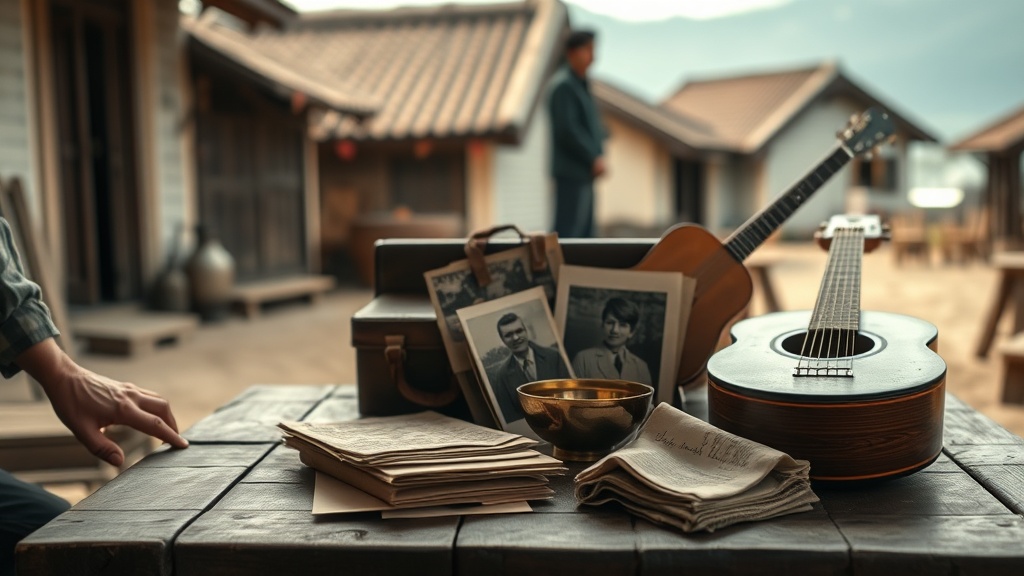
The film blends slack‑key guitar (a Hawaiian guitar style) with reinterpretations of Arirang (a Korean folk song) to restore historical feeling through melody.
This pairing does more than provide a soundtrack; it sculpts the emotional timeline of the narrative.
Music summons both the rhythm of hard labor and the melody of love.
Therefore, the audience experiences the era through sound, which deepens the archival images and eyewitness accounts.
Social meaning and uses in education
Memory as education
Memory is education.
This film can serve as an important resource for school history lessons and community memory projects.
Parents and elders may use the film to explain life stories and context to children and guests.
Meanwhile, as a form of adult education, documentary cinema can offer new learning experiences to lifelong learners.
Release on streaming platforms can turn the film into a shared educational asset beyond local communities.
The ethical questions the film raises go beyond reproducing the past; they ask how current generations will preserve memory.
On the other hand, this conversation can spark accumulation of family, local, and diasporic histories across layers of memory.
Contested ground: arguments in favor
The value of commemoration
The value of commemoration is clear.
Supporters see this film as an important cultural achievement that restores and honors the memory of Korean immigrants in the Americas.
The film connects individual lives and community narratives with music and visual archives rather than merely listing past events.
In this way, the work has potential as a teaching tool.
Teachers and community organizers can use it in classes and remembrance events, complementing oral traditions passed down at home.
Moreover, streaming distribution can introduce wider audiences—across generations and countries—to early Korean migration history.
Commemoration here is not mere nostalgia.
By recording testimony, the film expands archival materials and restores forgotten names.
That restoration can help reconstruct community identity and stimulate diaspora studies and folklore interest.
Another pro argument concerns artistic achievement.
The omnibus form, musical arrangements, and animation showcase the experimental energy of independent cinema.
Such experimentation can attract attention at festivals and help raise international awareness of Korean immigrant history.
In short, proponents argue the film preserves testimony, functions as an educational resource, and cements memory as cultural capital.
They see this as meaningful for local history research and for shaping future generations' sense of identity.
Contested ground: critical perspectives
Questioning the limits of representation
We must ask about representation's limits.
Critics note that choices in selection and editing can emphasize some voices while excluding others.
Records and testimonies are incomplete and may be biased, and film necessarily condenses material.
On the other hand, the omnibus form has tradeoffs.
Compressing events and emotion into short episodes risks simplifying complex contexts.
This can hinder viewers' understanding of structural causes and long-term impacts.
Moreover, distribution via commercial platforms increases accessibility but risks promoting convenient consumption.
Streaming can encourage short‑form clipping and fleeting attention, which may weaken deep historical reflection.
Ethical concerns also persist.
When testimony is reshaped as cinematic device, care is needed so that suffering and tragedy are not absorbed into entertainment grammar.
Meanwhile, if emotional effect is privileged, careful fact‑checking can be neglected.
Finally, critics ask whether the film adequately represents internal diversity within the immigrant community.
Migration histories include class, gender, and regional differences; a single commemorative narrative risks smoothing those complexities.
Therefore, critics call for follow‑up work that involves diverse researchers and community participants.
Conclusion: reconstructing memory and the questions that remain
Recordings do not end
Records do not end.
Hawaii Elegy opens a detailed page of Korean immigration to the Americas.
The film shows both the value of commemoration and the limits of representation, prompting broader scholarly and community conversations.
By calling up forgotten names, the film asks how we should remember the past.
Going forward, we need more testimony collection and stronger links between the film, education, and research.
In classrooms, homes, and online platforms, this film can stimulate historical imagination for children and adults alike.
On the other hand, follow‑up work should include more inclusive and critical local history research.
In short, Hawaii Elegy is one way to restore memory, and that way requires both commemoration and critique.
We leave readers with a question: which names in your family or community risk being lost?
