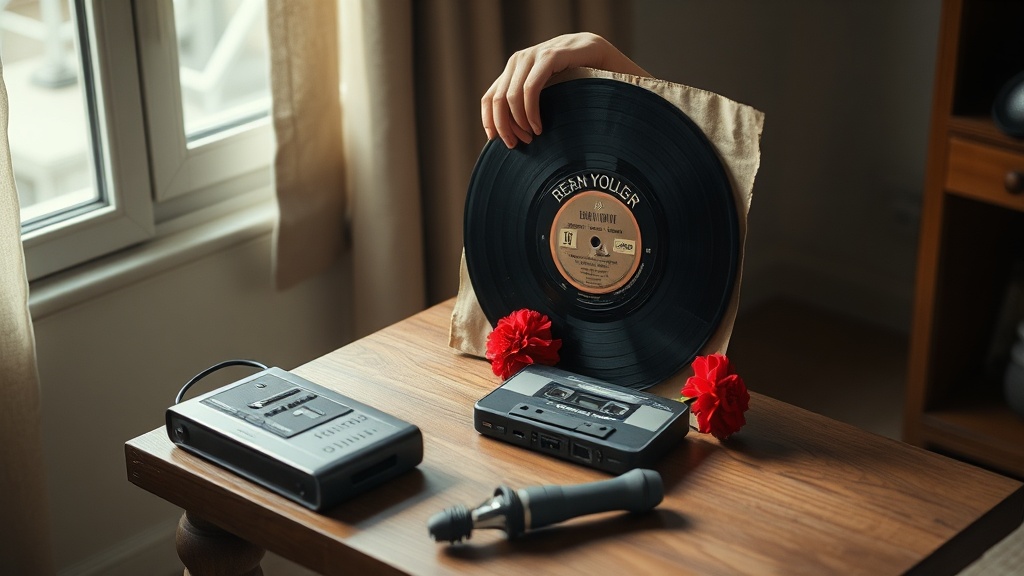
The label says engineers used a surviving single phrase from a broadcast and spent about two years refining the model.
Fans have called it "a gift from across time," expressing strong emotion.
However, disputes have grown over family consent and the lack of clear legal standards.
AI Voice: Tribute or Commerce
It began with one sung phrase.
On the first day of next month at noon, OmniMusic said it will release a new single using AI to recreate the voice of Seojin, a South Korean singer born in 1976 who died in 1996 (Seojin was known in the 1990s pop scene in Korea).
The track is a remake of Lee Seung-cheol's 1988 song "Don't Say Goodbye," and the single is titled "gift song."
According to the producer, the team used one preserved broadcast phrase as the training seed and spent roughly two years reproducing timbre, articulation, and breathing.
As a result, the case raises not only a technical milestone but also urgent ethical and policy debates.
Meanwhile, the music industry is rapidly shifting toward models trained on archival recordings and broadcast material.
On the one hand, that brings nostalgia for fans and a new commercial asset for labels.
On the other hand, heirs' rights and related neighboring rights (rights tied to performance and recorded sound) and the legal basis for commercial use are still underdeveloped.
Therefore, this reality highlights the need for broad institutional reforms across the industry.
The production process is public.
OmniMusic says sound engineers and data scientists collaborated to train an AI model from the single surviving phrase.
They describe stages such as data cleaning, source separation, timbre pattern extraction, and simulation of breath and articulation.
According to the production team, the finished recording reproduces subtle tremors and habitual pronunciations of the original voice to a high degree.
The project required about two years, combining personnel costs, technical expense, and risk management.

However, technical polish intensifies the debate.
On the one hand, this is an attempt to reestablish an emotional connection; on the other hand, it risks turning a deceased artist's image and voice into a commercial product.
Consequently, the ethical questions move beyond mere technical possibility to issues of cultural consensus.
It can serve as a tool for remembrance.
This technology offers a new form of memorialization.
Fans report experiencing past emotions in the present when they hear the recreated voice.
Particularly longtime supporters of Seojin have described the announcement as a "gift."
Technically convincing vocals often evoke feelings similar to those felt at live performances.
Fan memorials and memory preservation are the clearest values this technology offers.
Even one short archival phrase can create a strong desire among fans to hear the artist again.
The technology meets that desire and enables new forms of cultural commemoration.
Meanwhile, reinterpreting old recordings for modern audiences can broaden the market's diversity.
Furthermore, nostalgia-driven content has measurable commercial value in the digital music market.
Therefore, labels and rights holders can create new revenue channels together.
For example, limited-edition remasters, commemorative albums, and documentary soundtracks are all possible commercial products.
Hence, some argue AI does more than reproduce: it reactivates cultural assets.
But the controversy is real.
The concerns are not only about sentiment.
Unclear procedures for family consent and the unsettled status of neighboring rights are central issues.
Current domestic and international law does not clearly define how a deceased person's voice should be regulated.
As a result, disputes over commercial use are likely to arise repeatedly.
"Tribute should be protected, but commercial conversion must be handled cautiously."
Critics demand transparent consent processes, clear revenue-sharing arrangements, and defined limits on usage.
At the same time, some warn that "memorials becoming commodities" risks turning the deceased's image into a marketing tool.
These worries extend beyond emotion into legal and ethical challenges.
Ultimately, using the technology requires a delicate balance between cultural respect and commercial opportunity.
Moreover, commercial use of AI-restored vocals sets precedents for the whole industry.
Once allowed, many producers will have an incentive to replicate similar projects.
Therefore, critics argue institutional safeguards are necessary to prevent abuse and commodification of the dead.
Legal standards are needed.
Existing legal systems have not kept pace with technical development.
Rights structures for AI voice reconstruction, the scope of heirs' consent, and rules for commercial exploitation remain ambiguous.
Thus, without institutional reform, technical progress alone will produce repeated conflicts.
Coordination between government and industry is required.
First, the scope and process of family consent must be legally defined.
For example, laws could clarify whether pre-death contracts exist, who represents heirs, and whether consent can be revoked.
Second, financial questions such as revenue splits and tax treatment need resolution.
Tax rules, in particular, will be important where commercial exploitation generates income.
Third, ethical guidelines should secure cultural respect.
These would combine industry self-regulation with public standards rather than only top-down restriction.
In short, institutional measures can preserve technological benefits while limiting misuse.
Precedents are increasing.
Beyond Seojin, projects like the restoration of Kim Sung-jae from the duo Deuce show how rapidly this practice is spreading.
Such precedents raise both practical standards and ethical debates across the industry.
Consequently, more legendary artists' voices are likely to be revived with AI in the coming years.
Therefore, today's discussions are the start of long-term rules, not a one-off dispute.
From an industry perspective, investment in the technology creates a new class of musical products.
However, for that product class to be sustainable, trust and clear rules must come first.
Ethical trust is earned only when fans' emotional needs and heirs' legal rights are balanced.
Therefore, producers must show social responsibility beyond technical skill.
The conclusion must be clear.
AI vocal restoration carries both technical possibility and cultural weight.
On the one hand, it offers a new way to remember and honor the deceased.
On the other hand, it creates legal and ethical challenges that require policy reform.
Therefore, technological progress and social consensus must advance together.
In summary: first, the technology is already practical; second, both fans and producers can benefit; and third, heirs' consent and legal standards must be urgently clarified.
Throughout this process, ethical care and transparent profit-sharing rules will play key roles.
So we leave the question to the reader: how do you feel about releasing a deceased artist's restored voice to the public?
