Veteran actress Kim Jimi has died.
She passed away in Los Angeles on December 7, 2025, at the age of 85.
Reports say the cause was shock from hypotension (low blood pressure).
The film community has shown mixed reactions about how to honor her and how to handle funeral arrangements.
Kim Jimi's passing erases a page of an era
Facts at a glance.
Kim built a career at the center of Korean cinema in the 1960s and 1970s.
She is reported to have appeared in some 700 productions and to have received numerous awards.
She also ran a production company and took part in film organizations, contributing to production and film policy.
Domestic and international outlets reported that she died in Los Angeles on December 7, 2025.
Reports give the cause as shock from hypotension. Some outlets also mention a decline in strength after an episode of shingles (herpes zoster).
However, details such as timing and funeral procedures vary slightly across reports.
What her era weighed.
Kim Jimi was an actor who rode the golden age of Korean cinema.
Her body of work reflects not only a filmography but also the industry's structures and the star system of the time.
Meanwhile, her work as a producer and her activity in film organizations had institutional effects beyond personal achievement.
Therefore, her death is more than a private loss; it opens a cultural gap in film history.
On the other hand, her passing has prompted calls to reassess that era and to reinterpret her achievements in the context of the industry's history.

Weighing the record.
Her filmography and awards tell us about acting styles of the time and the role of female stars.
Awards like the Best Actress prize at the Panama International Film Festival and domestic honors such as the Grand Bell Awards illustrate recognition at home and abroad.
However, her career also reflects industry limits of the 1960s and 1970s, including gender discrimination in the workplace.
This dual nature raises questions for today's records and evaluations.
Her work running a production company and participating in film promotion efforts mattered because it pushed institutional changes across the industry.
Supporters and objectors weigh in.
Arguments for public honors
Supporters argue that an official film-industry funeral or public memorial helps explain her contributions to future generations.
Therefore, public mourning does more than offer emotional comfort; it preserves educational value and archival record.
Industry-led funerals let the whole field recognize contributions in one voice.
Moreover, public ceremonies create organized memories for researchers, critics, and ordinary citizens who reconstruct cultural history.
Especially for figures like Kim who combined acting with production and organizational work, public honors can help formalize institutional history.
An official ceremony becomes a learning opportunity for cultural history.
From this perspective, organizers say the family wish should be considered but that preserving a public record of contribution should take priority.
Arguments for privacy and restraint
Opponents stress the need to respect the family's wishes above all.
When funerals take place overseas, families may already have completed the necessary rites, and repeating them domestically could invade privacy.
Moreover, hasty reporting can cause extra pain to family members and spread unconfirmed information before medical and legal processes are complete.
The small inconsistencies among reports about cause and timing support this concern.
Finally, rehashing sensitive personal matters or past scandals can harm elderly victims and their families.
Family dignity and privacy should take priority.
Looking into the cause.
Reports list the cause as "shock from hypotension" (low blood pressure). Some accounts add that a recent episode of shingles weakened her overall condition.
Shingles can leave older patients more vulnerable, and when combined with heart problems or general frailty it can increase the risk of complications.
However, the articles do not provide a full medical report or autopsy, so the detailed pathology cannot be confirmed from the media alone.
Infectious causes, cardiac failure, medication effects and other mechanisms can all lead to hypotensive shock, so caution is required when interpreting the reports.
Separate medical facts from news reports.
Until an official medical opinion is published, final conclusions should be handled carefully.
Fans and networks react.
Domestic fans left messages of condolence and recalled classic performances.
Meanwhile, some netizens questioned the timing of reports and the limits of information disclosure.
Because funeral rites happened abroad, many fans in Korea expressed regret at missing a chance to pay condolences in person.
Online conversations combined praise for her career with renewed calls to reassess the era she represents.
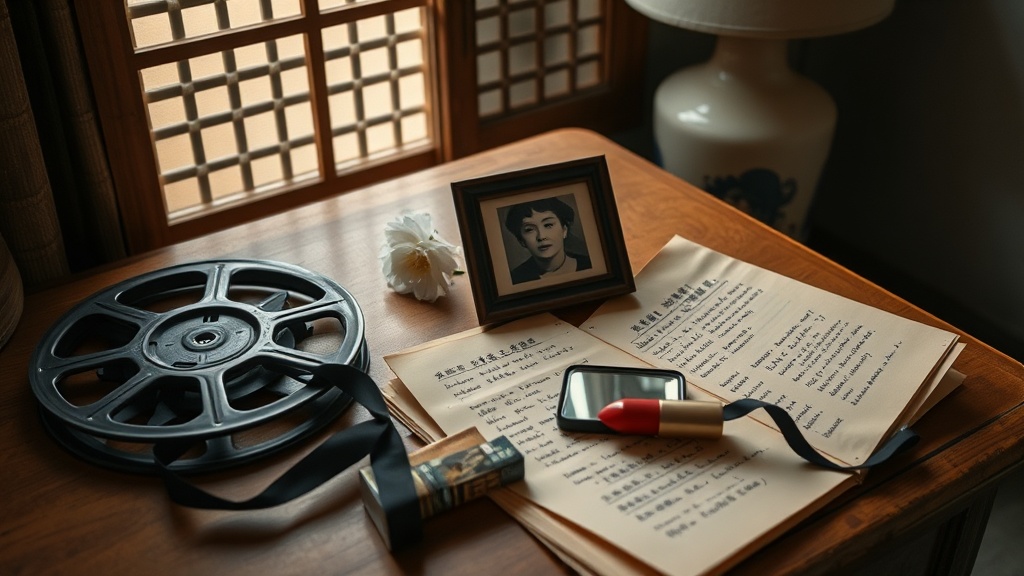
These reactions do more than mourn. They raise broader questions about how we preserve cultural memory and where to draw the line between personal privacy and public record.
Online mourning leaves both memories and questions.
Conclusion.
Kim Jimi's death leaves a cultural and institutional mark beyond the loss of an individual.
Reported details about cause and prior illness should be handled with caution because of reporting limits.
Debate will continue about how to balance public commemoration with respect for the family.
Her acting and industry work are a legacy for future generations.
Therefore, public record-keeping and family respect should go hand in hand, and institutions should prepare clear procedures for similar cases.
Finally, what do you think is the best way to honor Kim Jimi's legacy?
