Veteran film actress Kim Jimi reportedly died in Los Angeles on December 7, 2025.
A memorial area for her was set up and operated at the Chungmuro Seoul Film Center in Seoul.
According to reports, the memorial was open through the 14th.
Fans and colleagues expressed condolences both online and in person.
Kim Jimi’s passing and memorials: Who owns public memory?
Executive summary.
To set the facts:
The reported date of death is December 7, 2025.
Media accounts differ on the immediate cause, mentioning either shock from low blood pressure or complications related to shingles.
Organizations in the film community and fans reacted with a range of tributes.
A brief life in context.
Her filmography is extensive.
She first appeared on screen in a 1957 film by director Kim Ki-young and went on to be active through the 1960s and 1970s.
Some outlets compared her public profile to that of Elizabeth Taylor, highlighting both fame and acting range.
Later in life she lived in Los Angeles, where reports say she struggled with health problems.
Her work included acting, producing, and involvement in film organizations.
As a result, she is often remembered as a pillar of mid‑20th century Korean cinema.
Contested reporting around her death.
Reports about the cause of death vary.
Some media framed shock from low blood pressure as the direct cause, while others emphasized a decline after shingles (herpes zoster) as the underlying health issue.
These discrepancies risk confusion in public understanding.
Also, it is unclear whether the memorial arrangements in Korea fully reflected the wishes of the family.
The Korean Federation of Film Artists and the Actors’ Association reportedly decided not to hold a state-style film funeral (a public funeral ceremony specifically for film professionals) and instead opened a memorial area, likely taking local funeral procedures abroad into account.
How the memorial space was set up.
The memorial occupied a designated spot within the Seoul Film Center.
Reported exhibits included photographs, a short biography, and a list of representative works.
While some reports said the display ran through the 14th, details about timing and content varied by outlet.
Such a space serves to keep public memory alive.
However, questions arose about exhibit content, operational methods, security, and how materials would be preserved after the memorial closed.
Those transparency issues deserve attention.
One photograph from the site.
Below is a photo reported to be from the memorial.
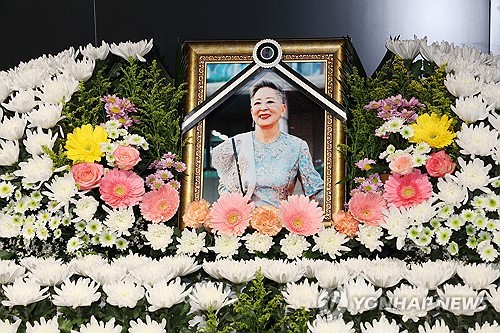
The image conveys the atmosphere and visitors’ presence.
Such photographs become an important part of the public record.
Arguments in favor of public memorials.
To state the main point clearly:
Public memorials are a valid way to preserve cultural memory.
Supporters stress that Kim Jimi’s achievements belong not only to her family but also to national film history.
First, they preserve cultural and historical value.
As an actor active during the peak years of Korean cinema, her films and activities are valuable to researchers and the public.
Exhibitions of photos and documents help transmit that context to future generations.
Second, memorial spaces give fans and colleagues a place to grieve.
They provide a setting for collective mourning and recognition, which can help communal healing.
Chungmuro’s symbolic place in Korean film history adds meaningful context.
Third, the materials have educational use.
Displays can be repurposed for film history classes and commemorative programs.
That turns remembrance into active cultural preservation rather than merely passive nostalgia.
Voices of caution and opposition.
Key concerns begin with consent.
Critics note that memorials sometimes proceed without clear family approval.
In cases where a funeral has already taken place overseas, it is especially important to confirm that domestic tributes reflect the family’s wishes.
First, there is the question of privacy and family care.
Death and funeral choices are private matters for relatives. Public displays without clear consent can add emotional burden.
When family agreement is not evident, a public memorial can unintentionally cause harm.
Second, there is the risk of commercialization or politicization.
High-profile tributes can be turned into promotional events, diluting genuine commemoration.
If organizations treat memorials as publicity, the sincerity of the tribute may be questioned.
Third, public memorials can reopen old controversies.
Reexamining a public figure’s past—whether justified or not—may spark renewed debate that distracts from respectful remembrance.
Careful, preemptive consultation is therefore essential.
Summing up the concerns.
Inconsistent reporting about cause of death illustrates the larger problem of incomplete official information.
Accurate medical details and a clear statement from the family or official representatives would reduce confusion.
Likewise, the memorial’s operational specifics should be disclosed.
Information on sources of materials, how items will be preserved, and what happens after the display closes will reduce future disputes.
Institutions running memorials must adopt transparent policies.
Finally, the press has a responsibility.
Journalists should prioritize fact-checking and the family’s wishes when covering deaths.
Unverified reports can add unnecessary pain for the bereaved.
Deeper analysis.
Fans’ expectations are not uniform.
Some wanted an official film funeral, while others urged deference to the family.
This divergence shows that no single approach satisfies everyone.
The lack of formal guidelines is apparent.
Without clear industry norms, decisions are made case by case, which can create inconsistency.
Setting standards for memorials—such as guidelines for public displays, custody of materials, and family consultation—would help.
Care for aging artists also matters.
Reports of declining health and limited care underscore broader issues about healthcare access and retirement support for people in the arts.
Discussion about end-of-life care for cultural figures should expand beyond individual cases.
Another memorial image.
An additional visual record related to the memorial follows.

This second image offers a different angle on the space.
Images like these help reporters and historians document how societies remember public figures.
Conclusion.
To restate the core points:
Kim Jimi was a central figure in mid‑20th century Korean cinema.
Her death is a cultural loss, and public memorials can serve to recall that legacy.
However, public commemoration should proceed only with respect for the family’s wishes and with transparent practices from cultural institutions.
Media and organizations should verify facts and explain how they will manage memorial materials.
Policy guidelines would help prevent confusion in the future.
In short:
Preserving public memory and protecting family rights must be pursued together.
Memorials are both a record of achievement and a shared act of care for those left behind.
Finally, a question for readers:
Which principle should come first when a public figure dies—public commemoration or private family wishes?
