Marking his 50th year since debut, Choi Baek-ho will meet audiences across the country on a national tour.
The concert is titled "50 Years of Romance: Singing Time's Traces."
The run opens at the Sejong Center for the Performing Arts (Seoul's major concert hall) and visits major cities including Jeju and Busan.
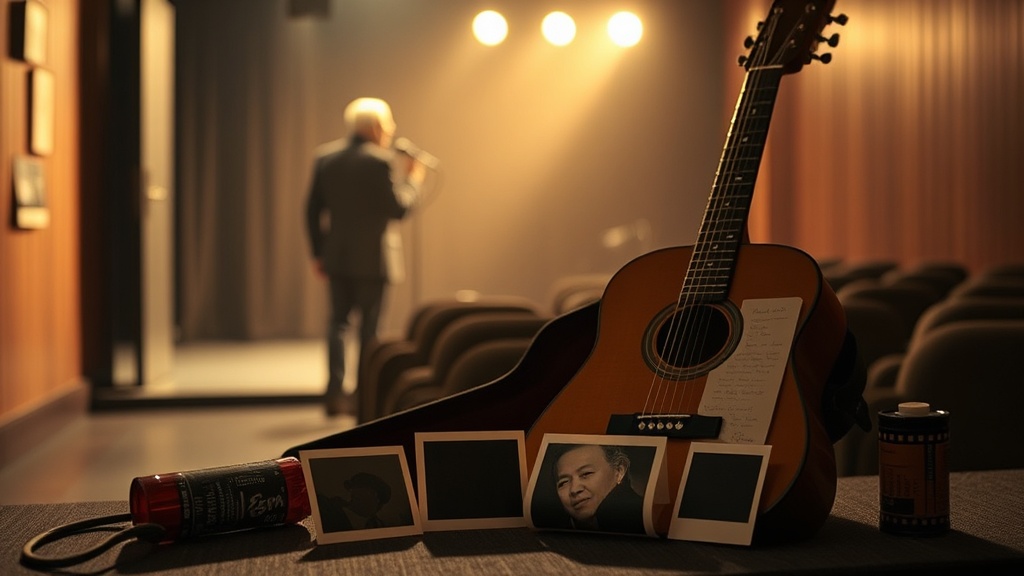
The production emphasizes filmic staging by weaving archival footage and images into the live set.
Half a century, one voice asks: What remains?
On January 24, 2026, the tour begins.
It reopens a historical conversation between stage and audience.
Choi Baek-ho helped shape Korean popular music with hits such as "About Romance (Nangman-e daehae)", "My Heart Has Lost Its Way", "The Night Before Enlistment" and "Yeongilman Friend."
However, this tour is designed as more than a simple walk down memory lane; it is meant as a space for reaffirmation.
Stage design and direction
The show is directed like a film.
Meanwhile, video, archival photos, and film-texture lighting create a cinematic atmosphere.
Scenes are staged to pull the audience back into specific moments from the past.
Live band performances are stitched together with storytelling so each song carries a narrative.
Importantly, the production team adjusts the technical density so gadgets never overwhelm feeling.
This approach aims to replay memories for the audience while letting them feel the present emotion.
History and records
He was one of the era's defining voices.
Choi's songs captured the mood of the 1970s and 1980s and struck a deep chord with listeners.
Titles like "The Night Before Enlistment" and "Yeongilman Friend" combine social background with private feeling.
This tour shows how those songs anchored an individual's life and the public's memory.
On the other hand, the show does more than recreate the past; it reinterprets it.
Video materials and the film-like lighting are tools to reassemble the record into an emotional narrative.

Supporters: meaning and value
This is a stage of gratitude.
Many regard the tour as a meeting of nostalgia and artistic completion.
First, fifty years of work carries generational experience beyond an individual's career.
The fact that one voice has been loved for half a century is a cultural asset in itself.
In that light, the tour reads as both a thank you and a declaration of renewal.
Audiences are not mere consumers; they are witnesses to time and collaborators in memory.
Moreover, the way the show crosses past and present through video and archives helps strengthen cultural memory.
This goes beyond simple nostalgia by educating a new generation about songs in their context.
From an industry perspective, this is significant.
Meanwhile, live tours that center on performance create revenue streams and sustain careers beyond recorded albums.
The continued stage presence of older artists points to greater career stability for musicians.
Further, this kind of activity connects to practical issues such as planning for life after main-stage years, including retirement income and long-term financial security for artists.
Ultimately, the concert functions as a public theater that reproduces collective memory rather than only private reminiscence.
As such, the time audiences and the artist spend together can support cultural continuity, which is why the tour earns positive responses.
Criticism and concerns
There are criticisms.
On the one hand, concerns about commercialization and nostalgia-driven marketing have been raised.
Retrospective shows can turn the past into a product.
We should watch how fans' sincere memories might be repackaged into profit for promoters.
Moreover, the generation gap is a real challenge.
To younger listeners, older language and moods can feel foreign.
Therefore, if the program simply repeats symbols of the past, it may struggle to attract new audiences.
This problem must be addressed by reinterpreting the past in ways that connect to modern contexts.
Another worry is ticketing and accessibility.
Ticket systems and price policies can limit the audience.
For example, older fans may have trouble with online booking platforms and complex pricing, reducing social access to the performances.
Also, an extended tour raises questions about physical stamina and health management, which are essential planning considerations.
Finally, if a retrospective glosses over problematic aspects of the past or fails to reflect on the social context of earlier times, it risks producing a biased historical portrait.
In short, the show should do more than glamorize; it should help audiences read the era honestly.
Schedule and ticketing
Tickets go on sale on December 12, 2025, at 2:00 PM local time.
Sales will run through platforms such as Interpark and Ticketlink (Korean ticket sites).
The tour opens at Seoul's Sejong Center main theater, then moves to Jeju, Busan and other cities.
In Gumi, a date is set for December 27, 2025, at the Gumi Culture and Arts Center.
The show arranges songs into a flowing setlist and inserts archival footage to build a film-like narrative.
Ticket prices and seating details are available on the ticket pages, and special assistance for older attendees should be provided to improve accessibility.
Expanding cultural meaning
Memory is a form of solidarity.
This tour attempts to reconstruct community memory beyond an individual's recollection.
Choi's music subtly carries the emotions and social realities of a particular era, and this tour reveals how those songs resonate with today’s listeners.
Through that process, we see how music connects private lives and public memory.
And the concert can be more than entertainment; it can become a forum for social reflection.
Conclusion
Choi Baek-ho's 50th anniversary tour is a concert of gratitude and reaffirmation.
It seeks to combine recollection with reinterpretation and to restore empathy between artist and audience.
Half a century is not just a large number but a moment to confirm shared memories
The show sings the past and announces a new beginning at the same time.
Now the audience is asked:
Which song would you choose to read your own life anew?
