Around 200 Disney-owned characters will be legally available on OpenAI's Sora platform for AI image and short-video creation.
The deal includes a $1 billion investment and equity rights for Disney.
It is an experiment testing how creation, protection, and new revenue models can be balanced.
Disney and OpenAI: Disruption or Deliberate Balance?
Quick overview
We are at a turning point. However, this is not a sudden change.
At the end of 2025, Disney agreed to invest $1 billion in OpenAI and granted a three-year license that allows OpenAI's Sora tools to use more than 200 Disney-owned characters and elements from movie worlds (for example, Mickey Mouse, Simba, Iron Man, and Elsa).
As a result, Sora users can generate short AI videos and images that legally include those characters.
This deal redefines the line between fan tools and major intellectual property.
The agreement covers a three-year term, gives Disney equity-related rights, and dovetails with Disney's internal AI rollout plans.
Disney is also exploring selective curation of outstanding user-created content (UGC) for Disney+.
Meanwhile, these moves must be seen in the wider context of streaming competition and platform strategy.
Background and context
Technology and market pressure drove this decision.
Hollywood moved from lawsuits and hostility around AI toward experiments in collaboration.
Disney's two-track strategy reflects that shift: controlled licensing with Sora on one hand, and continued legal action to protect copyrights on the other.
But this is not only a commercial deal.
Disney aims to capture revenue from licensing, integrate APIs and AI tools for internal automation, and broaden audience participation through platform partnerships.
Ultimately, the company is shifting part of its business model from pure content production to licensing and platform intermediation.

Technology governance matters.
Both Disney and OpenAI talk about "responsible AI," but the exact controls and monitoring systems will be tested in practice.
For example, how will illegal copying and uncontrolled derivative works be curbed?
Regulatory changes and enforcement will also shape outcomes.
Supporters — creativity and business opportunity
Proponents call this an expansion of creative possibility.
They argue that fans can become creators, making short stories or tributes starring familiar characters and then sharing them widely.
Moreover, outstanding user works could be selected for promotional use or even platform features on Disney+.
From a business angle, this opens new revenue channels.
Instead of relying solely on litigation to defend IP, Disney can monetize fan activity through licensing and platform partnerships.
The $1 billion investment is framed not as a pure expense but as a strategic bet to deepen platform influence and build long-term collaboration.
Therefore, platform reach, content variety, and investment strategy all appear to gain.
"An experiment to convert fan creativity into new kinds of revenue."
Operational efficiency is another gain.
Disney can use OpenAI tools for internal production, marketing, and customer service to boost productivity.
For example, automated editing assistance, draft script generation, or personalized recommendations could speed workflows.
These capabilities may become competitive differentiators in the streaming market.
Critics — copyright and brand protection worries
There are serious concerns.
Critics warn that the deal could weaken copyright protection and dilute brand value.
Mass automated generation risks producing low-quality or misleading content (including deepfakes), which could erode trust and the perceived scarcity of beloved characters.
Control limits are a key problem.
Even if Sora enforces rules, content produced there can leak to other platforms, and policing every copy is difficult.
This leakage can encourage unauthorized adaptations and undermine long-term IP value.
"Short-term revenue may come at the cost of long-term asset strength."
There is also a fairness concern across the industry.
If Disney alone places content behind a controlled license with OpenAI, it could create imbalances between studios and AI companies.
That concentration might tilt market power toward a few large studios, raising questions for regulators and competitors.
Practical responses and regulation
Balance is necessary.
Disney adopted a two-track approach: licensing a controlled platform while continuing legal defenses elsewhere.
Strategically, this aims to protect core rights while experimenting with new models.
Regulatory risk remains.
Stronger AI-related rules—especially about personal data, image rights, and copyright—would affect both Disney and OpenAI.
Companies must prepare technical controls and legal strategies in parallel.
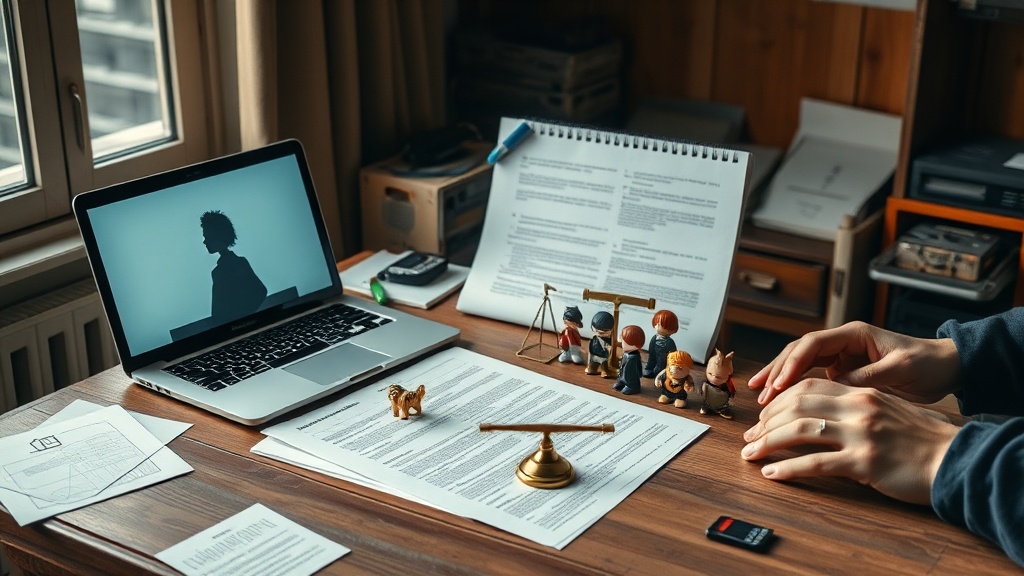
Policy shifts will ripple through the industry.
Decisions by regulators, court interpretations of copyright, and platform self-governance will interact.
Businesses should plan investments and governance with these variables in mind, prioritizing long-term risk management and transparency.
Comparisons and international implications
Look at precedents.
Other studios chose litigation while Disney chose partnership in a controlled environment.
Disney's approach limits licenses to platforms where oversight is feasible, whereas lawsuits try to block broad usage across many services.
The international scene matters too.
U.S. regulatory moves and European copyright rules will produce different pressures.
Global media companies must tailor strategies regionally, and Disney's choice may influence peers worldwide.
"Hollywood's choices could reset industry norms."
Technology responses vary as well.
Platforms need stronger content identification, clearer use policies, and efficient reporting and review systems.
Without these safeguards, opening content to AI creation risks unintended harms.
Conclusions and recommendations
The stakes are clear.
Disney and OpenAI's deal offers creative freedom and business opportunity, but it also invites copyright, brand, and regulatory risks.
How companies manage both sides will determine whether this experiment succeeds.
Innovation becomes risk without clear guardrails.
Practically, platforms should adopt automated monitoring and review systems, clear reporting and enforcement rules, and public user guidelines and education (teach users how to create responsibly).
Companies using a two-track strategy should strengthen governance that balances short-term gains with long-term IP stewardship.
Regulators should set standards that protect consumers and fair competition across the industry.
In short, this partnership signals an industry transition.
Yet the direction depends on corporate governance, regulatory choices, and user behavior.
Readers must decide: do you favor wider creative access and industry innovation, or stricter protection of long-held creative assets?
