Key Takeaways
WONDERLIVET 2026 is a major J-pop festival set for Nov. 20-22 at Goyang Sports Complex in South Korea, with YUZU and Ai Otsuka among the named acts. For fans, that alone makes the event attractive; for everyone else, the bigger question is whether the festival offers more than a niche lineup. The real test is not star power, but whether the event is designed as a convincing cultural experience rather than a branded playlist.
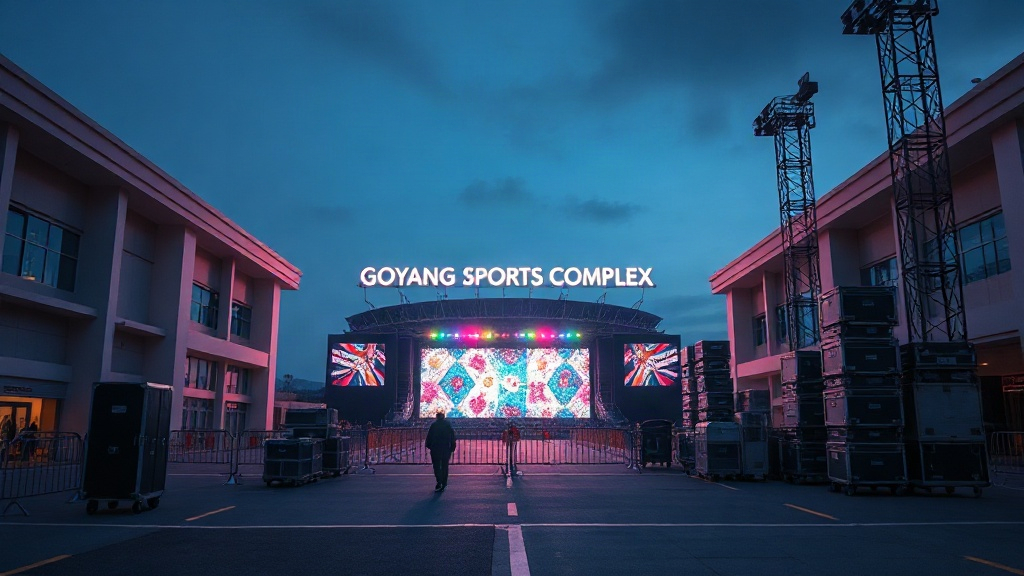
WONDERLIVET 2026 is a large J-pop music festival, with YUZU and Ai Otsuka among the artists mentioned for the event. It is scheduled to take place Nov. 20-22 at Goyang Sports Complex in Ilsanseo-gu, Goyang, just outside Seoul.
Even in that limited set of facts, the event reads as more than a stack of performances. The real issue is whether a genre-specific festival like this expands the choices available to Korean concertgoers, or whether it mainly serves an already committed fan base.

For J-pop fans, the appeal is obvious
The most immediate virtue of WONDERLIVET 2026 is also the simplest: it gives J-pop listeners a reason to show up. A festival built around Japanese pop music puts familiar artists and a familiar sound in one place, which is exactly what a dedicated fan wants from a live event.
That matters more than it may sound. A festival is not just a concert with extra marketing around it; in the best case, it creates a setting where different artists reinforce one another and give the audience a fuller experience than a single act could provide. If that works, a narrowly defined genre can still produce a broad kind of excitement.
There is also a broader upside here. When Korea hosts a J-pop festival, it signals that concertgoing here is not limited to one domestic style or one national market. For audiences willing to cross genre and language lines, that is a genuine expansion of options.
But a genre festival can also narrow its own audience
The same thing that makes the event appealing to fans may make it less welcoming to everyone else. A J-pop-centered festival can be vivid and focused, but that focus can also become a barrier for casual concertgoers who do not already have a reason to care about the lineup.
That is where the early emphasis on a few named acts matters. When only some artists have been highlighted, the festival’s identity can hinge heavily on who is in the first wave of announcements and how much trust those names command. Star power helps, but it does not automatically turn a themed festival into a complete one.
So the event invites a practical question: is it designed as a carefully calibrated gathering for a specific audience, or is it trying to reach a wider crowd and therefore needs a stronger experience beyond the lineup itself? Those are not the same challenge, and they should not be judged by the same standard.
The real measure is the design, not the poster
It is tempting to evaluate a festival like WONDERLIVET 2026 by reading the poster and stopping there. But a festival lives or dies by how the pieces fit together. The value is not simply which artists appear, but what kind of rhythm the event creates and what the audience feels when those artists are placed side by side.
That is why this J-pop festival can be read in two ways at once. It broadens the menu for Korean concertgoers, yet it also reflects how finely culture is now segmented by taste. Neither reading is false. The question is which one the event itself ends up proving more strongly.
So the fairest standard is straightforward: does WONDERLIVET 2026 offer a real festival experience that justifies its scale, or does it depend too much on the appeal of a few names already familiar to the faithful?
