Music streaming has made listening easier than ever, but it has not made the burden lighter for the people who create the songs.
For independent musicians, low per-stream payouts can quickly turn into pressure on both studio costs and day-to-day living.
Without fair revenue sharing, musical diversity slowly dries up.
The real question is not whether music is cheap to hear, but whose labor gets erased in the process.
Behind unlimited listening, who burns out first?
In June 2026, one musician's blunt remark cut straight into the fault lines of today's music business.
For musicians who fund their own projects, streaming is a financial disaster.
That is not hyperbole. It is a compact way of describing reality.
The age of monthly subscriptions has made listening easier, but it remains unclear who keeps paying for that convenience.
And that uncertainty eventually circles back to a simple issue: can creative work survive this way?
Fair revenue sharing in music streaming is not just an accounting problem.
It is more like checking the flow of rent in real estate: if you do not look closely at where the money goes, all you see are numbers on paper.
Platforms have grown and listeners have multiplied, yet the complaints keep coming from musicians who self-fund albums and still see their bank accounts shrink.
The fact that music is widely heard is not the same as the fact that creators can afford to keep going.

Streaming looks like a triumph of access.
However, the lower the barrier to entry, the more likely it is that the people inside the system get paid less for their work.
This is not only a problem for a few frustrated artists.
It is a question about the health of the whole cultural ecosystem.
Like a family budget, culture only stays alive when income and expenses remain in balance.
Who gets convenience, and who gets the loss?
The criticism is clear
The core complaint is simple: the payout is far too small.
Stream counts may look impressive, but the money earned per song is tiny.
For musicians who pay for recording, session players, mixing, and mastering out of pocket, that tiny amount can mean a real loss.
When investment and return collapse at the same time, music starts to look less like art and more like debt.
Independent artists feel this most sharply.
Unlike performers backed by major labels and large promotional machines, they must handle marketing, release planning, and booking on their own.
They often try to survive on streaming income while building everything else from scratch.
But that hope runs straight into low rates.
If this structure continues, new artists and independent music lose space, and the market becomes safer but duller.
Convenience without fair payment eventually creates cultural poverty.
There is also an ethical side to this.
Listeners can spend a single card swipe to access millions of songs, yet they rarely feel the labor behind them.
Pressing play is easy. Making the song is not.
Just as preventive care matters before a health problem grows worse, the payment system should be fixed before the damage spreads further.
Once creative habits disappear, it is hard to rebuild them later.
Some critics may say this sounds too emotional.
But this is not really about sentiment. It is about math.
Just as loan payments can tie up a person's life month after month, unrecovered production costs can tie up a musician's next project.
Streaming may connect an enormous audience, but if creators cannot afford the next song, the platform's success is only half a success.
Still, streaming has real benefits
There is another side worth taking seriously.
Compared with the era of illegal downloads, streaming is clearly a step forward.
Listeners can hear music legally, and new artists can reach people around the world.
People in places with limited access to physical record stores can still discover jazz, indie rock, classical recordings, and other genres online.
Streaming has also made music far more accessible.
In the past, buying an album took money, time, and effort.
Now a search can open up thousands of tracks instantly.
That shift has the same kind of everyday value as online education: it lowers the barrier for everyone.
Music is no longer something only a few people can collect. It has become part of ordinary life for a much wider public.
For people juggling work and school, it is often the most practical way to listen.
Beyond that, streaming creates useful data for the industry.
It shows which genres hold attention, which regions respond to certain sounds, and where smaller labels or early-stage musicians might find their audience.
It can also help artists build other income streams through concerts, merchandise, licensing, and online classes.
In that sense, the problem is not streaming itself, but the systems around payment and visibility.
Convenience is not the enemy. The problem begins when the benefits of convenience are shared unfairly.
This argument is practical.
If subscription prices rise too much, fewer people may pay, and illegal listening could return.
The platform is not a perfect answer, but it is still the central legal route for music distribution.
Even critics cannot ignore that point.
That is why the strongest pro-streaming case is not to defend the status quo, but to demand better accounting and more transparency.
College tuition can feel crushing for families, and music production costs can feel just as heavy for individual artists.
That does not mean the system should be thrown away.
The better path usually has three parts: transparent splits between platforms and rights holders, stronger protections for independent musicians, and direct support from fans.
Only that mix can keep culture from tilting too far in one direction.
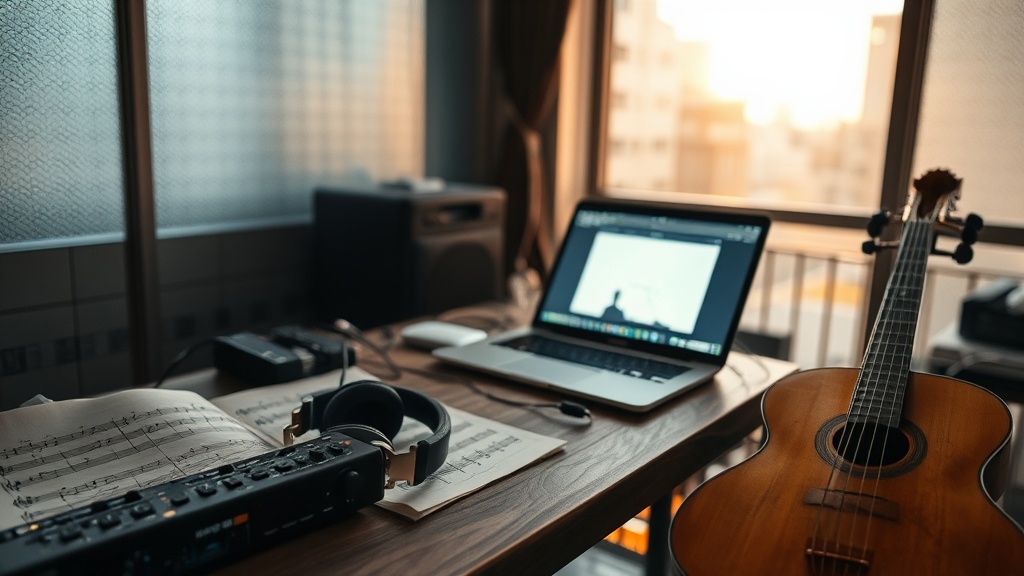
Is fair pay an ethical ideal or a survival tool?
It is both
Fair revenue sharing is not a nice extra.
It is a survival tool, and it is also an ethical duty.
Even when musicians are so busy they can barely keep a healthy routine, they still deserve a structure that respects their labor.
When that structure breaks down, the result is a world with a few winners and a great deal of silence.
Discussions about policy often get swallowed by big numbers.
However, in music, rhythm matters more than averages.
One track may be played thousands of times in a day, while another may take months to write, record, and finish.
If a payment system ignores that difference in time and effort, it may look equal on paper while remaining deeply unequal in practice.
That is why fairness begins with context, not just with math.
You can compare this to film or television.
Just because a work is widely consumed does not mean the creator is automatically paid well.
In fact, the larger the audience, the more carefully contracts and management need to be handled.
It is not so different from leases and mortgages, where one clause can change a family's life.
Big systems look simple from far away, but daily survival can turn on details.
In the end, the question is plain.
Do we want cheaper music, or do we want a culture that can last?
Low monthly fees are attractive, but they cannot justify the disappearance of creative diversity behind them.
On the other hand, simply raising prices without care could lock out listeners.
So the answer is not a simple yes or no. It is a redesign of balance.
The question left on the table
Streaming has changed music, and it has changed how we listen.
However, changing the way we listen does not make the work of making music any lighter.
Finance, rules, everyday living, and creative survival are all tied together.
If that knot is never untangled, music may spread farther while becoming thinner.
The point is clear.
Convenience alone cannot protect culture, and listening alone cannot support a livelihood.
Fair revenue sharing matters not just for a handful of musicians, but for the health of the entire music ecosystem.
If readers connect this issue to their own habits as consumers, change is not far away.
So what should we choose next?
Where should we draw the line between hearing music more cheaply and making sure music keeps getting made?
Once we answer that, the streaming debate stops being only an industry story and starts reflecting our own sense of responsibility.
