In 2024, a vehicle tied to actor Ryu Seung-bum was caught using a bus-only lane and was fined.
The apology from his former agency and news that the fine had been paid came later.
This was more than a routine traffic ticket. It raised a larger question about public order and personal responsibility.
Convenience lasts a moment, but rules protect everyone all day long.
That is why a small violation can spark such a big debate.
What does a moment of convenience really cost?
The record of 2024 begins in something that may look minor at first.
However, traffic rules are not the kind of thing people can dismiss as small.
When a bus-only lane violation was found during the operation of a vehicle connected to Ryu Seung-bum's former agency, a fine followed.
The former agency apologized, and the fine was eventually paid.
That short chain of events leaves behind bigger words: responsibility, management, and consideration for others.
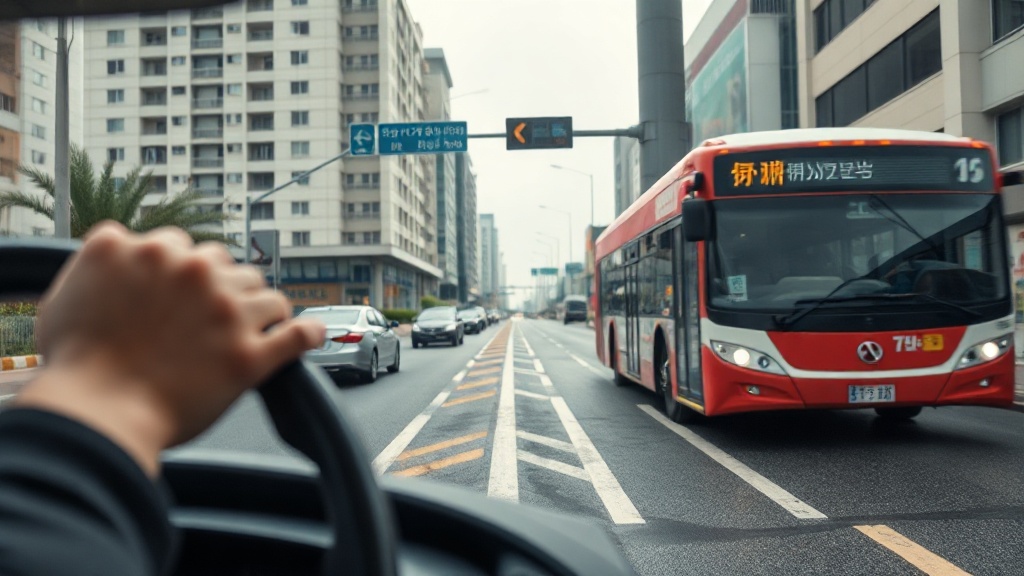
A bus-only lane is designed to keep public transit moving.
It is not just an empty strip of pavement. It is a tool for saving time for dozens of people at once.
In a crowded city, that matters.
One bus that moves smoothly can carry 30, 40, or even more riders without adding to the traffic jam.
When a bus moves faster, many people get part of their day back.
That is why a single violation affects more than one driver's convenience.

How the public responds also matters.
Paying the fine does not erase the discussion.
Instead, it leads people to ask why it happened, how the vehicle was managed, and who was responsible for the decision on the road.
Public figures are watched more closely than ordinary drivers.
For that reason, even a small traffic mistake can shake trust.
Order is another word for care
Rules are often inconvenient.
But that inconvenience exists for a reason.
It is accepted not for one person's comfort, but for the movement of everyone else.
Keeping a bus lane clear is not only about following a rule. It is about respecting the time of riders, easing congestion, and making the city work more smoothly.
In that sense, order is not the opposite of kindness. It is one of its forms.
Still, real life does not always feel that way.
The thought that says, This is only a moment, so it should be fine, may feel reasonable to one driver. To a community, it becomes a crack in the system.
Those who support strict enforcement make a strong case.
The bus-only lane exists for a public purpose, and breaking that purpose weakens the whole system.
During rush hour, even one violation can slow a bus carrying many passengers.
Then the delay spreads to everyone waiting, everyone transferring, and everyone trying to get to work on time.
The more exceptions people allow, the more the rule loses its force.
And once fairness starts to fade, trust fades with it.
That is especially true when the person involved is well known. Public figures are often expected to show more care, not less.
Supporters of strict enforcement also point to equality before the law.
If one person is fined and another is ignored, the system begins to look arbitrary.
Once drivers believe that rules depend on status, they stop trusting the road rules altogether.
In that sense, respect for the law is not just about personal morals. It is part of the social contract (the shared understanding that rules apply to everyone).
Following traffic rules is not a loss. It is a fair way of sharing time among strangers.
Meanwhile, others see the situation in a more complicated light.
Driving is not always predictable, and vehicle management systems can be messy.
When several people are involved in operating a car, a mistake may come from poor communication, a wrong route, or simple confusion instead of clear intent.
That is why some argue it is not enough to treat the event as a moral failure and move on.
If the fine was paid and an apology was made, the next step should be prevention, not public shaming.
This view also makes room for human error.
No driver is perfect every second of the day.
Road signs can be missed. A turn can come too late. A lane can be entered by mistake under pressure.
So the key question becomes what happens after the error.
Did those responsible acknowledge it? Did they fix the process? Did they make sure it would not happen again?
From this angle, the issue is not simply the mistake itself, but whether the response was honest and enough to stop a repeat.
There is also a warning about overreaction.
A traffic violation involving a celebrity can draw huge attention, but attention can quickly turn into noise.
If the public focuses only on outrage, it may miss the real lesson: better management, clearer guidance, and stronger driver education.
In other words, the best response may be to improve the whole system rather than to punish one person forever.
This view does not excuse the violation. It simply asks for a wider lens.
Both sides make sense.
Strict compliance protects public trust. Better management prevents mistakes from repeating.
What stands out in this case, though, is the response after the violation.
An apology was made, and the fine was paid.
That shows at least a basic acceptance of responsibility.
However, it is hard to say that this alone resolves everything.
Society always watches not only the result, but also the process and the habits behind it.
This kind of story is not like a stock price or a loan balance, where numbers tell the whole story.
It is about judgment, management, and trust.
Whether the person is a celebrity or an ordinary driver, the rule stays the same.
In daily life, the same principle applies to many choices: how carefully we manage a car, how seriously we treat insurance, and how responsibly we handle money and other obligations.
Small habits reveal the quality of bigger decisions.
Long-term stability often begins with respect for the smallest rules.
Sorry is not enough unless it changes behavior
That much is clear.
A bus-lane violation is not something that ends with a single ticket.
Responsibility has to follow. Management has to improve. A real prevention plan has to be in place.
The apology from the former agency and the paid fine may be the first step.
But the public always asks one more question: what happens next?
If that question is left unanswered, the apology can quickly become empty formality.
People do not expect perfection from anyone.
What they do expect is honesty when mistakes happen.
And they remember the people who do more than apologize, the ones who change the system so the same thing does not happen again.
That is why traffic discipline is connected to character.
A person is not defined by one easy choice made in a hurry, but by steady care and consistent responsibility.
This case reminds us of one simple truth.
The law is not decoration. It is a minimum standard that helps keep everyday life safe.
And bus-only lanes are one of the clearest places where that standard shows itself.
When people build the habit of thinking about the public good, the city moves more smoothly and trust gets stronger.
That is why a small violation should never be brushed aside.
In the end, this story brings together two things: the importance of obeying traffic law and the responsibility that follows a violation.
One side emphasizes order and fairness. The other emphasizes human error and the need to prevent repeat mistakes.
Both point toward better management and more mature conduct.
The real question is simple: in a shared city, how much weight should we give to a single moment of convenience?
