Las Vegas turned red after dark.
Sixty thousand ARMY members transformed one city into a concert ground.
BTS's presence rippled far beyond the stage.
The scene captured both where K-pop stands now and how far it has spread.
A fandom does not just fill seats; it can reshape the mood of an entire city.
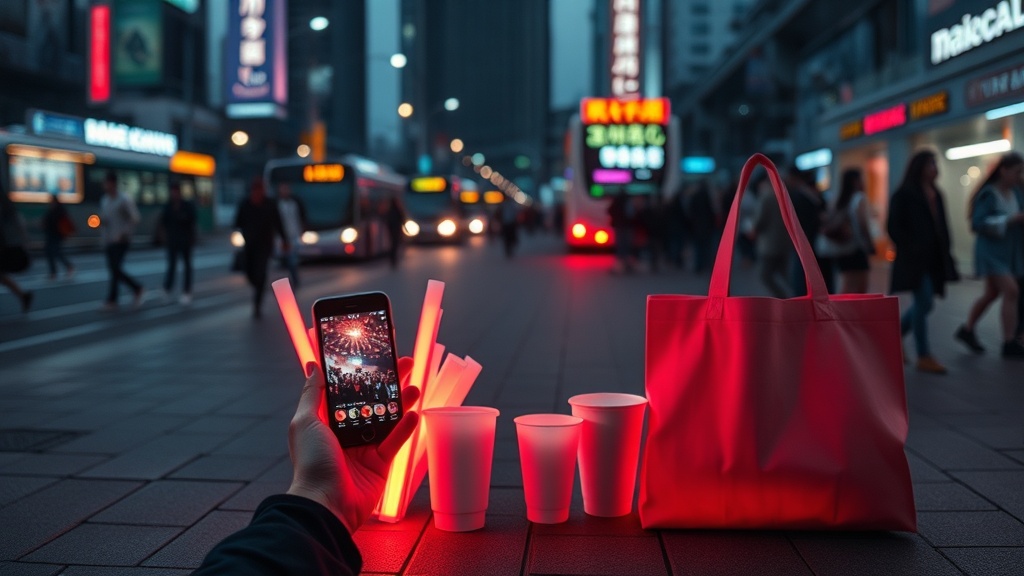
Why did 60,000 cheers turn Las Vegas red?
In May 2026, Las Vegas was not just another tourist city.
When 60,000 ARMY fans arrived for BTS, the air on the streets changed almost immediately.
In the middle of a city where a mini pyramid and a replica Eiffel Tower stand only a few blocks apart, K-pop became more than a show. It became a force that moved the whole town.
This was not only a hit concert. It was a sign that the center of global culture is shifting.
Las Vegas is used to spectacle.
It lives on big shows, bright signs, and endless tourism.
However, the scene created by BTS and ARMY went beyond the usual tourist script.
Fans came for the music, but they also shook up landmarks, streets, hotels, traffic, and spending.
As a result, the concert did not end at the venue. It spilled into the city itself.
This moment says something important about Korean pop music today.
K-pop is no longer a regional trend.
ARMY's gathering combines spontaneity with remarkable organization, and BTS sits at the center as a kind of language that moves people.
This was not just one performer drawing a crowd. It was fans from around the world joining the same time, the same place, and the same feeling.
That kind of unity carries meaning beyond entertainment. It speaks to culture, identity, and even social power.
Is all this excitement just a party?
The power of the surge
It is strong.
People who see the Las Vegas gathering in a positive light have a clear argument.
First, it makes K-pop's global reach visible in a way few things can.
When an Asian music act brings tens of thousands of people to a major U.S. tourism hub, it shows that cultural borders have already loosened.
Years ago, Korean pop culture might have seemed like a local interest at best. Now it can reshape the rhythm of an entire city.
Second, a concert like this brings real money into the local economy.
Fans do not buy tickets and stop there.
They book flights, reserve hotels, plan meals, and figure out transportation.
That flow of spending supports workers in hospitality, transit, restaurants, and retail.
Big concerts matter because they do not just create a single night of revenue. They keep the city moving.
Third, fandom is not passive anymore.
ARMY members share information, help one another with schedules, and build the atmosphere together.
That kind of energy spreads quickly online and turns into cooperation in person.
In that sense, fandom reflects something bigger about modern life: people can organize themselves around shared emotion and shared purpose.
Liking something deeply can become an engine for culture and business.
BTS's success also shows how language and identity can expand.
Korean lyrics are no longer treated as a barrier; they are part of the appeal.
That matters because it turns music into a gateway for learning about another country, another style, and another cultural context.
For many fans, pop music is where curiosity starts.
Seen this way, the red wave in Las Vegas was not just fan service.
It was a meeting point for city life, culture, industry, and identity.
And it cannot be explained by money alone.
It came from passion, belonging, and a shared experience people wanted to be part of.
The shadow behind the surge
But there is another side.
Large crowds always bring safety and order concerns.
When 60,000 people move at once, traffic jams, blocked walkways, and pressure on security can grow fast.
The bigger the success, the greater the risk if planning falls short.
That is why events on this scale depend on careful management and prevention.
Meanwhile, when fandom energy leans too heavily in one direction, cultural consumption can lose balance.
Love for an artist can be healthy and inspiring.
However, if the excitement overheats, people can stop noticing everything around them.
Like a household that spends too freely, a fan experience can turn costly if there is no restraint.
Tickets, travel, hotels, and merchandise can add up quickly. For some people, debt can even enter the picture, and then joy starts to feel like pressure.
At the same time, careful fandom can show something positive about community discipline.
However, that only works when fan energy is matched by planning from organizers, support from the city, and cooperation from the fans themselves.
In other words, fandom has power, but power needs structure if it is going to stay safe.
There is also the question of commercialization.
When a concert becomes more about pushing consumption than about the cultural experience itself, its meaning can get blurred.
In a place like Las Vegas, where entertainment and branding already overlap, that line can disappear even faster.
Tourism, marketing, and image-building can all blend together until fans look less like participants and more like part of a sales machine.
That is why ethics and management matter so much.
More broadly, fan-driven moments like this also reflect a society's priorities.
While people pour huge amounts of time and emotion into one artist or event, long-term issues like education, health, retirement, and pensions can slip into the background.
There is nothing wrong with joy itself.
But the longer the excitement lasts, the more important it becomes to keep the rest of life in view.
The louder the cheering gets, the more balance matters.

The show ends, but the questions stay
What remains
It lasts.
The scene BTS and ARMY created in Las Vegas was undeniably powerful.
It showed the global reach of K-pop, the organization behind fandom, and the ripple effect of a major city event all at once.
At the same time, it left behind harder questions about control, balance, safety, and sustainability.
Any cultural boom brings both light and shadow.
What matters in the end is not only what brings people together, but also where that energy goes once they arrive.
A society that measures everything only by visible returns, like property or investment gains, misses something deeper.
A society that can also read culture and solidarity will last longer.
A concert cheer may be brief, but if the experience widens people's sense of community and the world, it stays with them.
If excitement is consumed too quickly, all that remains is fatigue.
This event makes it clear how Hallyu, the global Korean Wave, works in the real world.
BTS sang on stage, but the effect reached far beyond the stage lights.
It shook the city's mood, its economy, fandom culture, and even its global image.
ARMY was not just the audience. It was part of the event itself.
Las Vegas was not just the backdrop. It became part of the story.
So how should we read a moment like this?
As proof of cultural progress, or as a burst of energy that now needs careful management?
There is no single answer.
But the question is clear: where is our era's deepest passion burning brightest?
