A Brazilian woman identified as A, who repeatedly visited the home of BTS member Jungkook, has been indicted after being held in custody.
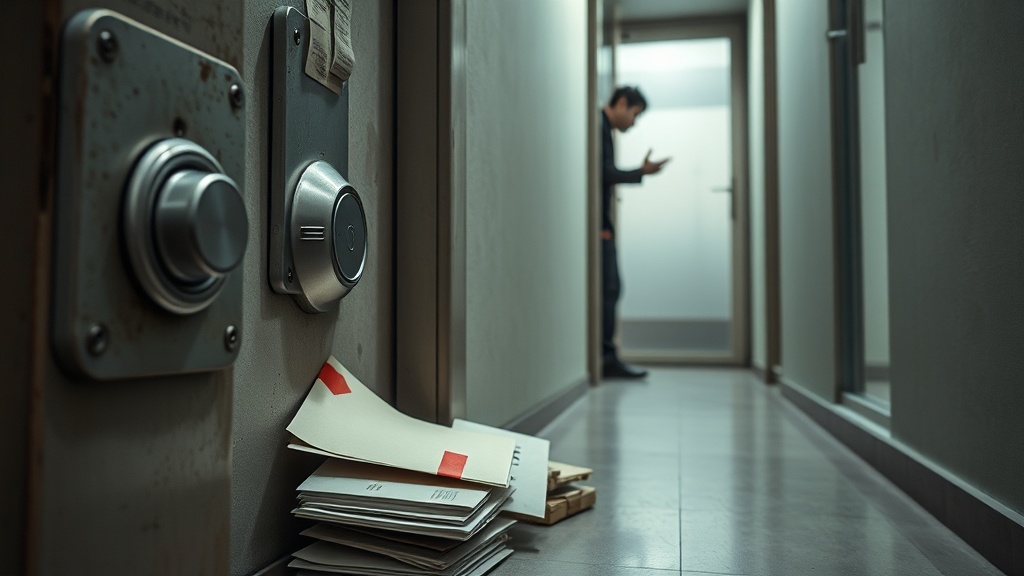
She rang the front-door buzzer hundreds of times and left mail at the house.
Prosecutors charged her with violating South Korea's anti-stalking law and trespassing.
The case renews concerns about stalking crimes targeting celebrities.
"Is the sound of a doorbell the start of a crime?"
Case summary
Here are the key facts.
Jungkook (real name Jeon Jung-kook), a member of the global K-pop group BTS, was the target. His Yongsan District residence was visited by the woman from Dec. 7, 2025 to Jan. 4, 2026 in about 20–23 separate incidents.
During those visits she repeatedly pressed the doorbell hundreds of times and left mail and other items at the doorstep.
Police arrested her on Dec. 13, 2025 for trespassing but later released her; she then violated a court-ordered ban on approaching the home and was rearrested and sent to prosecutors.
On Feb. 27, 2026 the Seoul Western District Prosecutor's Office, the unit that handles crimes against women and children, formally indicted her on charges of violating the Stalking Punishment Act and trespass.
Prosecutors declined to pursue attempted trespass due to insufficient evidence in some episodes.
Under current law a stalking conviction can carry up to four years in prison.
Facts and records
Look at the timeline.
Public investigation records and press reports show the woman repeatedly visited Jungkook's home, left mail, and pressed the doorbell many times as a pattern of stalking.
Police issued an emergency protection order banning her from coming within 100 meters of the residence, but she returned and authorities took further action.
Such repeated approaches are judged as an ongoing threat, not isolated curiosity or an accidental act.
Repeated visits and incessant doorbell ringing cause serious anxiety and fear to the victim.
Jungkook has previously experienced multiple stalking attempts and trespass incidents.
Past episodes include a reported intrusion into a parking area by a South Korean woman in Aug. 2025 and an attempt by a Japanese woman to tamper with a home lock in Nov. 2025.
Photos and videos appear to have been considered during the investigation.
However, final decisions in investigations and trials depend on legal evaluation of physical evidence and testimony.
A thorough review of investigation files and court records is necessary to reveal the full facts.
From the victim's perspective
Safety must come first.
Regardless of celebrity status, a person's home and privacy deserve legal protection.
Repeated visits and doorbell harassment cannot be explained away as simple "passion" or "fan devotion"; they are threatening behaviors that cause real harm.
Meanwhile, the fear felt by the victim extends into public life.
The mental stress suffered by a public figure can affect work and daily life.
Reduced focus on performances, recordings, or schedules can translate into professional harm.
Within fan communities, protecting personal safety and privacy is not just a private conflict; it becomes a public safety issue.
"If you come to my place, I'll lock you up" — such warnings reflect the tension left by repeated intrusion.
Without legal protections, repeated violations make recovery difficult.
Victims need quick and effective protection from law enforcement and institutional support.
Investigators and courts should weigh the victim's recovery prospects when making strict decisions.
From the defendant's side
The defendant's motive has been asserted.
During the prosecution inquiry the woman said her acts were expressions of love for Jungkook and that she had no intent to harm him.
That claim becomes a central issue in court, where motive and responsibility are disputed.
However, a stated motive does not erase the repetitive nature of the conduct or its impact on the victim.
The law considers both motive and result.
Mental health issues or obsessive behavior can affect criminal responsibility (how blameworthy someone is), but they do not automatically eliminate punishment.
Social policy must balance punishment with prevention and treatment to reduce repeat offenses.
That balance calls for punishment and rehabilitation together.
But in court, judges will consider motive along with repeated behavior, the use of force or intimidation, and violations of protection orders.
Another factor is the defendant's foreign nationality.
Immigration status, possible deportation, and diplomatic procedures add practical variables separate from criminal proceedings.
Those conditions can affect how investigations and trials proceed.
Legal and institutional implications
System improvements are needed.
South Korea's Stalking Punishment Act (enacted 2021) established legal grounds to punish stalking, but enforcement measures require strengthening.
Emergency safety orders and penalties for violations need a faster, more precise response system.
At the same time, social support systems linked to prevention and victim protection should be expanded.
Authorities must seek a balance of prevention and punishment.
Preventive measures may include warnings, restraining orders (a court rule to keep someone away), and connected monitoring systems.
On the punitive side, repeat violations should trigger strict criminal liability to deter future crimes.
This dual approach helps both victim recovery and deterrence.
Changing public attitudes matters as well.
Seeing stalking as mere "fan behavior" ignores victims' realities.
Media coverage and public education should clearly explain the nature of stalking and the trauma it causes.
Legal education and timely support can improve frontline responses.
International context and culture
The issue is global.
The worldwide reach of K-pop means artists face risks in many countries regardless of nationality.
Fan energy can sometimes turn into obsessive behavior, and authorities need to recognize that hazard.
International cooperation and information-sharing play an important role in responding to such incidents.
Comparing overseas practices helps.
Many countries have stepped up legal penalties and victim protections for celebrity-targeted stalking.
Korean law enforcement and institutions can benchmark these measures and adapt them to local realities.
Ultimately, combining protection and punishment offers a sustainable path forward.
Conclusion
Summing up the core point.
The Jungkook stalking case underscores how vital it is to protect a person's home and private life.
The prosecutors' decision to detain and indict tests the Stalking Punishment Act's real-world effectiveness.
At the same time, the defendant's motive and the possibility of therapeutic rehabilitation should be part of the discussion.
Legal action, victim protection, and public education must advance together to prevent recurrence.
Detailed fact-finding and the court's ruling in the coming trial will indicate how to improve related institutions.
It will take cooperation from many stakeholders to create a safer environment.
We ask readers:
If you had to prioritize, would you put victim protection or offender punishment first?
