Authorities have laid out phased measures to protect both spectator safety and historic sites such as Gyeongbokgung Palace.
The Cultural Heritage Administration, the Seoul city government and the police say they will focus inspections on access controls and emergency response systems.
Operational coordination and on-site improvements remain outstanding, so final readiness will depend on clear execution and public cooperation.
On the ground at Gwanghwamun: choosing between safety and preservation
Summary of the situation.
The BTS comeback show is scheduled for March 21, 2026, at Gwanghwamun Plaza in Seoul.
Organizers and authorities expect between 230,000 and 260,000 spectators, so agencies are mobilizing a full response.
The Cultural Heritage Administration (the agency that protects national monuments) announced a temporary closure of Gyeongbokgung Palace and the National Palace Museum on the event day and will control site access.
Seoul city gave conditional approval through its local festival committee and asked for additional safeguards.
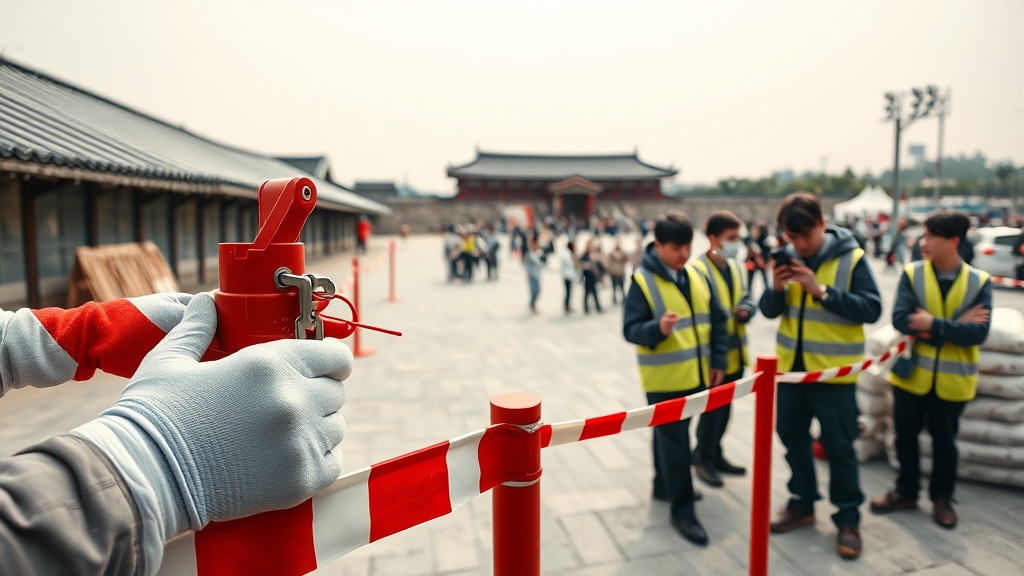
The police have proposed crowd-control lines and management of 29 entrance paths as core measures.
HYBE, BTS’s management company, said it will shorten the performance to one hour for safety reasons and adjust its coordination plans.
How on-site operations will be set up.
The Cultural Heritage Administration says staff will inspect palace buildings and restrooms during the week before the event and even check roof tiles and other fragile elements.
All agency personnel will be on emergency duty and emergency contact lines will be tightened to reduce the chance of damage to historic assets.
An emergency response unit for royal sites will increase perimeter patrols, enforce vehicle controls and expand CCTV monitoring.
Seoul city is sharpening the large-scale emergency medical and transport plan, and it has demanded upgrades to restrooms and other visitor facilities.
The city also ordered a joint operations center for real-time information sharing and asked for a detailed improvement plan by the 10th (the deadline set by officials).
These moves clarify how administrative, safety and heritage roles will be divided in practice.

Traffic and subway operating rules.
The police plan to request express-through services (no stopping) at stations near Gwanghwamun and City Hall and to announce vehicle controls on major roads.
They will manage flows through 29 access points to prevent crowding and keep multiple exit routes open to reduce congestion at dismissal.
Public transit will run with flexible schedules and extra trains and buses are planned to disperse attendees.
However, bottlenecks remain a real possibility when many people try to leave at the same time.
As a result, authorities plan temporary pedestrian lanes, adjusted traffic signals at key intersections, and extra safety personnel deployed in real time.
Traffic control and clear wayfinding will be central to keeping the event safe.
Emergency medical readiness is crucial.
Seoul city says it will refine a large-scale emergency medical and transport plan and preposition medical teams and ambulances near the site.
Officials have developed scenarios for cardiac arrest, heatstroke and mass-casualty incidents and confirmed patient-transfer routes with nearby hospitals.
Medical prevention and rapid response are the most important tools for minimizing loss of life at large public gatherings.
Signage with medical information will be provided in multiple languages, and medical and safety staff will work together to spot emergencies early.
Authorities stress that this must function as prevention-focused safety, not just reactive emergency care.
Spectator lives and the preservation of cultural heritage must be treated with equal weight.
Arguments in favor of holding the event.
First, a large performance can showcase Korean heritage alongside global pop culture, raising international awareness of both K-pop and historic sites.
Hosting an event in a symbolic space like Gwanghwamun can amplify tourism and cultural promotion when managed responsibly.
Economic spillovers and increased recognition of heritage assets often follow well-run public events.
Second, the measures proposed by authorities are layered and concrete.
Temporary palace closures, emergency staffing, crowd-control lines and tightened medical requirements are practical preparations that could work in real conditions.
If the operational plan functions as designed, risks of mass disorder and physical damage can be significantly reduced.
Third, public-private coordination can quickly address outstanding gaps.
HYBE’s decision to shorten the performance and the city’s requests for improvements show that adjustments are possible through cooperation.
With sufficient fixes and civic cooperation, it is plausible to meet both safety and preservation goals.
Finally, the experience gained from managing such a high-profile event can inform future rules and standard operating procedures.
Therefore, while immediate risks exist, the event could accelerate institutional improvements in public-safety protocols if lessons are properly captured and applied.
These points accept the event’s value but insist that concrete risk controls must accompany it.
Concerns and objections in detail.
First, the projected crowd of 230,000–260,000 exposes real limits to effective control.
In an emergency, simultaneous exits and converging flows can produce unpredictable crushes and injuries.
When many people try to leave at once, no amount of controls guarantees complete safety.
Second, physical vulnerabilities at heritage sites such as Gyeongbokgung’s outer gate, walls and roof tiles raise alarm.
Repeated pressure and vibration can cause irreversible damage to features like stone platforms (woldae), walls and clay roof tiles.
If visitor routes are not strictly separated from protected zones, the risk of direct harm to cultural property is significant.
Third, Seoul city’s judgment that HYBE’s safety plan is insufficient is a serious red flag.
If requested improvements are not meaningfully reflected on the ground, written plans will amount to little more than formalities.
Interagency cooperation may look thorough on paper, yet practical gaps often appear during field operations.
Fourth, gaps often exist between an ideal medical plan and real-world application.
In a mass-casualty scenario, staffing and hospital capacity may be overwhelmed; delays in transport can be fatal.
Without rigorous drills, verification of scenarios and repeated on-site checks, a small problem can quickly become a major tragedy.
In sum, these objections are not mere criticism but warnings grounded in concrete safety and preservation concerns.
Organizers and authorities must prove their plans with numbers and site simulations; otherwise, a large event could pose unnecessary risks.
This demand aligns with the principle that public safety must come first.
Comparisons and alternative approaches.
Supporters stress promotion and operational learning.
Opponents prioritize physical safety and heritage protection.
These positions are not mutually exclusive: careful mitigation can create balance.
As alternatives, consider ticketed, time-staggered entry to spread arrival times, staged opening of exit routes, and temporary reversible road changes to concentrate post-show egress.
Also recommend temporary protection for sensitive sections of palace walls and platforms, and adaptive safety fencing that reacts to crowd pressure.
Complementary measures include closing CCTV blind spots, temporary fire-safety upgrades, multilingual signage, and expanded paid facilities to secure basic convenience and reduce risky behavior.
Operationally, joint government-private rehearsals should be run, and response benchmarks should be quantified for each scenario.
Publishing operation manuals and inspection outcomes would increase transparency and public trust.
Ultimately, the event should be used to test preventive systems and rapid, on-site response rather than to rely solely on post-incident fixes.
Summary and recommendations.
Authorities have proposed a range of safety measures, but the key issue is whether those measures will hold up under real conditions.
Officials must treat heritage protection and spectator safety as equally important and pursue both operational readiness and prevention concurrently.
Combining rehearsal-based drills, phased dismissal plans and layered medical preparedness will be necessary to reduce actual risk.
This event tests three public goals at once: public safety, cultural-preservation, and global promotion of popular culture.
Therefore, preparations should assume worst-case scenarios and favor prevention at every step.
Which balance do you think is realistic: strict limits that prioritize preservation, or adaptive measures that allow a large public celebration with heavy safeguards?
