On March 21, 2026, a major comeback concert in Gwanghwamun raised sharp questions about accessibility and event management.
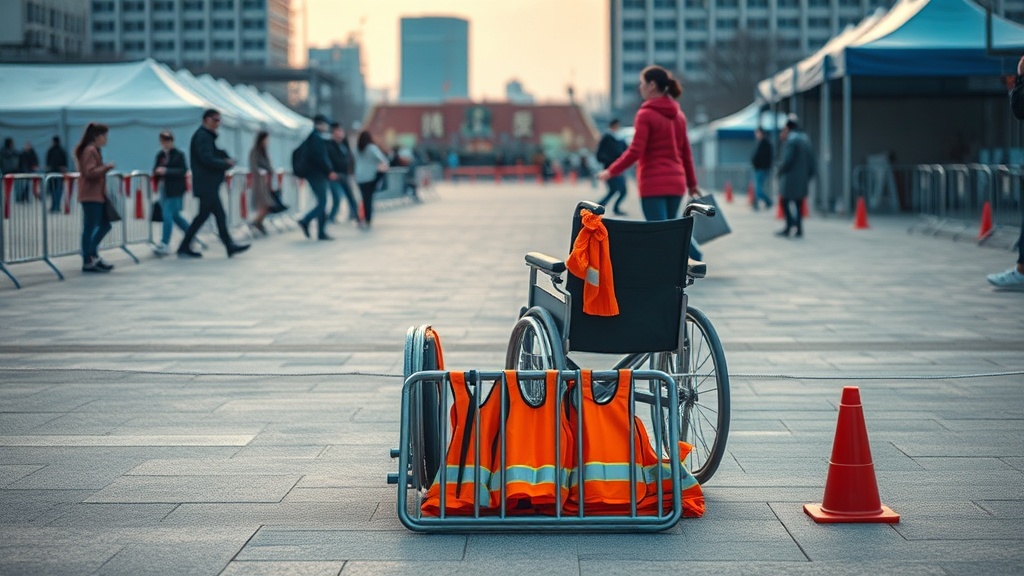
Out of roughly 22,000 temporary seats, only 10 were set aside for wheelchairs, a fact that triggered public criticism.
Disagreements between the organizer and safety authorities over crowd estimates led to heavy deployment of civil servants and police.
Voices are growing that ask how to balance disabled spectators' right to attend with the public use of resources.
Gwanghwamun ARIRANG: festival or field of dispute?
Event overview and the numbers
The dates and figures jump out first.
On March 21, 2026, a temporary stage was erected at Gwanghwamun Square for a large open-air event.
The promoter said online measures suggested about 100,000 attendees.
Meanwhile, Seoul city and the police estimated up to 260,000 people, while the city later reported an actual count of roughly 40,000.
The gap between those numbers is more than a statistical quarrel; however, it affects operations and how public resources are allocated.
Police and city officials said they mobilized staff to guard against terrorism, large crowds, and medical emergencies.
Reportedly, about 10,000 civil servants worked holiday shifts and more than 6,000 police officers were assigned.
That scale of deployment raised questions about whether taxpayer funds were used appropriately and whether emergency services were left short elsewhere.
Legal and institutional background
There is a legal blind spot.
Under rules tied to the enforcement of disability convenience laws (rules that require venues to reserve seats for disabled attendees), an indoor venue with over 2,000 seats must set aside at least 20 wheelchair spaces.
However, those regulations do not clearly apply to temporary outdoor stages, exposing a regulatory gap.
As a result, the scope of legal responsibility for public events has become a central issue.
That legal gap has real consequences.
Advocacy groups say that if an event is public, accessibility rules should apply whether the venue is permanent or temporary.
On the other hand, organizers and some administrators point to the practical limits of temporary setups.
Either way, the debate points toward the need for clearer rules and stronger guidance.

Criticism over disabled access
Access to public events should be universal. We must listen to those directly affected. The failure to apply accessibility standards is not merely procedural. Ten wheelchair spots do not meet the public purpose of an open event.
That is why the tiny number of wheelchair spots at a public concert became a civic concern.
Reporting that just 10 wheelchair spaces were available among roughly 22,000 seats explains exclusion more than it does arithmetic.
Wheelchair-using fans say they were frustrated: only five wheelchair tickets in each of two sales rounds left many without any chance to attend.
One disabled fan said they had to watch the broadcast at home because they could not get a ticket.
Another who uses a wheelchair reported being turned away after security checks and spending time circling the square before giving up.
These accounts show how small legal gaps can translate into real exclusion.
Public events assume a social promise: shared use of public space. However, if rules do not cover temporary stages, organizers are left to decide how—or whether—to provide access.
That discretion often falls short, and isolated accommodations rarely produce true inclusion.
This line of critique drives calls for legal and operational fixes.
Groups such as the Coalition for Disability Rights urged authorities to require accessibility standards regardless of a venue's permanence.
Their demands ask for both law changes and practical changes on the ground.
Arguments for the safety-first approach
Safety is the priority.
Police and safety officials say they prepared for worst-case scenarios, including coordinated threats, and that heavy staffing was necessary.
Some experts argue that over-preparing is a reasonable insurance policy when large crowds and international tensions are factors.
Supporters of the heavy deployment also point out the event ended without major incidents.
This view rests on risk-management principles.
Authorities allocate resources to cover the worst foreseeable outcomes. If a shortfall led to a disaster, the political and social cost would be enormous.
Hence, some officials treat the expense of extra staffing as acceptable insurance.
Yet context matters. Not every choice is justified simply by invoking safety.
If crowd-estimation methods or counting rules (for example, how online viewers and foreign connections are tallied) inflated the numbers, the justification for massive resource use weakens.
Seoul's official count falling far below organizer and police estimates highlights the need for transparent forecasting.
At the same time, moving many emergency staff to the event may have left other neighborhoods less well covered.
This phrase calls for balanced analysis of costs and benefits between safety and efficient public-resource use.
Resource use and the tax debate
How public money is used must be transparent.
Deploying about 10,000 civil servants on a holiday sparked debate about proper spending.
Critics say exaggerated crowd estimates wasted taxpayer money.
Supporters reply that planning for huge crowds preserved public safety.
The central question is forecast reliability.
Technical choices—adding up telecom connections, counting overseas viewers, or double-counting—can swing the numbers dramatically.
Deploying large forces without verified estimates may protect safety in the short term but undermine long-term public trust.
Thus, standardized forecasting methods and clear cost-benefit analyses are needed.
Another worry is redistribution of emergency resources.
If medical teams and social-service staff are moved to the event, other vulnerable groups may face gaps in care.
Temporary weakening of services for the elderly or people who need ongoing support is a serious policy concern that cannot be ignored.
Public spending earns legitimacy only when it secures both safety and efficiency.
This idea highlights fiscal and administrative responsibility as part of good governance.
Transparent accounting and alternative plans should be part of preparations for any large public event.
Alternatives and international examples
Comparisons are useful. Practical steps are feasible. Promoters should also bear more responsibility.
Many cities around the world set clear accessibility rules for large outdoor events.
Some require temporary stages to include accessible routes and a minimum number of seats for people with disabilities.
Those practices offer models for improving domestic rules.
First, create minimum accessibility standards that explicitly cover temporary stages.
Second, standardize how crowds are estimated and introduce independent verification.
Third, publish cost-benefit reports and contingency staffing plans when public resources are mobilized.
Organizers who consult disability groups early and build accessible plans reduce last-minute problems.
Formalizing communication with fan communities can help ensure that vulnerable attendees are not left out.
These measures are investments in event quality and public trust, not mere compliance burdens.
Voices from the field and social meaning
The lived experiences of attendees matter.
Stories of disabled fans who gave up trying to attend show what happens when policy does not meet reality.
At the same time, widespread frustration about inconvenience and perceived waste of public money reveals fractures in public consensus.
This conflict is not just about one concert; it reflects how we build inclusive public culture over time.
Political statements amplified the debate.
Comments from public officials and partisan framing sometimes shifted focus away from access and resource allocation to cultural or political battles.
Nevertheless, the need for policy fixes remains clear.
Policy recommendations
Here are practical proposals.
First, legislate minimum accessibility standards that apply to all public events, including temporary stages.
Second, standardize crowd-estimation guidelines and create a process for independent review.
Third, require publication of cost-benefit analyses and plans to keep essential emergency services functioning while resources are deployed.
Operational details matter too.
Set clear standards for wheelchair routes, security checkpoint placement, and staff to assist mobility-impaired attendees.
Mandate collaboration between organizers, local government, and disability advocates to increase feasibility.
Those changes can produce short-term improvements and long-term gains in inclusive cultural participation.
Conclusion
In short, reforms are needed.
The Gwanghwamun ARIRANG concert exposed both a legal blind spot around temporary venues and the risks of over- or under-preparing for crowds.
Accessibility and safety need not conflict; they should be planned together.
Transparent forecasting, accountable resource use, and real inclusion for disabled attendees should become core standards for future large public events.
Policy grows stronger when it listens to people on the ground.
Finally: who should our next big public celebration be for?
