On March 21, 2026, a full-group BTS comeback performance at Gwanghwamun Square tested the boundary between public celebration and public safety.
The police said they planned for up to 260,000 people and imposed 33 hours of crowd control with large safety deployments.
Organizers estimated about 104,000 attendees while the Seoul city tally put the figure near 48,000 — numbers that diverged sharply from the police prediction.
As a result, traffic disruption and clashes with street vendors raised questions about whether the control measures undermined the square's public character.
A public festival in Gwanghwamun and the management dilemma
What happened
Safety was declared the top priority.
On March 21, 2026, Gwanghwamun Square hosted a BTS comeback concert involving the whole group.
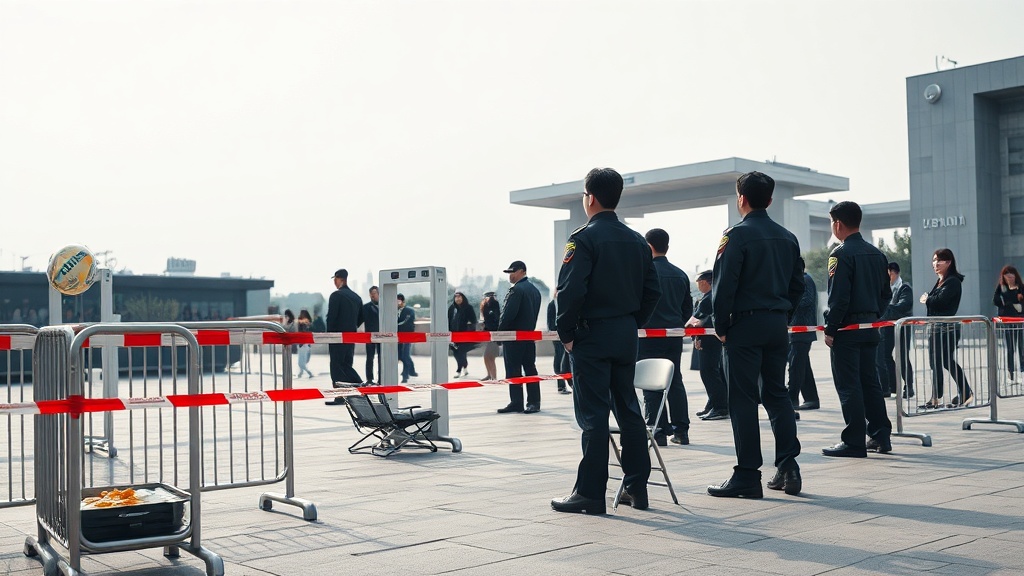
Police say they began controlling the square from 9 p.m. the night before, maintaining restrictions for 33 hours, running some subway stations without stopping, diverting buses, setting up 31 access checkpoints, and performing bag checks.
They reported deploying about 300 metal detectors and counter-drone equipment, and said roughly 15,000 staff and security personnel were assigned to the operation.
Finding a balance between public safety and freedom of movement is essential.
The concert ended without a major accident, but confusion on site and around the square sparked debate.
Calls to the emergency line 112 were mainly for traffic and noise complaints, totaling 74 reports, while three alleged airborne threats were later judged to be false alarms.
Context and background
Context matters.
The police said their measures reflected both local and international security concerns and the global reach of K-pop (popular South Korean pop music).
Officials pointed to tensions in the Middle East and other international factors as part of the rationale for a large security footprint.
Meanwhile, experience with large public gatherings and practical limits on event operations also shaped planning.
Gwanghwamun Square is both a historic, symbolic place and an everyday transit corridor.
Temporary closures inevitably cause inconvenience to residents and passersby, so administration needs to factor that in repeatedly when designing plans.
That reality has revived calls for institutional safeguards and better prior communication with the public.
The safety-first argument
The safety argument is straightforward.
Supporters of the police approach say "better safe than sorry."
Police and event organizers argue they estimated the maximum likely security demand and staffed accordingly.
They emphasize that preventing crowd crushes, violence, confusion, and possible terror risks requires proactive measures.
Officials pointed to past failures at large gatherings at home and abroad as reasons not to underestimate risk.
Metal detectors and drone-countermeasures are technical tools that can lower random risks, and running trains through busy stations without stopping reduces sudden surges of people on platforms.
From this view, preparation and manpower are the minimum safety devices to protect lives.
Because the event finished without a major incident, supporters conclude the measures were preventive rather than excessive.
Problems with over-control
Over-control clearly has costs.
Critics say the police prediction of 260,000 people was unrealistic.
Actual attendance estimates — about 104,000 from organizers and 48,000 from the city — were far below that figure, and long closures and traffic detours produced needless disruption, they argue.
Notably, skipping stops at Gwanghwamun, City Hall, and Gyeongbokgung subway stations and rerouting buses interfered with everyday travel and commutes.
Confrontations during vendor crackdowns and reports of people heading to wedding halls being turned back reveal social and human costs beyond simple access restrictions.
Some vendors had come hoping to sell on a rare busy day, while other citizens tried to exercise routine freedom of movement and were stopped.
These incidents raise the question of how to guarantee access to public places and how to weigh everyday rights against event management.
When control measures collide with public rights, they risk losing democratic legitimacy.
Neutral and alternative views
A balanced approach is needed.
Neutral observers note that while the absence of a major accident is a positive, the accuracy of crowd forecasts must improve.
Analysts identify gaps in forecasting models and transparency of information sharing as key causes of the controversy.
They suggest concrete steps: prior consultation with residents, advance public notices, alternative transport plans, and temporary vendor permits to reduce friction.
For example, real-time monitoring of crowd size and movement could minimize unnecessary closures.
Administrations should clarify how responsibilities are shared with organizers and set legal and institutional rules for using public spaces and compensation when closures impose costs.
Policy design should weigh three goals at once: protecting the public, ensuring safety, and preserving citizens' freedom of movement and economic activity.

Symbolism and social impact
Symbols matter.
BTS is an icon of global popular culture, and Gwanghwamun is a politically and historically charged public space.
The meeting of the two turns an administrative decision into a social conversation that touches culture and politics.
Management can sometimes diminish the festival experience, while festivals can test public norms and expectations.
Policymakers must therefore design realistic mechanisms to ease the tension between safety and public access, including transparent data and participatory decision-making.
Police and public agencies should update management manuals to prioritize both safety and minimizing citizen inconvenience in similar future events.
Conclusion and questions
To sum up:
The BTS concert at Gwanghwamun highlighted both the need for safety and the challenge of preserving public space.
Police preparation likely helped prevent a major incident, yet inaccurate crowd forecasts and heavy-handed measures caused real inconvenience and harm to some citizens.
Therefore, post-event reviews should refine forecasting methods and strengthen rules so public-space use and safety coexist in balance.
Safety and public access can conflict but they are not irreconcilable.
We leave this with a question for readers: do you think strong measures like long-term square closures are justified to protect public safety, or should authorities limit their powers to preserve access to shared civic space?
Progress depends on the social agreement we build around that question.
