She was reported to be 48 years old, and the news shocked fans in both Taiwan and Korea.
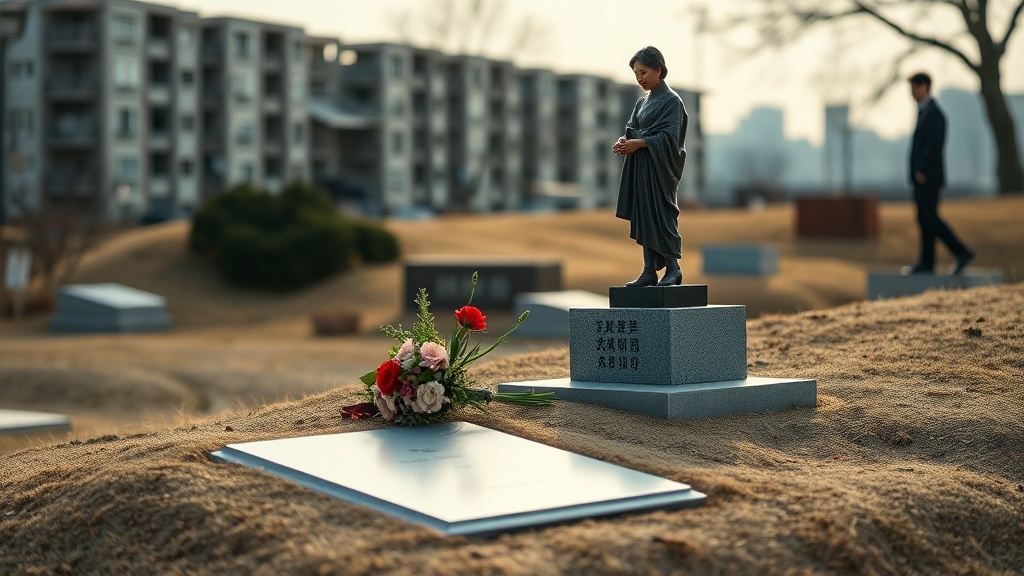
In February 2026, Koo Jun-yup held a public remembrance at her gravesite and installed a small monument marked "Wife, 1st anniversary."
This piece lays out the timeline, medical issues, and public reaction in layers.
Lost Laughter, a Small Monument: Shih Ssu-yuan's Final Trip and the First Anniversary
Case outline
Here is a brief outline.
At the end of January 2025, Taiwanese actress Shih Ssu-yuan traveled to Japan with family.
She developed a high fever after a reported influenza (flu) infection, and her condition progressed into pneumonia complications.
She received emergency care and showed temporary improvement, but she collapsed on the way to the airport and went into cardiac arrest; after many hours of treatment she passed away.
The central medical concern was a rapid deterioration from influenza to pneumonia, compounded by an existing heart condition reported in some accounts.
Meanwhile, the travel setting and the limits of on-the-spot emergency response appear to have influenced the outcome.
Fans remembered her energetic public image and reacted with shock at the sudden loss.
Medical course and what it means
The deterioration was sudden.
Reports say fever began after arrival in Japan on January 29. Medical staff evaluated her for influenza and signs of pneumonia and began treatment.
Antipyretics (fever reducers) produced a temporary clinical improvement, and that apparent stabilizing influenced the decision to move her to the airport.
However, temporary improvement is not the same as full recovery; patients with cardiac strain face a higher risk of rapid relapse.
A short-lived improvement during treatment should be treated as a warning sign.
Experts note that pneumonia places added stress on the heart, and in people with underlying cardiac disease even small clinical swings can be fatal.
Conversely, resuming travel or activity after a brief fever reduction can lead to misjudgment of risk.
Emergency-room symptom control and supportive care can create short-term stability, but known heart disease typically requires more intensive monitoring and inpatient care.
Prevention and responsibility
Prevention is possible.
One perspective emphasizes pre-travel health checks, vaccinations, and sharing medical records with travel companions or local caregivers.
Adults with chronic conditions are advised to consult their specialist before departure and to carry adequate medications and emergency plans.
Traveler insurance and an understanding of local medical access are also essential.
From this view, the incident cannot be reduced to individual error alone.
The quality of emergency medicine at the destination, the coordination between airlines and airport medical services, and timely communication with local hospitals could prevent catastrophic deterioration.
There are cases where prompt admission to a nearby hospital would likely have changed outcomes.
Also, seasonal outbreaks of contagious illnesses such as influenza mean that vaccination status can influence the course of illness.
Therefore, advocates call for cooperation among airlines, tourism services, and public health authorities.
They argue for realistic policy measures: expanding pre-departure medical consult systems, distributing checklists for travelers with chronic conditions, strengthening emergency response teams at airports, and including air medical evacuation in travel insurance coverage.
Force majeure and personal freedom
Not everything can be controlled.
Others warn against using a rare tragedy as a pretext for heavy-handed regulation that would erode personal freedom to travel.
They note that statistically rare events should be balanced against individual choice and mobility rights.
No amount of preparation can guarantee 100 percent safety before travel.
This position accepts Shih Ssu-yuan's death as a tragedy but cautions that overly broad mandates—such as mandatory predeparture medical checks for all travelers—could invade privacy and restrict movement.
Over-regulation could also waste medical resources and increase administrative burdens.
As a compromise, they recommend guidance-based policies, education, and easier access to medical consultation that preserve individual autonomy while managing risk.
In short, balance between regulation and freedom should guide policy design.
Public and family reaction
Fans mourned publicly.
Because Shih had a lively acting career and a warm public image, many fans in Korea, Taiwan, and across Asia expressed deep grief.
Online, messages and photos flowed as fans shared memories and condolences.
Koo Jun-yup publicly marked the first anniversary at the gravesite, installing a sculpture engraved "Wife, 1st anniversary," and held a small ceremony to remember her.
The family asked for quiet mourning in an official statement, and relatives expressed thanks to those who sent sympathy.
Still, tensions arose between private grief and public attention.
Some voices warned that fans' public memorials could intrude on family privacy.
Such debates are familiar whenever a celebrity's death becomes a matter of public consumption.
Now an image is presented.

The narrative continues after the image.
Photographs and archives serve both as factual reminders and as witnesses to emotion.
For a time the internet became a place for tribute and fact-checking; media reports worked to correct rumors and clarify details.
Policy suggestions and practical lessons
Practical lessons are clear.
First, travelers with chronic conditions should consult their physician before departure and ensure vaccinations and medications are up to date.
Second, it is wise to verify travel insurance details, especially emergency evacuation coverage.
Third, airlines, airports, and travel companies should strengthen protocols to connect quickly with local medical facilities in emergencies.
Fourth, public health authorities and the tourism sector should prepare joint manuals for seasonal outbreaks.
These measures should be designed to respect personal freedom while protecting public safety.
Small preparations and system upgrades are realistic ways to reduce the chance of a repeat tragedy.
Again, private grief and public debate coexist.
Shih Ssu-yuan's death is both a family tragedy and a public health signal about travel safety for people with underlying illnesses.
When compassion and policy work together, harm may be reduced.
Conclusion
The takeaway is straightforward.
Shih Ssu-yuan's sudden death highlighted vulnerabilities in health care while traveling and the danger posed by underlying heart conditions during respiratory infections.
Koo Jun-yup's first-anniversary memorial sits at the intersection of private grief and public remembrance.
Policy preparedness and individual readiness both matter.
Which side do you weigh more heavily after reading this?
Will you emphasize pre-travel prevention and stronger systems, or prioritize individual choice and freedom?
Your view will shape future public conversations.
