The agency made the announcement on January 28 and held a private funeral.
At the family's request, details including the cause of death were not released.
Fans and colleagues in the music world expressed deep shock at the sudden news.
Why did Mo Sujin's sudden death stop us in our tracks?
Case summary
The facts are simple.
Mo Sujin (born 1999, age 27), the vocalist of Acoustic Collabo (a mixed-gender duo), died on January 25, 2026. The agency, Panic Button, posted an official notice on January 28.
The funeral was private at the family's request, and the final rites took place on January 28 at 10:30 a.m. at Namyangju Eden Memorial Park (a cemetery just outside Seoul).
The agency urged the public to avoid spreading unverified guesses and rumors.
Career and music
Her voice stood out.
Mo trained as an idol trainee and joined Acoustic Collabo as the third-generation vocalist in 2019. She first appeared under the stage name "Cloudy" on several soundtrack tracks, and since 2022 she performed under her real name.
She became known for emotional performances on songs such as "I’ll Let You Go," "Missing Me, Missing You," and "Let’s Break Up." In June 2025 she released a single titled "Your Universe."
Her musical achievements were built in a relatively short time.
However, her death at a young age leaves lasting questions for fans and colleagues.
The family and agency made it clear they wanted a quiet farewell.
Respecting the family's wishes comes first.

Shock and immediate reaction
The shock was intense.
After the news spread, messages of condolence appeared quickly across social media and music communities.
Fellow musicians and fans recalled her voice and stage presence with sadness.
Meanwhile, unverified rumors began to circulate, and the agency issued a formal statement to draw a clear line.
These moments tend to trigger conflicts.
On one side, people call for transparency and full disclosure. On the other, many insist the family's privacy must come first.
Therefore, this case goes beyond an entertainment obituary. It raises questions about information disclosure, individual rights, and media ethics.
Actions should be careful, and as the agency requested, unfounded speculation helps no one.
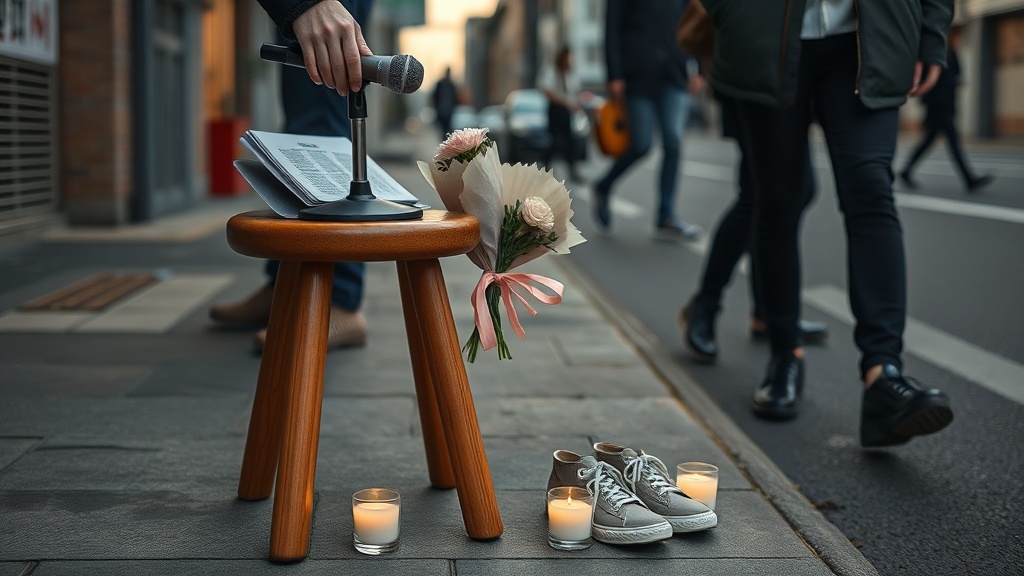
The case for respecting privacy
Respect comes first.
Those who prioritize privacy argue the family's wishes should be paramount for ethical and emotional reasons.
Not releasing the cause of death or other private details is a decision to protect the deceased's dignity and to avoid amplifying public curiosity that could increase the family's pain.
Young public figures' deaths often draw intense media attention, which can suddenly overload relatives and raise the emotional burden at home.
From a social perspective, the demand for privacy is not only emotional.
News cycles and fandom behaviors can treat information like a consumable product, which allows unverified claims to spread and can threaten a family's physical and psychological safety.
Mental health impacts are invisible but long-lasting. In this light, the question should shift from "Why not disclose?" to "Whose pain are we trying to reduce?"
Furthermore, the idea of separating public work from private life is gaining traction both in the West and in Asia as a way to protect families.
Legal and ethical issues also matter.
Invasive reporting can violate personal rights, and persistent pressure for disclosure can cause additional harm to the bereaved.
Media organizations must balance reporting freedom with the public interest, and they should not abandon care and restraint in that process.
Ultimately, honoring the family's choice may cause short-term frustration but can reduce long-term social costs and support recovery.
The case for disclosure
People also want answers.
On the other side, calls for transparency are real and should be acknowledged.
Supporters of disclosure argue that public figures create a relationship with fans and the wider public who feel they have a right to know the facts, and that releasing accurate information prevents the spread of false rumors.
If a third party was involved, or if public safety could be implicated, clearer information would help build social trust.
This view grows out of fandom culture.
Fans often want to honor a career by understanding events accurately, and they sift through timelines and statements to find meaning.
When official outlets withhold information, social platforms may fill the gap with speculation. That vacuum can harden into misinformation.
Also, if an agency or institution repeatedly blocks disclosure, it can raise concerns about accountability—concerns that may weaken public trust in future incidents.
That said, calls for disclosure are not automatically justified.
Rights and responsibilities should be weighed, and disclosure must be designed carefully in scope and method.
For example, an official statement could focus only on verified facts and on whether any public-safety issues exist, while minimizing details that would unduly burden the family.
In the end, transparency and privacy are competing values. The challenge is to find a balanced approach rather than a one-sided one.
Conclusion and lasting questions
Closing this topic requires care.
The surface facts are straightforward: Mo Sujin died January 25, 2026; the agency announced it January 28; the funeral was private; specific reasons were not disclosed.
However, beneath those facts lie complex issues: mental health, family suffering, media dynamics, and fandom culture are all entangled.
The core need is balance.
Any choice between disclosure and privacy affects real people.
Therefore society should turn emotional reactions into thoughtful reflection and institutional improvements, not into blame or thoughtless speculation.
For example, a public discussion might strengthen systematic mental-health checks for performers and expand crisis support and aftercare for artists and their families.
In short: Mo Sujin's death is tragic and shocking. We should respect the family's wishes while also considering how to balance transparency and accountability in ways that protect people.
How will you view this case—through the lens of privacy, transparency, or somewhere in between?
