Teaser material posted on the label's official website and social channels appeared in early February.
The audition notice included language inviting applicants born between 2008 and 2013 (roughly ages 13–18 in 2026).
Min Hee-jin framed the launch as a fresh start, stressing her own creative approach and business model.
Min Hee-jin: A renewed production experiment — what to expect
The outline.
Min Hee-jin began as a visual director at SM Entertainment and later joined Hybe as Chief Brand Officer, where she oversaw the creation of NewJeans (a breakout K-pop girl group known for its distinctive aesthetic).
After leaving adore in 2024, she founded OK Records in 2025.
OK Records opened official channels on Feb. 3, 2026, and then released a stream of teaser clips on Feb. 5.
The recruitment language—displayed on a billboard marked "WANTED"—listed birth years from 2008 to 2013, signaling a new boy group audition project.
The label's offices are reported to be opening near Garosu-gil in Seoul at the end of February.
Key: The stated business scope includes music production and artist management, plus brand and advertising services.
An expression of intent.
This is not positioned as another mass-produced idol factory.
Min has publicly said she will plan the boy group with the sincerity of a producer, not the shorthand of assembly-line production.
Her statement signals a willingness to try creative experiments and new business styles that the mainstream market rarely shows.
In turn, these choices could influence both brand strategy and artist-management practices.
Meanwhile, the teasers and audition staging have already drawn attention.
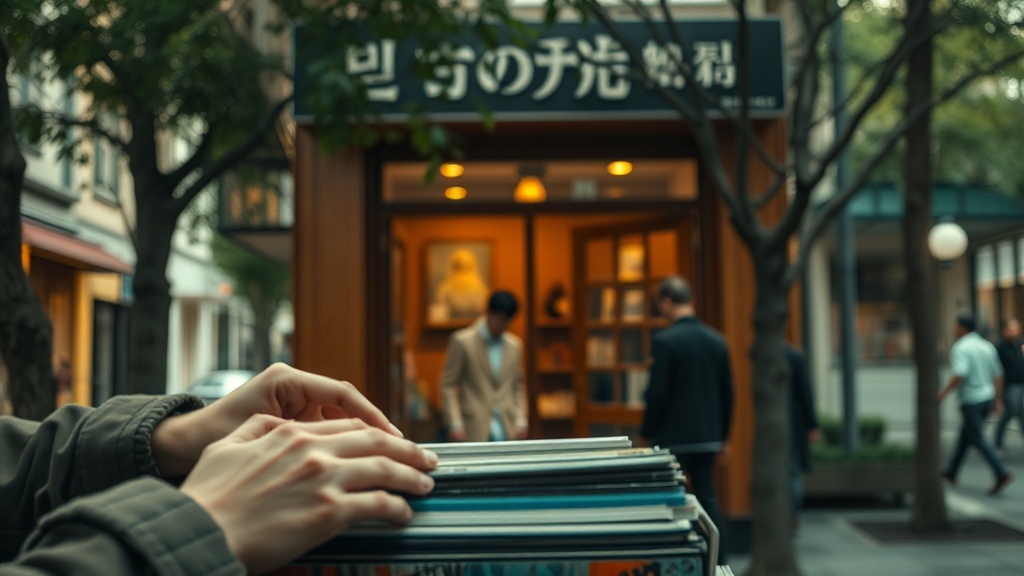
The videos center on a record shop motif and hint at performances staged around the world before finishing at a Seoul shop.
That visual choice reads as a focus on music-centered experience design rather than purely promotional spectacle.

The project aims at both artistic and commercial outcomes.
Therefore early strategy will hinge on building a creative team and securing funding.
Sustainable activity requires a solid business base and operational capacity.
Arguments in favor.
"As a producer, I will plan a boy group with sincerity. I want to surprise people with creative work and business styles the market hasn't seen before."
Supporters focus on creative freedom and differentiated content.
Min already has proven results in visual direction and branding, which supporters cite as evidence she can deliver a distinct artistic identity.
Like the NewJeans example, a novel production method can deliver a jolt to the market and broaden what fandoms expect.
On the other hand, an independent-label structure can break the uniform, company-driven production practices that dominate the industry.
Smaller labels can act fast, run experimental marketing, and pivot strategy quickly.
That agility may give OK Records an advantage when targeting young consumers and global fans.
Cases of small-label success show that strong artist branding and fan-experience design matter most.
When effective investment pairs with strategic partnerships, early risk can become an opportunity.
Investors and industry observers are therefore watching OK Records' business model closely.
Takeaway: An indie label allows rapid strategic adjustments.
Concerns and counterpoints.
Critics stress realistic constraints.
First, funding and infrastructure: major companies deploy large capital and global distribution networks to support big launches.
An independent label needs sufficient funding and reliable revenue models to endure early losses.
Second, talent recruitment and management capacity: producing a boy group means more than songs and choreography. It requires trainee management, health care, legal contracts, scheduling, and logistics.
A small organization faces real challenges sustaining all those functions at scale.
Third, a gap between public expectation and operational reality can be costly.
High initial hype creates pressure on content schedules and performance plans. Early missteps can damage the brand.
Fourth, competition is intense.
OK Records will compete with rookie lineups from established companies launching simultaneously.
If the project fails to secure a clear, differentiated position, its long-term viability will be in doubt.
Summary: Early failure could cause lasting damage to brand trust.
The business view.
Assessing commercial feasibility is not optional—it is essential.
Artist development is creative work, but it also requires capital, revenue planning, and measurable return pathways.
OK Records lists talent management, recording and distribution, and brand/advertising services as business objectives—suggesting a multi-pronged revenue strategy.
Investment and cash management will be central variables.
Initial funding can come from equity investors, strategic partnerships, or self-funding; each path affects control and risk.
Investors will evaluate creative vision alongside projected returns and risk controls.
Operational setup matters too: office space, staff hiring, training facilities, and distribution channels must be built together.
If the label plans international activities, it also needs global distribution and local partners in target markets.
Running a label as an employer requires clear internal culture and management systems.
Artist health and safety, reasonable staff working conditions, and ethical contract practices form the long-term foundation for trust.
Therefore institutional design should start in the earliest phase.
Core point: The mix of funding, operations, and distribution determines sustainability.
Reality and ideal.
Min Hee-jin's launch combines personal conviction with demonstrable skill.
However, practical constraints and high public expectations cannot be ignored.
These two forces will shape both the project's direction and its pace.
Looking at past successes and failures suggests several lessons.
First, building an initial fanbase depends on the artist's distinctiveness.
Second, sustainable income comes from diversified business lines rather than single-album sales.
Third, internal management systems and ethical practices create long-term brand trust.
Therefore OK Records must find a balance between creative experimentation and commercial viability.
Creative risk is necessary, but if it is not sustainable, it will not deliver structural change.
How that balance is designed will decide the project's fate.
The conclusion.
Min Hee-jin's project is an important experiment that challenges K-pop production conventions.
If the label pairs serious business preparation with funding and operational design, it can achieve meaningful results.
Conversely, ignoring practical limits could lead to rapid problems.
In short: creativity is the starting point; stability is the prerequisite.
The attention stirred by the audition and teasers is both an opportunity and a test.
As an independent label, the path will be difficult, but a well-designed approach could set a new standard.
We ask readers: how do you evaluate the new production grammar OK Records appears to propose?
