From the Japanese colonial period to the present, horses often stand for hope and moving forward.
Lyrics that mention a white horse or a carriage create stories of homecoming, love, and freedom.
This column traces how those images operate across songs and eras.
From "Baekma-ya Gaja" to "Let the Horses Run": How songs call the horse
Overview and beginnings
The horse is an image of hope.
When commercial records spread in the 1930s, horses slipped naturally into popular-song storytelling.
The repeated phrase baekma (white horse) works less like an animal reference and more like a symbol of returning home and reunion.
Meanwhile, words like carriage and "let the horses run" act as metaphors for moving through time and looking toward the future.
After record distribution became established in the 1930s, singers such as Nam In-su and songs like Gounbong's "Baekma-ya Gaja" ("White Horse, Let's Go") stirred the public imagination.
After liberation (1945), songs about horse-drawn carts—titles translated as "returning carriage" or "flower carriage"—linked feelings of homecoming to migration toward cities.
However, by the 1980s and in contemporary rock and pop, the horse shifts into a dynamic metaphor for freedom and passion.
Depending on the era, the horse can mean hope, freedom, or loyalty.
Layers of symbolism
The image is layered.
A horse's symbolism combines mythic origins and everyday familiarity.
In myths from East and West, horses signal forward motion and mystery, and Korea's own legendary fine horses add narratives of loyalty and sacrifice.
Thus pop lyrics borrow these older meanings to link modern feelings to longer cultural stories.
For example, the idea of a "white-horse prince" borrows Western romance codes to make the white horse an instrument of love.
On the other hand, songs titled "Let the Horses Run" use the animal's energy to sing about personal liberation and collective momentum.
In short, the same animal image can mean hometown nostalgia, romantic fantasy, or youthful leap depending on lyrical context.
The horse's meaning changes with the lyrics' context.

Images provide a visual link to lyrics, but they do not fix meaning on their own.
Instead, popular interpretation forms where lyrical narrative and visual representation meet.
Variations across eras: From colonial Korea to today
Historical trajectory
It is a long arc.
Horse imagery appears even during the Japanese occupation of Korea (1910–1945), where it sometimes mixed with militaristic codes.
Yet in the same years the white horse served as a tender image of return and reminiscence.
As Korea industrialized and urbanized, the horse's practical role faded while its symbolic power grew.
In the 1980s, songs like Lee Jae-seong's "Carriage Toward Tomorrow" used horse imagery to sing about hope after rapid industrial change.
From the 1990s onward, pop and rock used the motif more diversely: Crying Nut's "Let the Horses Run" projected younger generations' desire for freedom and resistance with a raw, breathy energy.
Thus the horse moves from a nostalgic motif to a forward-looking metaphor.
Songs reshape the horse to meet the era's demands.
Cultural extension
The horse becomes a sign beyond music.
Horse imagery spreads into horse racing, product naming, and car models.
For example, race tracks and vehicle brands borrow equine symbolism to add value to products.
This cultural spread helps songs' meanings travel into wider social life.
At the same time, the tradition of celebrated horses ties into certain ethical narratives in Korean society.
Stories of famous horses emphasize loyalty and sacrifice, and those traditional scripts sometimes clash with or complement modern narratives.
In this way, the horse's cultural expansion reveals where local tradition and global imagery meet.
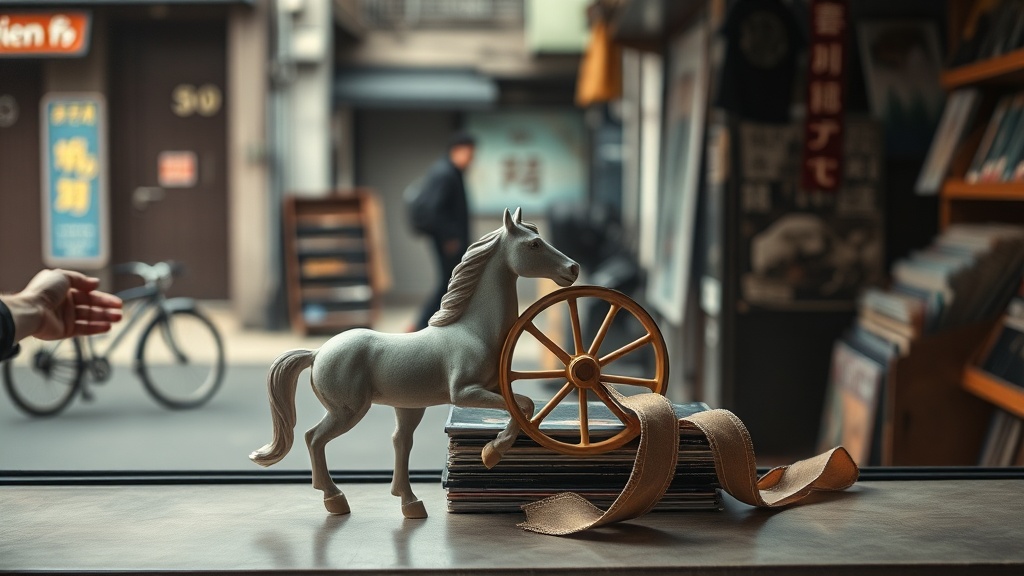
These two images sit a little apart from the main argument.
They help pace the reader's attention rather than serve as direct evidence, and the essay's focus remains lyrical context.
Conflicting views: Benefits and problems
Positive view
The horse gives hope.
Proponents see equine imagery as a powerful emotional tool in popular songs.
White horses and carriages symbolize return and reunion, offering comfort and optimism to listeners.
For people who left rural homes during urban migration, horse images act as a bridge to memory and solidarity.
Also, a horse's energy evokes youth, freedom, and daring—qualities that intensify a song's emotional arc.
In practice, horses strengthen a lyric's narrative and help generations find common feeling: a parent might have sung "Baekma-ya Gaja," and a child recognizes a familiar storyline decades later.
In pop songs, the horse links communal memory and identity.
Educationally, horse images matter too.
They are useful examples in lessons about cultural history or in lyric-analysis exercises.
Thus the horse functions as cultural capital, with music preserving and extending its reach.
Critical view
There are problems.
Critics say repeating horse imagery can also reinforce illusions.
First, the romance of white horses and carriages can obscure social complexities.
Homecoming narratives sometimes simplify the economic hardships and structural changes after industrialization.
Second, the image is heavily commercialized.
From car branding to racetrack mascots, the horse is often treated as a marketing asset, and that process can dilute a song's original emotion.
Third, recycling mythic and traditional narratives risks ignoring historical context.
If symbols once used in wartime mobilization or militaristic songs are repeated without critique, the symbol's meaning can be distorted.
For example, some older wartime songs used horse imagery with mobilizing intent, and uncritical reuse can be problematic.
Finally, when symbolic use overlooks animal welfare or concrete realities, it can create ethical dissonance.
So, consuming horse imagery in culture should come with critical reflection.
Repetition of a symbol demands attention to context and responsibility.
Conclusion and outlook
The point is simple.
Horse images in Korean popular songs are powerful signs of hope, freedom, and forward motion, and they change across historical contexts.
However, repetitive use can lead to commercialization and historical amnesia.
Therefore, enjoying symbolic comfort from songs should be paired with critical reflection about origins and costs.
In short, the horse remains a potent cultural sign.
Through popular music it shapes social memory and expands private feelings into a public frame.
Still, we should not forget the symbol's history and ethics as it circulates.
Horse songs give us dreams, but we should also ask where those dreams come from and what they require.
Key takeaway: The horse image is continually reworked into symbols of hope and freedom.
Yet cultural consumption demands attention to history and ethics.
Popular music spreads these symbols widely, and that spread carries social responsibility.
Question for readers: What feelings do horse images in songs evoke for you?
