Oneohtrix Point Never's visit to Korea has been officially announced.
In March 2026, a new stage will open in Seoul.
Daniel Lopatin's project OPN will bring its experimental sound to the city.
Fans are expecting a live realization of the latest album, Again.
Oneohtrix Point Never Arrives in Seoul — When Experiment Meets Pop
Context of the announcement
This is a new scene.
The March 2026 Korea show has been confirmed, while exact date, venue and ticket details will be announced later.
OPN’s arrival under Daniel Lopatin’s direction means more than a tour date.
When an international artist appears on a Korean stage, it often serves as a bridge between the local electronic scene and the mainstream pop world.
Historical background
The beginning was modest.
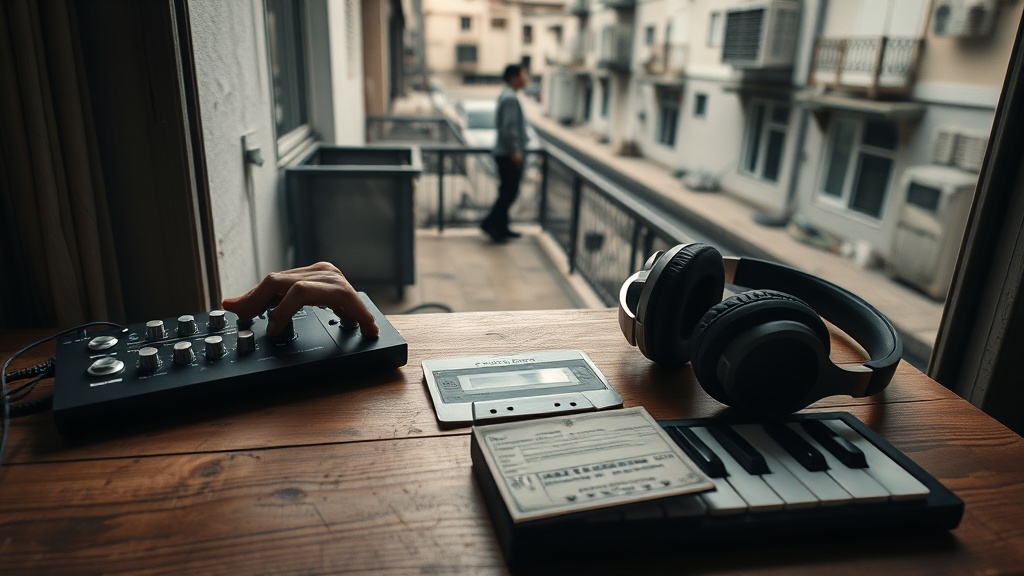
OPN began with a 2007 cassette release and grew across formats and genres.
Early work relied on arpeggiated synthesizers and a kind of new-age sensibility, then expanded through noise, drone and sampling.
That expansion created a narrative that influenced contemporary music discourse beyond mere genre experiments.
One way to summarize OPN’s aesthetic is to say the music favors negative space.
That phrase points to an aesthetic of layered sampling and repeating structures that create a sense of “space.”
That aesthetic has influenced later movements such as vaporwave and hyperpop, though Lopatin himself has not fully accepted the vaporwave pioneer label.
These subtleties make the Korea visit more significant.
Recent musical currents
The evolution keeps going.
Again, OPN’s tenth studio album issued in 2025, combines audio collage, glitch and psychedelic melodies.
Critics note the record uses some AI tools and a compression-focused approach (compression here means manipulating sound dynamics).
Consequently, interest grows in how those studio techniques will be translated live.
Lopatin’s work continues to expand at the crossroads of vocals and electronics, balancing pop accessibility with experimental disposition.
On the one hand, that mix should feel familiar to local listeners. On the other, it will also offer unfamiliar moments.

What Korean audiences expect
Expectations are high.
Seoul’s electronic-music fans have become more open to experimental shows as live culture matured in recent years.
Now, an international act’s visit is often seen as a measure of the local scene’s strength.
So the concert matters not only as an event but as a place for exchange.
A performance on a Seoul stage can reshape relationships between local audiences and overseas artists.
This show will test both the immediacy of electronic music and the scalability of pop-influenced ideas.
Some attendees will gain new musical insight from Lopatin’s sonic experiments.
For example, the sensation of arpeggiated repetition or glitch textures live can feel very different from recorded playback.
Positive perspectives
The benefits are clear.
First, an international appearance raises interest and participation in the local scene.
Domestic promoters may use this momentum to book more diverse foreign artists.
That could lead to long-term investment in the live sector and new jobs.
Second, musical exchange offers direct inspiration for creators.
Local musicians and producers can experience OPN’s sound-making in person and learn new experimental approaches.
Third, audience experience will likely diversify.
Unlike conventional pop shows, OPN’s performance could combine sound and visuals to create immersive moments.
Those moments can shift cultural consumption patterns and attract broader audiences.
Ultimately, this visit could leave a positive imprint on both the concert’s intrinsic value and the surrounding creative ecosystem.
Concerns and issues
Real problems remain.
First, ticket price and accessibility.
International acts often come with high ticket prices, which may limit access for experimental-music fans.
Second, commercialization worries exist.
If experimental sound is repackaged primarily for profit, its core exploratory nature could be diluted.
Third, misunderstandings about genre and communication can occur.
OPN’s music needs contextual framing, and a short festival-style set may not convey that context well.
Live experimental music only makes sense when its context and structure are communicated clearly.
Sound quality and visual design will shape the audience’s experience.
If stage design or audio systems fail to support the artist’s intent, attendees may be disappointed.
Finally, cultural misreading is a risk.
If local promoters do not appreciate the aesthetic aims of the artist, the show can become a superficial spectacle.
Many of these concerns can be eased by careful planning and clear communication during the production phase.
Mitigating risks will require varied ticket policies, robust technical setup, and close collaboration between artist and promoter.
Conclusion and outlook
In summary, OPN’s Korea visit is more than a calendar entry.
Daniel Lopatin’s project blends experimental electronic practice with pop elements and could create new narratives on a Seoul stage.
However, success depends on accessibility, faithful delivery of artistic intent, and technical execution.
A concert is a collective work made by fans, creators and organizers alike.
This visit is an opportunity to leave a lasting, positive effect on Korea’s electronic-music ecosystem.
What scene are you most looking forward to at OPN’s Seoul show?
