After the series debuted on March 7, 2025, foreign arrivals began rising from April onward, and by July foreign visitors were up 76.0% year-on-year.
Filming locations such as the flower fields and coastal fishing villages in Ora-dong, Jeju, were singled out by viewers and drew many new visitors.
This case shows how K-culture (Korean popular culture) can directly diversify regional tourism demand.
"Ratings Changed an Island" — How a Series and a Place Lifted Each Other
Numbers tell the story.
First, it is notable that Jeju provincial authorities and related agencies actively courted production from late 2022.
They provided site scouting and administrative support while filming went on for roughly one year and two months.
After the show premiered in March 2025, increased flights and coordinated local promotion combined to turn interest into real travel demand.
Meanwhile, domestic visitation also rebounded: from March 1–16, domestic arrivals reached 435,798, up 14.3% from the same period a year earlier.
The series became a direct catalyst for tourism demand, not just a piece of entertainment.
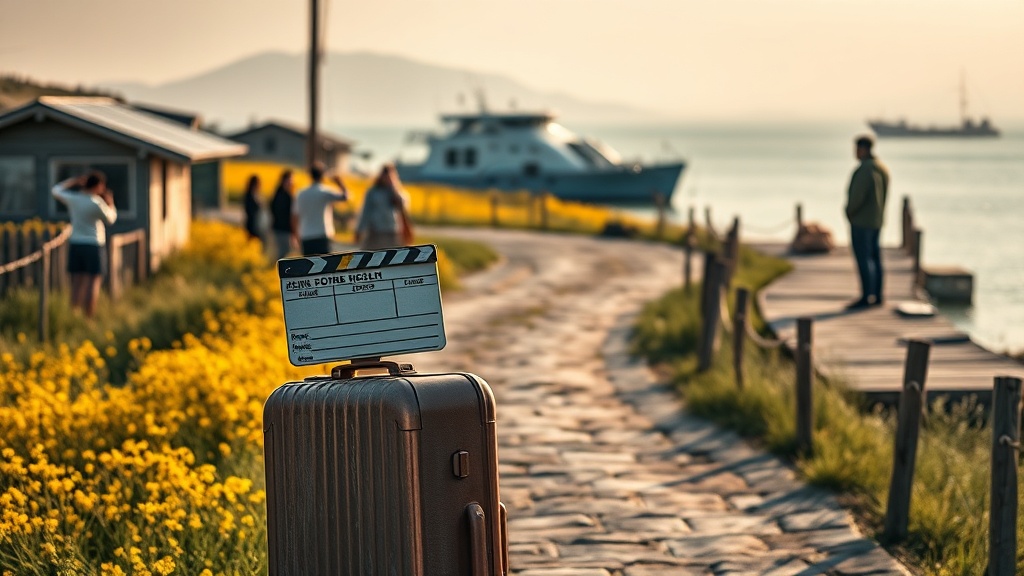
On screen, viewers saw fields of yellow blossoms, quiet fishing villages, and rocky coastal panoramas that left strong visual impressions.
Those images quickly translated into travel motivation, and the filming locations became short-order "must-shoot" photo spots for visitors seeking the perfect shot.

Where image and reality met, new tourist routes formed.
One filmed site in Seogwipo recorded about 260,000 visitors, and that surge had immediate effects on local shops and small businesses.
At the same time, travel agencies and airlines reacted quickly by adding seats and launching special packages aimed at fans and international tourists.
Background and causes
First, the drama's popularity and storylines made Jeju's scenery appear especially attractive.
Second, Jeju's government and agencies actively supported filming through location arrangements and cooperation.
Third, airlines added flights and local promotion amplified timing effects, maximizing the post-release window.
These three forces combined to boost visitor inflows immediately after the show's release.
Importantly, the increase in foreign visitors ties directly to the global spread of K-culture (Korean popular culture).
Moreover, the fact that visitation rose consistently by quarter, rather than spiking and falling, suggests the possibility of structural change rather than a single media-driven blip.
Why the locations appealed
The flower fields in Ora-dong and nearby fishing hamlets are prime examples where on-screen images led to real visits.
Locals combined photogenic landscapes with simple coastal experiences, which encouraged visitors to stay longer.
Visitors did more than take pictures: they ate at local restaurants, visited cafes, and booked hands-on experiences, sending money straight into the local economy.
That spending also brought new business opportunities and attracted investment.
Tourism is completed where the image provided by the show meets the visitor's real experience.
Hence, a filming location becomes more than scenery; it becomes a packaged local asset with economic value.
Pros: Expanding economic opportunity
The economic logic is straightforward.
More visitors increase multi-layered spending on lodging, food, transport, and souvenirs.
In particular, rising foreign visitor numbers bring foreign exchange and lift the region's global brand recognition.
Local small businesses reported noticeable short-term revenue gains, and some entrepreneurs began planning to expand or start new services.
Airlines and tour operators added routes and created packages, helping stabilize demand.
Repeat visits bring larger, more sustained economic effects than one-off spikes.
As capital and investment flows in, public and private attention to local infrastructure and services increases.
From a policy angle, this trend opens options.
Local governments can redesign tourism strategies around content, revise filming support systems, improve signage and transport for visitors, and offer programs to strengthen local business capabilities.
In short, the drama's pull can act as a catalyst for local economic activation.
That catalytic effect raises brand value and points toward longer-term tourism growth if managed well.
Cons: Hidden costs and risks
These concerns are real.
First, overcrowding and environmental damage risk rising.
Many filming sites are ecologically sensitive, and careless visitation can harm plant life and create litter problems.
Second, resident quality of life can suffer.
If tourists concentrate near residential areas, noise, safety issues, and pressure on local services increase.
Third, economic gains can be uneven.
If revenue concentrates in a few sectors or businesses, broader local development may be limited and inequality may grow.
Fourth, a short media buzz may not convert into long-term stability.
If interest fades, visitor numbers could drop quickly, leaving the local economy exposed.
Without proper planning, local governments may struggle to handle sudden visitor inflows.
Administrative resources must be reallocated for traffic, waste management, and safety—requiring budget and institutional changes.
Ultimately, balancing short-term benefit and long-term sustainability is the core challenge.
Filming-location effects are opportunities that also impose management responsibilities.
Welcoming visitors is desirable, but policymakers must control the costs and risks behind the scenes.
Comparative cases and lessons
Successful examples show how to protect sites while managing visitor flows.
For instance, some places designate preservation zones, guide visitor routes, and offer curated experiences that raise the value of each visit.
Other cases show the dangers of unchecked commercialization, which led to conflicts with residents.
Solutions included community-led governance and returning a share of tourism revenue to local welfare funds.
These examples indicate that policy must go beyond promotion to include institutional tools, budget planning, and resident participation.
Concrete measures include carrying-capacity studies, environmental impact assessments, revenue-sharing models, and stronger safety and sanitation infrastructure.
Policy recommendations
Practical and direct measures are needed.
First, set up visitor management systems.
Reservation-based entry or staggered visitor routes can ease crowding.
Second, improve income distribution mechanisms.
Allocate part of tourism revenue to a local community fund for resident welfare and environmental upkeep.
Third, encourage investment with local-first rules.
Support lodging and experience businesses with targeted financing and capacity building so local operators benefit.
Fourth, consider regulatory and tax incentives that favor long-term planning over short-term gain.
Finally, institutionalize resident participation to prevent conflict and build local stewardship.
Policy must both protect opportunity and control risk.
That dual approach leads to sustainable local growth.
Outlook
Jeju and similar destinations have new opportunities thanks to global interest in Korean culture.
However, effects vary by title and timing; not every show leads to the same durability of visits.
Local governments and communities must therefore convert short-term inflows into lasting assets.
Examples include linking site management with experience programs, building a local brand, and marketing to encourage repeat visits.
At the same time, plans for added flights and accommodations should balance economic efficiency with environmental limits.
Turning tourist influx into long-term growth requires institutional readiness and financial planning.
Summary and conclusion
The core is balance.
Netflix's "Poksak Soksassuda" successfully boosted visits to Jeju in the short term.
The effect was amplified by a trio of factors: flight increases, local promotion, and the visual appeal of the filming locations.
At the same time, overcrowding, environmental harm, and resident conflicts are risks that policy alone can address.
Therefore, converting short-term revenue into long-term community assets requires institutional design and resident-centered management.
In the end, the sustainability of content-driven tourism depends on site management and institutional preparation.
Policy, business, and community collaboration must seize this chance responsibly.
In short, the drama reintroduced Jeju to the world and delivered immediate economic benefits.
But to keep and fairly distribute those gains, institutional improvements and resident-focused management are necessary.
We leave a question for the reader: when you visit a place featured in a show or film, how do you choose where to go?
Would you prioritize your personal enjoyment, or the long-term sustainability of the community you visit?
