The South Korean government posthumously awarded her the Gold Crown Medal (the highest class of cultural merit) on December 14.
Since her 1957 debut she appeared in hundreds of films and came to symbolize the golden age of Korean cinema.
Her work as a producer and film official, which affected the industry beyond her acting, was also cited in the award notice.
The Face of an Era, an Empty Seat — Kim Ji‑mi’s Passing and an Official Honor
Facts and Context
Let’s begin with the facts.Kim Ji‑mi was born July 15, 1940, and made her film debut in 1957.
She died in Los Angeles on December 7, 2025, and the government awarded her the Gold Crown Medal on December 14.
These dates and the medal conferment are recorded in official notices and reported widely in the press.
"I miss you. I love you."That short final message circulated among fans and colleagues and offered a glimpse of her personal side.
Early Life and Stardom
Her rise was swift and memorable.Born in Daejeon (then part of Chungnam province), she was discovered on the street while still in high school and debuted at 17 — a story that became part of Korean film lore.
During the 1960s and 1970s Kim combined box‑office appeal and critical respect to become a top star.
From films like The Twilight Train to Mother and the classic Chunhyang stories, her filmography cut across genres.
The 1960s and 1970s are commonly called the golden age of Korean cinema, and Kim Ji‑mi was at its center.
Stardom here meant more than screen presence.
However, commercial success and acting skill together shaped her image as the face of a generation.
Meanwhile, it is important to remember that production systems, audience habits, and industry conditions then were very different from today’s.
Producer and Administrator
Her career took a bold turn off camera.In 1986 she founded Jimmy Film and worked as a producer, importer, and distributor, turning a personal brand into an industry presence.
She helped expand the international circulation of Korean films and took part in importing and distributing selected foreign titles.
Her producing career was not a mere post‑acting hobby but a sustained effort to engage with the industry’s structure.
"Protecting film is not only a matter of personal honor."That stance carried into public roles, including service on film promotion boards.
Becoming a producer is not a path open to every actor.
On the other hand, Kim did not remain only a performer; she exercised influence over distribution and production systems and changed how some films reached audiences.
Meanwhile, other contemporaries chose to end careers with acting alone.
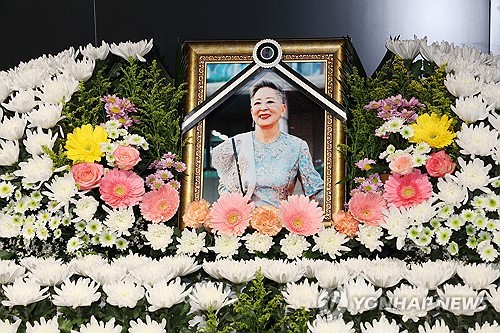
After this photograph was published, her career and actions were reassessed on multiple levels.
A single image captures both the mood of an era and a star’s stature.
However, a photo alone cannot explain the full scope of her contributions.
Awards, Honors and What They Mean
Her recognitions were layered.Kim won many domestic and international awards and entered the Film Hall of Fame in 2010 — each an official acknowledgment of achievement.
Notable wins include Best Actress at the Asian Film Festival (1969), Best Actress at the Panama International Film Festival (1974), and the Grand Bell Awards Best Actress (1985), records that helped confirm her range to international observers.
Her membership in the National Academy of Arts and work with the Film Promotion Commission link performing accolades to institutional contribution.
The posthumous award thus reads as state recognition of both her individual career and her place in Korean film history.
It is important to ask why the state awards such honors now and what purpose they serve.
Awards are not merely ceremonies; they are acts that link past and present.
However, the timing, form, and practical preservation of that legacy remain separate issues.
Public Response After Her Death
Mourning began immediately.Fans, colleagues, and younger actors posted condolences across media and left memorials at events.
The press revisited her filmography, and industry figures welcomed the government’s recognition as meaningful.
On the other hand, generational gaps matter: many younger people did not live through the golden age and may not share the same reference points.
"An era’s performance is its historical record."
The fair preservation of cultural memory will remain an issue.
If records, restorations, and education change, the way future audiences encounter her work will also change.
Meanwhile, institutional mechanisms for preserving industrial memory must be debated and improved.
Aging, Safety Nets, and Life After the Spotlight
We should also talk about the realities of aging.After leaving active sets, actors face practical challenges: health care, pensions, and caregiving.
Even high‑profile figures like Kim required systems that support a long career’s later years.
For older artists, access to medical screening, mental health care, and steady financial support are central to late‑life stability.
They represent a social promise to preserve the dignity of an era’s artists.
The welfare of retired filmmakers cannot be solved by individual choices alone.
Industry‑level safety nets, tax and pension reforms, and training that passes knowledge to younger creators must work together.
Kim Ji‑mi’s life suggests these are policy questions as much as personal stories.

The second image supplements the visual memory of the artist.
Its placement offers a pause in the narrative while retaining context.
Preserving Memory — An Educational Task
Records must be made and kept.Kim Ji‑mi’s films and career need organized filmographies, preservation of film prints, and digitized archives to reach future viewers.
Institutions like a film hall of fame matter, but they must be paired with concrete programs for restoration, education, and exhibition.
That way, a generation’s aesthetics, industrial practices, and the lived experience of actors can be learned in depth.
"Completing memory is the work of the next generation."
Preservation is not just a cinema issue.
It connects to how a society reconstructs cultural heritage and teaches it to citizens.
Remember that film is both an art form and an industry; preservation strategies should reflect that dual character.
Conclusion: A Legacy to Inherit and Tasks Remaining
To summarize.Kim Ji‑mi’s death and the Gold Crown Medal together mark an official commemoration of a key era in Korean film history.
Her life as an actress, producer, and public figure leaves a layered legacy.
However, a state honor alone does not solve the practical tasks ahead: recording, restoring, and improving institutions for artists remain pressing.
We should ask ourselves: how will we preserve and teach Kim Ji‑mi’s era and work for those who come after us?
