As 2025 came to a close in December, the sea around Busan remained a workplace.
From stalls at Jagalchi Market to the shipyards known as Kkangkkang-i, women continued to quietly provide for their families.
The KBS Busan documentary "Living with the Sea: Ajimae" puts their faces on screen.
It gently asks how their labor and love kept families together.
“A long day for the women who lived with the sea”
The breath of the place
Life here touches the sea.
One person's day is part of a community history.
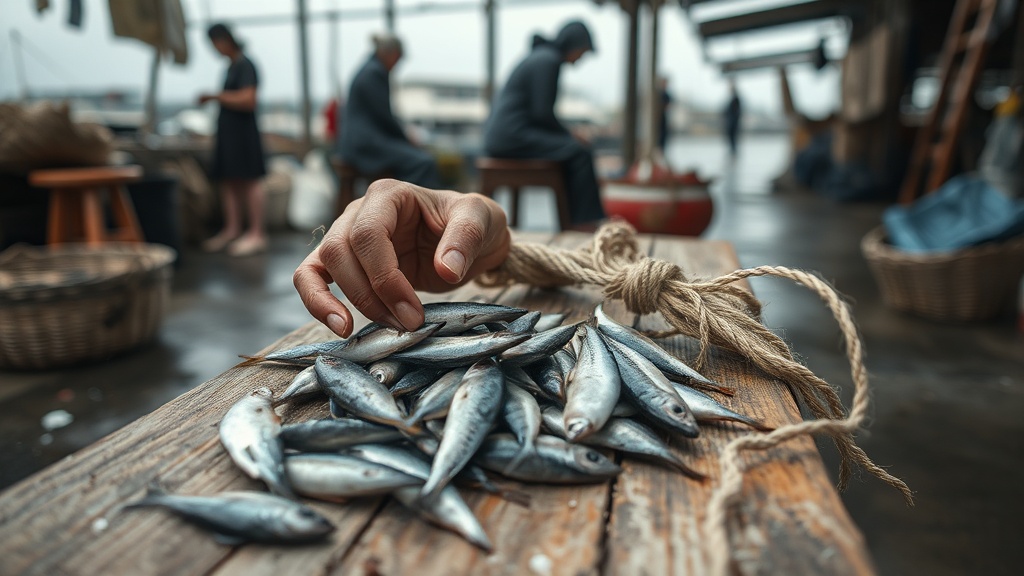
The film records each scene in detail—from market stalls at Jagalchi to the Kkangkkang-i ship repair neighborhoods and the sea off Yeongdo where women gather seafood (hand-harvesting along the shore).
These are not mere landscapes but threads of time.
Meanwhile, the crew lingers on the frame.
The camera takes its time on wrinkles and callused hands.
Those images do more than tell private stories; they stir a collective memory.
As a result, viewers are invited to imagine the sounds and smells on screen.
History at the fingertips
War traces remain.
Jagalchi Market grew after the Korean War when refugees settled and rebuilt their lives.
In those first years, people cooked and sold eel to survive, and that way of working passed down through generations.
The clang of the Kkangkkang-i repair yards and the sea work off Yeongdo were not just jobs but survival skills.
In addition, this history is also a family record.
These mothers never turned their backs on the sea.
In that way, their work fed and educated their children and formed a pillar of the local economy.
Therefore, the documentary summons a regional memory that goes beyond individual recollection.

Invited into everyday stories
They start their mornings early.
The market opens at dawn and the sea work faces the waves.
The film follows that daily rhythm.
The camera does not miss the hand that wipes a stall, the measured breath in a boat, or a raincoat whipped by wind.
These scenes create emotional depth.
Fatigue and resolve, laughter and resignation intersect.
They also show how love is expressed through labor.
Small acts that seem trivial were the great force that kept families safe.
Voices for respect and preservation
What is needed is the preservation of memory.
This view emphasizes cultural value and identity protection.
Many local scholars and cultural activists say Jagalchi and Kkangkkang-i are more than a market and shipyards.
They argue these places symbolize women's labor and community independence.
Preservation is not only about places but about connecting stories across generations.
On that basis, some worry these markets and the sea will be lost to urban change.
Therefore they call for record-keeping, cultural transmission, heritage protection, and policies that link tourism with the local economy.
They hope the film will spark public interest beyond simple documentation.
The real vulnerabilities
The problem is reality.
Cultural value does not erase economic precarity.
Many of the women rely on unstable work, and physical labor strains the body.
Their old age is precarious in gaps of health and social safety nets.
Consequently, voices on the ground ask for policy action.
For example, improving work conditions, providing regular health checks and treatment support, and expanding social security like pensions are necessary.
Also required are local job strategies linked to education and employment opportunities for younger generations.
Otherwise, preservation risks remaining only a ceremonial slogan.
Time for debate
The case for support is clear.
Combining preservation with assistance can make communities sustainable.
Cultural tourism and local economic activation can create jobs.
Public investment can help protect community pride.
On the other hand, concerns are reasonable.
Tourism and protection measures can alter daily life or commercialize it.
Outside capital can threaten residents' livelihoods.
Therefore preservation requires careful design.
Asking for balanced support
Balance is a matter of choice.
Cultural respect and real welfare must go together.
Policies should be designed with resident-led decision making.
In addition, training programs linked to job creation are needed.
Moreover, transparency in fund management is essential.
How local budgets and private investments are used must be open.
Otherwise, development driven by commercial aims will weaken community voice.
Thus, local governance is crucial.
Listening to individual voices
The women’s words are precious.
Their memories teach everyday lessons.
The documentary places those words on screen.
They can be cold or warm, and always honest.
Personal stories are the starting point for policy debates.
Institutional change is hollow without on-the-ground voices.
Therefore the film becomes a tool to amplify those voices.
Through this process, we are reminded of collective responsibility.
A policy perspective
Policy is a practical tool.
Social security and local economic strategies strengthen safety nets for the women.
For example, regular health screenings, improved work environments, and income stabilization programs have real effects.
Job transition programs tied to local training are also necessary.
These institutional approaches have costs.
However, over time they can reduce social expenditures.
Preventing old-age poverty and medical burdens benefits individuals and society.
Therefore policy investment is like insurance for the future.
The media's role
The media records and interprets.
A documentary reconstructs facts and also frames a perspective.
The crew's gaze shapes the film's message.
Thus production ethics and responsibility deserve discussion.
Accurate and respectful storytelling builds empathy.
But pity or objectification must be avoided.
Viewers may understand lives through film, but the film alone does not provide solutions.
There needs to be a bridge to public debate.
Conclusion
The film means more than a record.
The lives of Busan women who worked in the sea and market are vital assets that connect families and communities.
Preservation and protection must be balanced, with real welfare and cultural safeguarding together.
Their labor was a form of love that kept families safe.
In short, documentation that preserves memory and policy support must proceed together.
Now the question is how to build that balance.
What action do you think should come first?
