AGF 2025 took place from December 5–7, 2025 at KINTEX in Goyang, just outside Seoul.
Over three days the festival recorded exactly 100,518 visitors.
Major Korean game companies and a broad range of subculture businesses showed up in force.
This edition was notable for both its larger scale and its fan-centered programming, giving it clearer industrial significance.
AGF 2025: Did Subculture Shift the Game-Show Landscape?
Overview
In December 2025, KINTEX hosted AGF, Korea’s largest event focused on animation and games within subculture (fan-centered) communities.
The three-day festival used Halls 1–5 of the first exhibition center and drew a total of 100,518 visitors.
Exhibitors included Smilegate, Nexon, Netmarble, NCSoft, NHN, Neowiz, Shift Up, Japan’s Cygames, and China’s Yostar, among others.
Official tallies show AGF hit a record attendance, underlining subculture’s commercial expansion.
History and Background
AGF began as a two-day event.
Since its first edition in 2018 the festival has steadily grown, and in 2025 it expanded to three days.
The decision to extend the schedule followed a late June recruitment notice for Japanese companies and an early July announcement; public interest focused on the lineup and floor plan during the preparation period.
Attendance rose by roughly 40% year over year, prompting organizers and industry observers to reassess the event’s role.
Meaning and Reach
Subculture is moving closer to industry center stage.
The most striking fact about AGF 2025 was the wide presence of major game companies.
Smilegate acted as a main sponsor and showcased both flagship titles and new releases, while NHN used a mobile game booth to deepen fan contact.
These patterns suggest the festival has moved beyond a fan celebration into an arena for marketing strategy and commercial investment.
The event should be analyzed not only as a festival but also from the perspective of corporate investment and funds allocation.

On-site Characteristics
Stages and merchandise drove the experience.
Large merchandise booths, collaboration cafes, and stages for voice actors and creators extended the time fans stayed on-site.
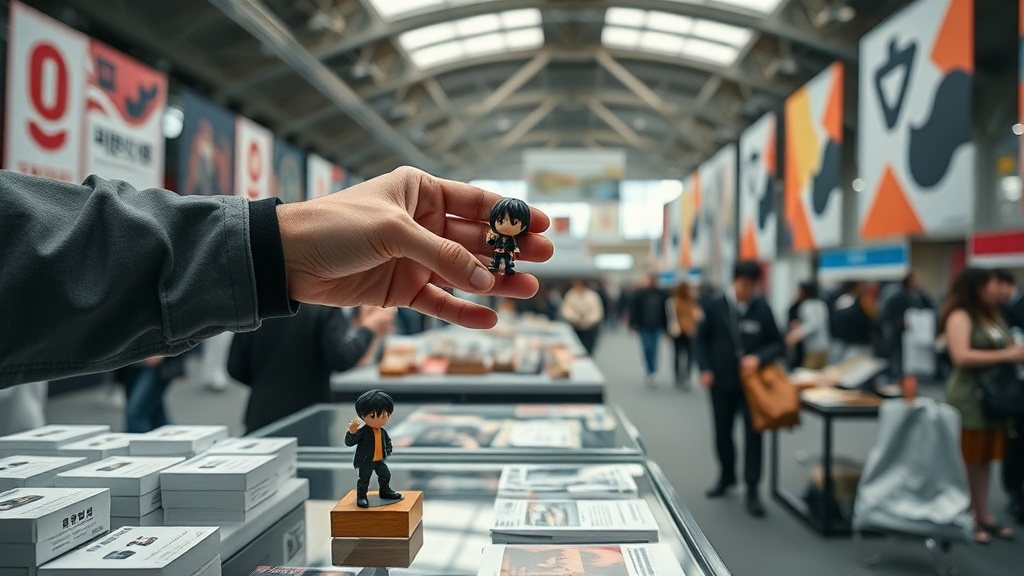
Cosplay zones and pop-up stores amplified the atmosphere, while model kits and figures on display and for sale directly stimulated fan purchases.
However, long circulation routes and crowding were also widely reported as problems.
AGF vs G-STAR: Arguments in Favor
Supporters emphasize a strong fan base.
Proponents argue AGF could eventually rival G-STAR, Korea’s traditional large-scale game expo focused on business-to-business (B2B) and major IPs (intellectual properties).
First, it was symbolic that Nexon, Netmarble, and NCSoft—the so-called "3N"—all participated. Their presence confirms economic value in subculture-focused content.
Second, AGF’s fan-centered design encourages deep spending and loyalty. Limited-edition goods, artist stages, and curated merchandise build long-term IP value.
Third, a 40% attendance jump and the break through the 100,000 mark matter financially: ticketing, advertising, merchandise, and collaborations all improve a company’s chances of recouping event costs.
Fourth, live demos and instant player reactions create a rapid feedback loop for product development—AGF becomes a practical R&D stage, not just a marketing event.
Fifth, AGF’s cultural mix—animation, light novels, webtoons, and virtual creators—favours IP extension and ecosystem building over the long term.
AGF vs G-STAR: Arguments Against
Critics point to limited universality.
Opponents say AGF cannot yet fully replace G-STAR.
The most pragmatic critique concerns audience composition. G-STAR has long been built around global partnerships and big-IP deals, making it strong in international business and licensing. AGF, by contrast, is driven more by niche fan communities and so faces limits when scaling to general audiences and global business networks.
Second, capacity strains emerged as a problem. Even using all main halls at KINTEX, the site experienced severe crowding, difficult circulation, and safety-management challenges.
G-STAR’s global network and big-IP orientation provide a different kind of competitive edge compared with AGF’s fan-first model.
Third, industry voices are mixed. Some publishers value AGF for deep user reactions but still see G-STAR as the place for large B2B meetings and publisher-to-publisher deals.
Fourth, long-term stability depends on diversifying revenue streams and integrating into global distribution and investment pipelines. Fan turnout alone cannot ensure a sustainable industrial base.
Fifth, external risks such as extreme weather and transportation disruptions remain real threats—icy roads during this edition highlighted operational vulnerabilities.
Operations and Safety
Crowding is a concrete challenge.
Rapid growth increases the burden on event operations.
Organizers must optimize visitor flow, strengthen emergency response systems, expand on-site staff, and prepare for weather-related disruptions.
If the festival and venue operators do not address these issues, they risk losing long-term trust.
Industry Implications and Company Strategy
Companies are adjusting strategy.
The AGF growth trend affects how game and content firms plan events.
Decisions now weigh short-term revenue against long-term IP value and investment efficiency. Merchandise, collaborations, and on-site promotions boost cash flow and brand equity alike.
Smaller studios and independent creators especially gain learning and networking opportunities by linking online reach with in-person interaction.
From a corporate view, AGF is becoming a credible platform for user research and market testing.
Impact on Fans and Local Communities
The local economy benefits.
Large visitor inflows bring direct spending on hotels, restaurants, and transport.
However, if local infrastructure cannot absorb the surge, tensions with residents may arise. Thus, collaboration with local authorities, transport planning, and hotel coordination are essential.
At the same time, fandom culture expands new business opportunities for small local merchants.
Conclusion
AGF 2025 sent a clear industrial signal beyond being a festival.
The event demonstrated that the fusion of subculture and the games industry can drive real market change.
However, operational weaknesses and limits as a global business platform remain.
The core challenge is balancing fan experience with industrial expansion.
In short, AGF has clear growth potential and immediate economic impact, but it must address stability and global competitiveness to become a lasting industry platform.
Which of these priorities would you emphasize for AGF’s future—deepening fan engagement or building global business capacity?
Please share your experience or observations from the event.
