Cuisine.K and a TV drama join forces to recreate royal Korean dining.
All seats are free; dining passes are distributed by raffle.
The event is designed as an experimental stage for training Korean cuisine chefs.
"A drama opens a time portal to the table"
At a glance
It is a hands-on experience.
Cuisine.K, a chef-development project by CJ CheilJedang, is a laboratory for finding and training the next generation of Korean cuisine chefs.
This time, it teamed up with the tvN drama "The Tyrant Chef" (a South Korean cable drama) to run a pop-up restaurant in Gangnam from November 2 to 4.
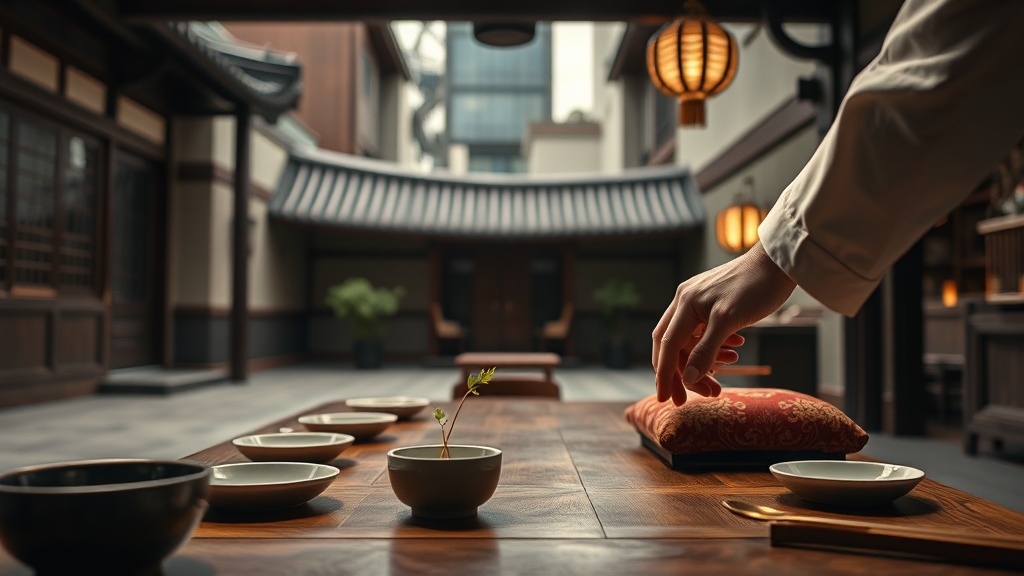
The popup uses a "time-slip" concept: visitors step into the drama's courtly world and are staged to taste a royal feast while seated like royalty.
Every seat is free, and dining passes are allocated through a raffle on the CatchTable app (a restaurant reservation app).
The space recreates props and parts of the drama's set so that viewing and tasting merge into a single immersive culinary experience.
Cuisine.K cycles themes and chefs roughly every three to four months, using the popup as a platform for experimental Korean food.
Origins and intent
This explains the direction.It gives young chefs a stage to experiment and connect with the public.
The project began with two goals: globalizing Korean food and nurturing young culinary talent.
At a moment when K-content and interest in K-food are both growing worldwide, companies look for new ways to link cultural content with food culture.
In particular, a popup tied to a drama turns viewers into participants, extending the brand experience beyond the screen.
This collaboration can be read as a meeting of the drama's courtly food narrative and Cuisine.K's experimental spirit.
Meanwhile, it gives young chefs a chance to test creative dishes and observe real-time reactions.
In an educational sense, the popup is practical training: for some chefs it becomes material for future restaurant plans and business models.
How the experience is built
The visit is carefully staged.
The popup's concept is "time-slip."
Visitors move into the drama's era and taste the royal table as if they were part of the story.
Free seating and a raffle determine attendees; the method intends to widen access while managing limited capacity.
Set design recreates props to increase visual immersion, and the menu links to scenes and narratives from the drama.
Cuisine.K encourages chefs to combine traditional elements with contemporary techniques when developing dishes.
As a result, visitors receive more than a tasting: they get a storytelling dining experience.
The case for it
Opportunities open up.It contributes in concrete ways to the popularization and creative growth of Korean food.
First, the Cuisine.K and drama collaboration can act as a catalyst for the globalization and popularization of Korean food.
Young chefs can experiment with creative Korean menus and stories, and the public can directly experience the layers of Korean cuisine.
Especially when drama fans and food lovers overlap, the event shows how cultural content can expand its reach.
Second, it models how K-content and K-food can merge.
By turning drama narrative into a real-world experience, the collaboration strengthens both the brand and the content through mutual reinforcement.
Such cross-sector experiments can generate new business models and jobs.
Third, it matters for chef training and careers.
Cuisine.K provides a near-real stage where chefs can test menus, service flow, and customer reactions.
This is practical experience, not just classroom learning, and it can become a reference for funding or attracting investors.
Finally, the free raffle format broadens participation.
The public gains access to new food without cost barriers, and brands collect wide-ranging consumer feedback.
That feedback becomes evidence for future menu development and marketing strategy.
Concerns and counterpoints
Limits are real.
Critics raise several layered concerns.
First, the three-day schedule and raffle-driven attendance narrow who can take part.
Many interested people may miss the chance, which can make the event feel exclusive or fleeting rather than broadly participatory.
Second, there is a gap between theatrical presentation and real dining.
Dramas often beautify food with visual effects, but real service faces practical limits like hygiene and cost.
If fans' expectations are not met, brand trust could suffer.
Third, the event risks becoming marketing-first.
If the popup focuses mainly on promoting the drama or driving short-term sales, chefs' creativity may be subordinated to promotional goals.
Over time, that could dilute the project’s mission to preserve and develop Korean culinary identity.
Fourth, traditionalists worry about cultural distortion.
Balancing preservation of traditional Korean food with contemporary reinterpretation is delicate.
If experimentation stretches too far from historical context, it could harm valued cultural assets.
Deeper analysis
We look at causes.
This collaboration sits where the global spread of K-content meets growing interest in K-food.
The company chose to merge content with cuisine to expand brand experience and capture young audiences more directly than traditional advertising.
While this can be effective for marketing, it also raises questions about cultural responsibility.
Online reaction is mostly positive.
Netizens express excitement about combining drama and Korean food and welcome the free trial.
However, criticisms about limited access, commercial emphasis, and the challenge of recreating the drama’s realism persist.
From an operational view, the event yields valuable data.
Organizers can measure dish appeal, preferences, and price sensitivity from participant feedback; that data informs productization and expansion.
Yet caution is required: samples may be biased toward drama fans, and short-term results should not be overgeneralized.
Comparative cases
Comparison helps.
Internationally, content-linked popups have been effective for brand extension and cultural promotion.
Successful models typically include long-term roadmaps, community involvement, and exhibits that can be preserved after the event.
In contrast, short-lived events often fail to meet consumer expectations and have limited lasting impact.
For Cuisine.K's popup to create long-term value, it needs follow-up programs, robust data analysis, and a sustained network for participating chefs.
In addition, clear pathways should connect the popup experience to education, entrepreneurship, or career advancement for chefs.

Conclusion — How should the experiment be judged?
The Cuisine.K and "The Tyrant Chef" popup demonstrates the potential of mixing Korean food with cultural content.
However, its true value should be judged not only by short-term buzz but by long-term educational outcomes and cultural preservation.
To succeed, the project must expand participation and prove a real balance between tradition and innovation.
Companies and producers should invest in data-driven improvements and support systems for chefs.
We leave the question to readers: would you attend a popup like this?
