The Netflix animated film "K-Pop Demon Hunters" soundtrack has swept global music charts.
The lead single, "Golden," reached No. 1 on the Billboard Hot 100 and topped multiple other charts.
This success highlights K-pop's expanding reach and the power of cultural fusion.
However, concerns about identity dilution and splits within fandoms are also being raised.
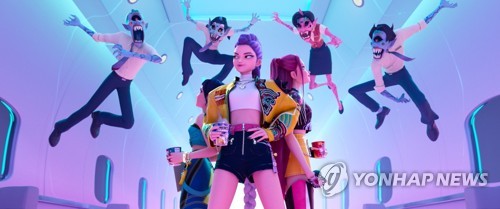
Can K-Pop Win the World Again Through Animation?
Overview
The release became a major talking point immediately.
Released in July 2025, "K-Pop Demon Hunters" is a U.S.-produced animated film on Netflix that blends K-pop idol culture with traditional Korean aesthetics.
The soundtrack album climbed the streaming and sales charts worldwide right after release, peaking at No. 2 on the U.S. Billboard 200.
Its lead single, "Golden," reached No. 1 on the Billboard Hot 100—marking a milestone as a K-pop–related song led by a female vocalist to top that chart.
Key Issues
The main issues are clear.
First, the role of Netflix as a global distribution platform cannot be overstated.
Simultaneous exposure on a service with hundreds of millions of subscribers put the OST in front of vast international audiences, and streaming and digital sales surged as a result.
Second, the musical craftsmanship and incorporation of Korean traditional elements sparked curiosity and empathy among foreign listeners.
Third, this achievement expands K-pop beyond its idol-group templates, signaling a change in the industry’s genre boundaries.
Supportive Views
Positive perspectives dominate much of the conversation.
First, there is industrial opportunity.
The mainstream success of an animation soundtrack shows that music business models can diversify beyond idol-centered releases. Producers, songwriters, and sound engineers may see new demand as music increasingly pairs with screens and storytelling.
Moreover, combining animation and music makes global marketing via online platforms more efficient. This offers a blueprint for smaller labels and studios planning startups or new business models.
Second, it reaffirms cultural value.
Blending traditional Korean elements with contemporary K-pop sounds is a way to keep cultural identity visible while making it globally accessible. On the other hand, it shows that Korea can export not only pop songs but creative hybrid works—useful examples for music education and content programs.
Institutions teaching music, media, or animation can use this case to design more practice-oriented curricula, strengthening the industry’s talent pool over time.
Third, the achievement signals diversity and gender representation.
A female vocalist topping the Billboard Hot 100 is a meaningful milestone for representation.
In a scene often dominated by idol groups, an independent female-led hit helps broaden the range of role models and career paths for artists. Consequently, this can encourage better governance and career-support systems within the industry.
Criticisms and Concerns
Not all reactions have been celebratory.
First, there is a risk of cultural dilution.
When projects are shaped primarily for global markets, local specificity can be generalized or softened.
There is a danger that traditional motifs are used only as surface decoration, producing a thin form of fusion without cultural depth. Therefore, creators must think carefully about how to integrate heritage respectfully and sustainably.
Second, fandom fractures are possible.
Longtime K-pop fans who supported idol-driven styles may feel sidelined if industry attention shifts to OST-centered or franchise-based projects.
Such shifts change consumption patterns and fan rituals, and some fans may resist. In turn, fandom splits could destabilize the consumer base, weakening long-term loyalty in the industry.
Third, sustainability is uncertain.
Success driven by viral trends or platform algorithms can fade quickly. Because an OST’s fortunes are tied to a film’s popularity, repeating this level of success is not guaranteed. Labels and studios should avoid complacency and plan long-term artist development and investment strategies.
Deep Analysis: Causes and Reactions
It helps to unpack why this happened and how people responded.
The soundtrack’s rise came from several overlapping factors.
First, Netflix’s global reach provided massive simultaneous exposure.
Next, high production values and musical polish made a strong impression on international listeners.
Specifically, "Golden" combined an earworm melody, tight arrangements, and an appealing female vocal tone to secure mainstream appeal.
Meanwhile, the restrained use of traditional Korean musical elements made unfamiliar sounds feel accessible rather than alienating.
Social media and fan communities then amplified streams and chart positions through voluntary sharing and playlisting. In short, a multi-layered strategy that targeted both fans and general listeners worked in tandem.
Online reaction has been mostly positive. Overseas communities have welcomed this new form of K-pop expansion, while some domestic circles debate identity and commercialization. Ultimately, the episode can be read as a signal that K-pop’s ecosystem may be shifting structurally, not just trending momentarily.
Supportive Arguments — Detailed
The positive case has concrete, persuasive points.
First, revenue diversification and structural expansion matter.
Animation OST success encourages labels and producers to pursue IP (intellectual property) and storytelling-based value chains beyond pure music sales. This can attract investment and expand the industry pie into areas like games, merchandise, live experiences, and themed attractions.
Second, there are educational and employment benefits.
High-profile cases underline the need for cross-disciplinary training in music, media, and animation. Universities and lifelong learning programs may revise curricula to focus on practical, blended skills. Small studios and creators can also use such success stories to validate business plans when seeking funding.
Third, there is soft power and cultural diplomacy value.
By combining music with narrative animation, Korea can project a layered cultural brand abroad. Over time, this increases national cultural influence and can boost tourism, exports, and international partnerships. Therefore, coordinated public and private strategies could multiply the impact.
Critical Arguments — Detailed
The critical case is also substantial and worth heeding.
First, culture can be commodified.
When projects chase global hits, creators risk reducing meaningful cultural elements to exotic motifs. If tradition becomes mere ornament, cultural trust may erode over time. Creators and planners should therefore integrate context and respect in their work.
Second, fan conflict and shifting consumption patterns matter.
Longstanding fans may see new directions as a dilution of the scene they supported. That can provoke backlash, boycotts, or negative public discourse, all of which undermine stable demand and brand value for artists.
Third, a one-off hit is not a strategy.
If success depends mainly on algorithms or a single media moment, it will be hard to replicate. Without a solid domestic base and continuous investment, chart wins might remain superficial. Policy and funding mechanisms should help convert short-term attention into long-term capacity.
Policy and Industry Recommendations
Practical responses are needed.
First, develop guidelines for responsible use of cultural assets.
Public and private bodies should collaborate on standards that help creators use traditional elements with respect and traceability. This preserves cultural credibility while allowing global adaptation.
Second, strengthen communication with fans.
Labels and platforms should explain creative choices, invite fan participation, and co-create content where possible. Transparent dialogue reduces alienation and helps manage expectations.
Third, commit to long-term investment and infrastructure.
Rather than relying on episodic chart milestones, stakeholders should fund artist development, production facilities, and training. Consider public-private fund models that blend public support with private incentives to underwrite risk. Finally, tie education programs to industry needs to nurture the next generation of creators.
Conclusion
Meaning and challenges coexist.
This example shows what can happen when K-pop steps outside familiar formats and partners with other storytelling media.
However, it also leaves unresolved questions about protecting cultural identity, balancing relationships with fans, and building an industry that lasts beyond a single hit.
When policy, industry strategy, and creators’ reflection advance together, this moment can become a foundation for sustainable growth.
We leave the question to readers:
How will you receive this kind of K-pop expansion?
