Key Takeaways
Lee Chang-dong's first short film, Heartbeat, will stream on Netflix on November 2.
The 28-minute film follows a child caught between a depressed mother and a father staging a protest atop a tower crane, with Jeon Do-yeon and Sul Kyung-gu in the cast.
First shown at the 2022 Jeonju International Film Festival, it was never given a theatrical release and is linked to his upcoming Netflix film Possible Love, due November 6.
The fact that a 28-minute short film is only now arriving on Netflix, three years after its debut, says a great deal about where film distribution in South Korea is headed.
Heartbeat, the first short film by acclaimed director Lee Chang-dong, may attract attention for starring Jeon Do-yeon and Sul Kyung-gu, but it is not a simple star vehicle. It condenses depression, labor conflict, and family rupture into a compact work that began as a request from the World Health Organization and the Beijing Contemporary Art Foundation.
In the end, this release is bigger than one short film. It marks the point where Lee's filmography starts being gathered inside Netflix, with a socially charged short film serving as the opening chapter.

A Short Film That Opens a Larger World
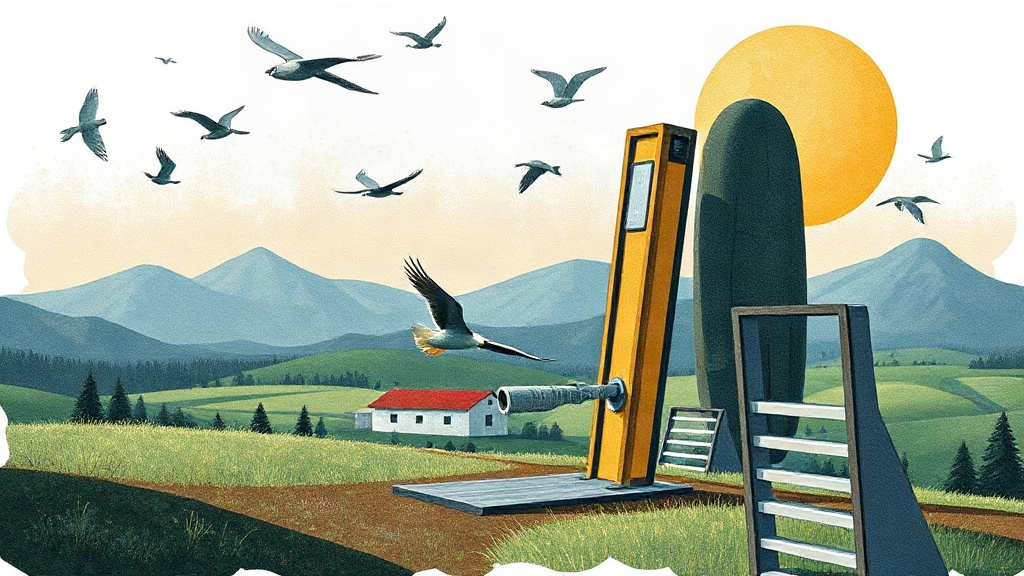
Heartbeat is the first short film Lee Chang-dong has ever made. At just 28 minutes, it is brief, but the subject matter is anything but light. At its center is Cheol-i, a child caught between a mother suffering from depression and a father occupying a tower crane in protest. Jeon Do-yeon plays the mother, Sul Kyung-gu the father, and Kim Geon-u the child.
The film is compelling not only because of its cast. As in much of Lee's work, what looks like a family story also carries the weight of labor conflict and emotional collapse in South Korea. The short format does not reduce the story so much as intensify it. The emotions that might have spread slowly in a feature film arrive in one concentrated blow.
The project also began in an unusual way. The World Health Organization and the Beijing Contemporary Art Foundation proposed a series of films on depression to directors around the world, and Heartbeat was Lee's answer to that invitation. That origin matters: it frames the film not as a purely personal experiment, but as an artistic response to a global social issue.
From Jeonju to Netflix
Heartbeat was first screened at the 23rd Jeonju International Film Festival in 2022. But it never had a proper theatrical release. That matters. Many films win attention at festivals and still struggle to reach wider audiences, and short films face that problem even more sharply. Screenings are limited, distribution is narrow, and visibility is fragile. For a 28-minute film to end up on Netflix's global lineup is less a rerun than a change in distribution itself.
Netflix is also presenting Lee's body of work as a single package. The company says it will showcase all of his films worldwide, from Green Fish, released in 1997, to Possible Love. Bringing an early work and a new one, a feature and a short, into one platform changes how audiences encounter them. Viewers can go backward from a new film to older ones, or forward from the older films to the latest release.
How Possible Love Deepens the Context
Heartbeat makes even more sense when placed beside Possible Love. Lee has long carried a story about laid-off workers from Ssangyong Motor Company, and that concern appears to have split into both the short and the feature. The fact that Jeon Do-yeon, Sul Kyung-gu, and screenwriter Oh Jung-mi also worked on Possible Love is no coincidence. It is the same issue being pursued through films of different lengths.
That connection also highlights what lies at the heart of Lee's cinema: not grand events, but the moments when people begin to break down, and the gaze that stays with them as they do. Heartbeat is not a small work simply because it is short. It is a concentrated piece of Lee's world, where labor, illness, and family duty all merge into the director's familiar emotional weight.
What Platform Release Can and Cannot Do
The release also reminds us of an old limitation of short films. They are made, but not always seen. Their shelf life can be short. A platform like Netflix can soften that weakness by giving the film immediate reach across borders and a longer life than a festival screening alone could provide. For a director as globally recognized as Lee Chang-dong, the value of a short film often lies as much in how it connects to later works as in its own runtime.
Still, platform access is not the same as understanding. Netflix can widen the audience, but it cannot explain the film's layers for them. In that sense, Heartbeat is welcome news and a sign of how quickly film viewing habits are changing. It also suggests something else: that Korea's weightier films are increasingly finding second lives outside theaters.
For that second life to matter, however, exposure alone is not enough. The viewers must also have the patience to follow the questions the film leaves behind.
