At the 213th Broadcast Journalist of the Month awards, five reports were selected.
One of them examined the death of a female firefighter and allegations that an internal investigation was silenced.
It is a moment when fact-checking and public accountability matter at the same time.
More important than heated debate is the willingness to keep asking.
Journalism becomes powerful when its questions break through an organization’s silence.

What question remains after five winning reports?
On the 30th, the significance of this report became even clearer.
The Korean Journalists Association and the Korea Association for Broadcasting Studies named five winners of the 213th Broadcast Journalist of the Month award, and one of them was an SBS report on the death of a female firefighter and allegations that an internal probe was buried.
That alone shows this was not just another news brief. It was a case study in how public watchdogs work, or fail to work.
An incident does not end when it happens. It comes back to life in the doubts, the checks, and the judgments that follow.
The issue also touches a profession that carries special public meaning.
Firefighters protect lives and safety on the front line, so a firefighter’s death is never only a private tragedy.
It quickly becomes a question of public duty.
That is why the allegation that an internal investigation was ignored, brushed aside, or buried goes beyond procedure. It becomes a matter of trust.
When trust collapses, institutions are reduced to paperwork.
Where oversight stops, journalism steps in
Journalism asks.
That is where it begins.
A report about a silenced internal investigation is not simply chasing drama.
When a public institution may have handled something improperly, the job of the press is to follow the trail, verify the record, and bring the issue into public view.
This is not a budget story with numbers you can see at a glance. It is more like balancing a household ledger, line by line, until the gaps show up.
It is also like a medical checkup: uncomfortable, but necessary. If something is wrong beneath the surface, waiting only makes the damage worse.
The reason this report drew attention is that it illuminated the structure around the event, not just the tragedy of one person.
At home or at work, people can sometimes keep a problem quiet for a while.
However, buried questions tend to return louder later on.
In a fire service organization, where decisions are tied directly to life and death, that silence is especially dangerous.
Truth-finding should not be delayed
Delay itself can become harm.
First comes the facts.
That argument points to the heart of the matter in the firefighter death case.
If the death was connected to workplace procedures, the real question is not only what caused it, but how the organization responded afterward.
If there was an internal review, what did it examine? If it found something, why was it not made public? If it was not made public, why was it kept quiet?
These questions are uncomfortable, but public standards are built by people willing to endure discomfort.
Supporters of the report say journalism is what forces those questions into the open.
In many public institutions, reform does not happen through self-correction alone.
It often takes outside reporting and follow-up coverage to expose the blank spaces behind memos and meeting notes.
Like reading an insurance policy carefully to know what is covered, internal oversight only has meaning when the process is examined closely.
If the silencing claim is true, then it is evidence that the system failed.
There is also a human reason this matters.
Reports like this keep the loss of the victim and the pain of coworkers in the public memory.
Workplaces often run on endurance.
Still, a death tied to public responsibility cannot be patched over by endurance alone.
Seeking the truth honors the dead, and it also helps prevent the same thing from happening again.
Before protecting an institution’s face, we should protect the dignity of life.
This argument raises a moral challenge as well.
If leaders knew there was a problem and buried it, that was not management. It was avoidance.
Public institutions are given autonomy not to escape scrutiny, but to meet a higher standard.
For that reason, journalism’s long pursuit of the silenced investigation is not an exaggeration. It is close to a necessity.
Order inside an organization still matters
When procedure breaks down, everything shakes.
Loose conclusions can be dangerous.
The other side also has a sober point.
Public institutions have internal inquiries, disciplinary rules, and reporting systems, and those processes must follow law and policy.
When attention moves too fast, interpretation can outrun the facts, and an organization can begin to look guilty before evidence is fully established.
That is why some argue that even when covering a silenced investigation allegation, reporters should start with official records and confirmed evidence.
A careless report can blur the real issue instead of clarifying it.
From this perspective, the key is organizational stability and the continuity of public service.
Fire services must operate every day, and workplaces are not run by emotion alone.
If one allegation shakes trust in the entire system, frontline workers may be left with low morale and suspicion.
Job stability is tied not only to individual careers but also to the functioning of the community.
So, this view says it is also important to respect internal procedures while waiting for the facts to become clear.
Critics of expansive reporting also warn against overreading the case.
For example, even if a flaw in the review process is confirmed, that does not automatically prove a full-scale cover-up.
There may be field errors, missed reports, or administrative confusion.
When a single sentence can create huge liability, as with a mortgage document or a lease, the original record and the procedure matter more than speculation.
The report may serve the public interest, but the fact-finding must continue all the way through.
This view insists that deliberate concealment and administrative mistake should not be treated as the same thing.
If they are mixed together, responsibility becomes blurry, and no one ends up truly accountable.
Justice is completed by accuracy, not speed.
So the argument goes: calm verification should come before emotional outrage, and journalism should lead with proof, not judgment.
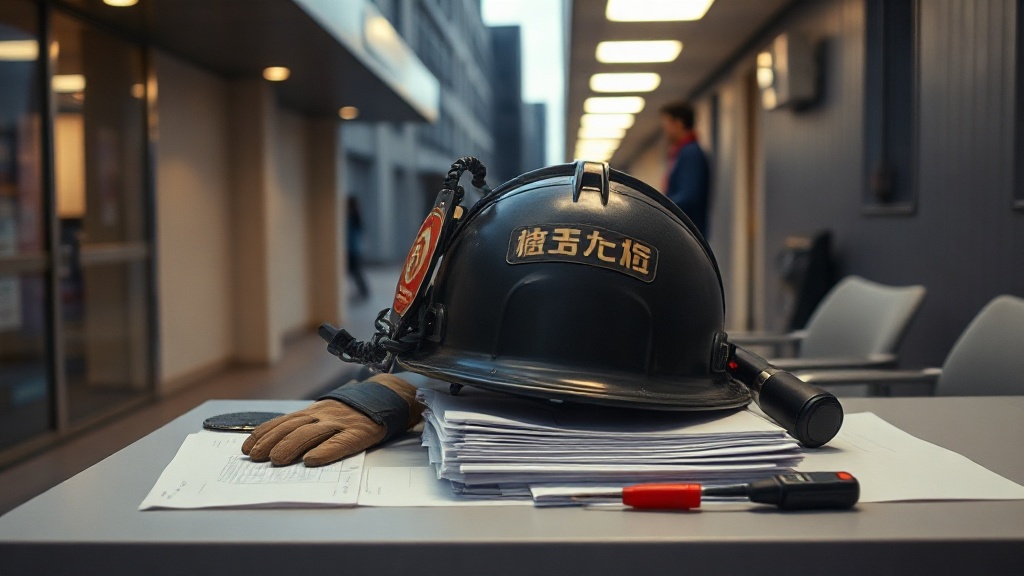
Between public safety and silence, where do we stand?
In the end, this case returns to public responsibility.
A firefighter’s death is a private tragedy, but when it overlaps with questions about internal oversight, society has to ask a wider question.
If an agency charged with protecting human life cannot properly handle its own internal problems, what basis does it have for public trust?
That question reaches beyond one article and touches the whole system of ethics, institutions, and accountability.
Both sides actually share the same foundation.
Neither denies that truth matters.
One side emphasizes immediate disclosure and aggressive reporting. The other says facts must be built carefully, step by step, on confirmed evidence.
That difference may sound small, but in practice it shapes the speed and depth with which a case is understood.
The reason the reporting was recognized is probably tied to that tension.
Readers should go one step further.
They should ask why stories like this keep drawing attention.
If institutions worked well enough, investigative reporting would not need to do so much heavy lifting.
However, many people are still left waiting in frustration and distrust.
The way to shorten that wait is not louder outrage, but more transparent management and stricter investigation.
Building truth is how fairness is protected
The core point is clear.
The report on allegations that an internal investigation into a female firefighter’s death was silenced brings together public responsibility, press oversight, and the protection of vulnerable people.
Truth-seeking gets more painful when delayed, and trust can collapse if an institution cares only about stability.
On the other hand, procedure without substance can also miss the real accountability that people need.
What is required is balance.
The question left behind is simple.
When faced with uncomfortable truth, do we stay silent, or do we keep checking until the facts are clear?
If public safety is worth defending, then that is the question we have to answer.
When truth and procedure seem to clash, which one should be placed first?
