TXT is bringing its third VR concert into movie theaters.
Endless Ride asks where the line between performance and technology really is.
Fans are closer than ever, and the experience is more polished.
However, can a real stage show ever be fully replaced?
That question sits at the center of this release.
What changes when TXT comes to the movie theater
Tomorrow X Together, better known as TXT, is set to release its third virtual reality concert, Endless Ride, later this month.
This is not just another fan event.
K-pop concerts, once defined mostly by songs and live stages, now have a new meeting point: VR technology and cinema screens.
For fans who would otherwise travel hours to see a show, that is welcome news.
For the entertainment business, it is another experiment in how far a concert can be stretched.
This release is less like a concert and more like a product built around experience.
That may sound exaggerated, but modern entertainment increasingly sells design, not just results.
Fans do not only listen to music anymore.
They buy into camera movement, spatial pressure, and the feeling of being close to the artists.
Seen that way, a VR concert is a hybrid form where music, images, emotion, and software all work at once.
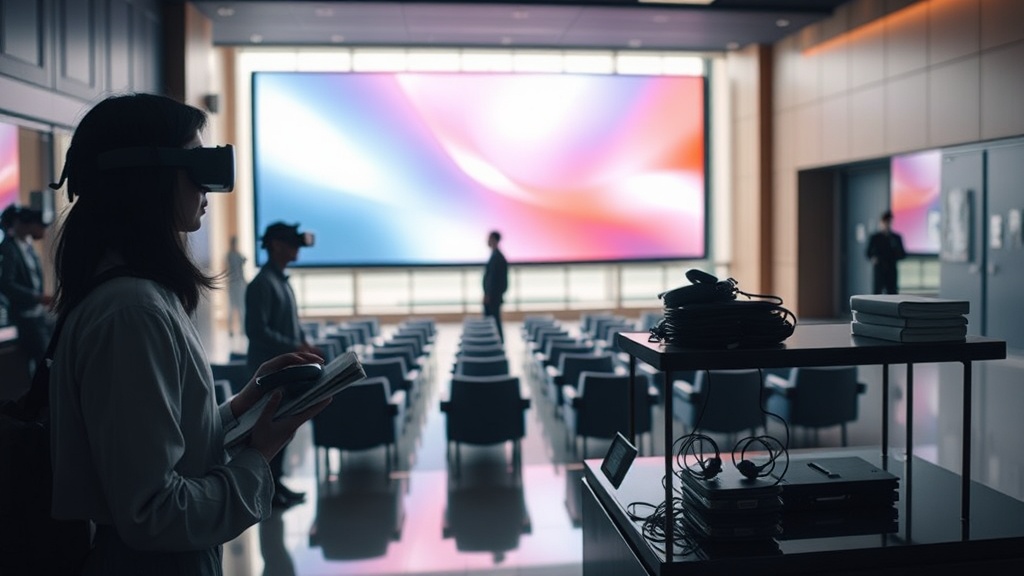
Has the stage disappeared, or just gotten bigger
People who still defend live shows ask the same question every time.
The heart of a concert, they say, is sharing the same air.
The wave of light sticks, the roar of the crowd, and the nervous thrill of an unexpected encore do not translate neatly to a screen.
From that view, no matter how advanced VR becomes, it cannot replace an actual venue.
That argument has real weight.
A live concert is a single event, shaped by sound, crowd energy, and even mistakes in the moment.
VR, by contrast, is a crafted experience.
It uses edited visuals and controlled immersion to guide emotion.
Spontaneity, surprise, and the thick atmosphere of one specific night are hard to recreate with technology.
For pop music in particular, the heat of the room matters.
However, that does not mean the new format should be dismissed.
Many fans cannot attend shows because of distance, cost, work, school, health, or family life.
When access points open up in more places, whether in downtown Seoul or at a local theater elsewhere, the door to culture gets wider.
Just as housing and commuting shape daily life, access to live entertainment shapes who gets to participate.
VR concerts are a practical way to lower that barrier.
There is also a business reason behind the shift.
Music alone rarely guarantees stable income anymore.
Big concerts sell out fast, seats are limited, and prices keep climbing.
In that gap, VR concerts and theater releases create a new revenue model.
Performance, technology, distribution, and screening all connect in one chain, giving companies new ways to invest and recover costs.
Less direct presence, more access.
That may be the shortest summary of this release.
Fans do lose something.
But they also gain something real.
They can watch in a familiar space, with family, with friends, or even alone, without the burden of traveling to a packed arena.
This is not just about convenience.
It is evidence that the map of cultural consumption is changing.
Can technology replace emotion
Supporters see VR concerts as the next stage of live entertainment.
They point to wider access and the smart use of existing movie-theater infrastructure.
In an era when livestreamed fan meetings and online concerts are already normal, VR feels like a natural next step.
Even distant fans can share the same scenes, cheer at the same moments, and enter the same story world.
That argument is not just a celebration of gadgets.
Audience experience is becoming more personalized, and people want deeper immersion.
The music business has already learned to connect albums, videos, memberships, platforms, and fandom communities in carefully designed ways.
VR adds another layer to that system.
For a global genre like K-pop, it also helps reduce the barriers of language and distance.
Movie theaters, too, make sense here.
They are built for shared viewing.
Large screens, strong sound, and dark rooms help focus attention and increase the intensity of what people watch.
In that sense, a theater is not a replacement for a concert hall.
It is a second stage, one that reinterprets the performance for a different setting.
That gives audiences another option and gives the industry a steadier path to distribution.
On the other hand, critics worry that technology can flatten emotion.
They argue that VR creates a sealed version of immersion and leaves less room for the audience to interpret, react, and shape the moment.
At a live show, crowd energy can change the rhythm onstage.
In VR, the path is already built.
The feeling may be cleaner, but the event itself can feel less alive.
This concern matters especially in fandom culture.
Fans are not just buyers; they are participants who build memories together.
A small mistake, a glance, or an unexpected laugh can become a treasured story later on.
In VR, some of that accident and roughness may disappear.
The result can be safe and polished, but also less human.
There is another issue as well: cost.
High-end production, equipment, and screening setups all require money.
That means audiences may face repeated pressure to pay for each new format.
Culture becomes richer, but for some people, it also becomes harder to afford.
Innovation almost always brings convenience and burden at the same time.
Even so, the criticism does not erase the value of VR concerts.
The real point is balance.
Live shows still need protection, and VR should work as a bridge that widens the reach of performance.
If the music business wants to stay healthy, it has to let the in-person and the remote, the traditional and the innovative, support rather than replace one another.
TXT's third VR concert is one attempt to test that balance.
What Endless Ride says about the industry
This release says something bigger than one group's success.
Concerts no longer end at a single stage.
Movie theaters, online platforms, VR, and fan communities now form one connected system.
In that system, jobs multiply too.
Planning, filming, sound, screening, data management, marketing, and community support all become part of the same pipeline.
The trend also reaches education and career planning.
Young people do not just consume concerts; they also learn how these experiences are made.
For students thinking about media, or for founders planning entertainment ventures, the space where technology meets culture is a rich field of study.
In a world shaped by online learning, a VR concert becomes a living example of media convergence.
Still, the center has not changed.
No matter how complex the format becomes, music remains the core.
Fans do not remember the headset first.
They remember the lyrics, the melody, and the feeling in the room.
Technology can widen the stage, but people remain at the center of emotion.
If that truth is forgotten, VR concerts turn into little more than expensive packaging.
If it is kept in view, they become a real way to carry performance farther.
Society often doubts new formats before folding them into everyday life.
Just as rental and ownership coexist in housing, live concerts and VR concerts can also live side by side.
There is no reason one model must erase the other.
Endless Ride tests that possibility for TXT and for the wider industry.

The question that remains
TXT's third VR concert shows how far K-pop can stretch.
At the same time, it brings the old question back into focus: what are we really going to a performance for?
Is it the reach of technology, or the shaking force of a live room?
There is no single answer.
What is clear is that both fans and the industry are already living in a new era of choice.
So this release is not just about taking sides.
It points toward coexistence.
Live concerts still hold irreplaceable energy, while VR concerts offer reach and accessibility.
One does not have to erase the other for culture to keep moving forward.
The key idea is simple.
Endless Ride is not just a screening announcement.
It is a sign that the relationship between performance and technology is being rewritten.
Access has widened, immersion has sharpened, and the questions have become more complex.
The only question left is this: what do you value most when you go to a concert?
