At LA Anime Expo, a K-game booth drew unusual attention.
Janken, better known in English as rock paper scissors, pulls people in with the simplest rule set imaginable.
When a simple game becomes a shared cultural language, an exhibition turns into an experience, not just a promotion.
This case also invites a closer look at how K-games are introduced overseas.
Why Janken-Pon Changed the Room
In July 2026, the stage was a major fan convention in Los Angeles called Anime Expo, one of the biggest events of its kind in the United States.
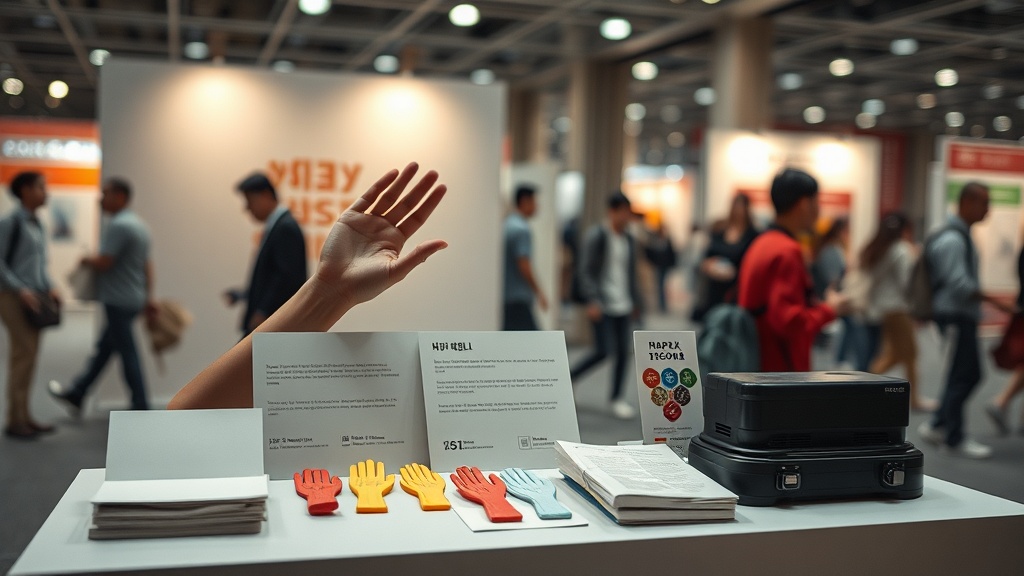
In the middle of the crowded show floor, a Korean game booth stood out, and at the center of its appeal was a familiar game: rock paper scissors.
In Japanese, the call is often heard as janken, and the article used the phrase janken-pon.
It is not just a rule; it is a rhythm that gets people moving.
Exhibitions and games are both industries built on attention.
However, the power to hold attention does not always come from complex systems or flashy mechanics.
Sometimes it comes from something easier to digest, something that gives an instant reaction, something that leaves no time for hesitation.
Rock paper scissors is one of the rare games that crosses language barriers almost immediately, which makes it a perfect tool for a busy expo floor.
This is not only a story about a game.
It also shows how K-games are packaged for overseas audiences, and how a booth can be designed around the first reaction of a passerby.
What looks light at first can become the fastest doorway into a brand.
In that sense, this case is a reminder that small rules can have outsized power.
Is Simplicity Weak, or Is It the Strongest Move?
Small, but immediate
It is strong.
The biggest strength of rock paper scissors is that it needs almost no explanation.
Even someone seeing it for the first time can understand the relationship among rock, paper, and scissors in a matter of seconds.
At an international event, where crowds move fast and every visitor may speak a different language, that kind of speed is priceless.
Booth staff can skip long explanations and instead invite action right away.
This is especially useful in gaming.
In mobile games, casual games, and hands-on exhibits, lowering the entry barrier often matters more than building a complicated rule set.
Rock paper scissors is not just a way to decide a winner; it is a tool that removes the hesitation before participation.
When paired with a character or mascot, the effect can become even stronger.
At a show like Anime Expo, visitors usually notice the rule before the world-building.
However, if the rule is easy, the next steps happen naturally.
They walk up to the booth, try the demo, make a connection, take a photo, and tell someone else about it later.
That sequence is the ideal loop for event marketing.
Quick understanding leads to quick participation.
Quick participation changes how long people stay.
That change becomes the booth's first impression.
But depth can be lost
It is also weak.
On the other hand, a rule that is too simple can make the content feel light.
Because everyone knows rock paper scissors, everyone can also finish it in a flash.
A booth may succeed at creating a fun moment, yet if nothing deeper follows, the memory can fade quickly.
In other words, the event hook may be strong, but lasting impact needs a different kind of design.
This is a common problem in global exhibitions.
Some booths win cheers on the floor but leave people with little idea of what comes next.
If a booth relies too much on a single simple game, visitors may walk away saying only, That was fun.
That is not a bad reaction, but it may not be enough to build a deeper relationship with the game or the brand.
There is also the issue of cultural framing.
Janken-pon sounds perfectly natural in Japan, but not every visitor will share the same emotional context.
At an overseas event, what feels friendly to one group may feel unfamiliar to another.
If the explanation is too thin, a simple game can start to look like a disconnected gimmick instead of a meaningful experience.
So simplicity is both a strength and a limit.
It is excellent for capturing a first glance and a first bit of participation.
But if organizers want long-term recognition and trust, they need another layer beneath it.
Rock paper scissors works best as an entry point.
The wider the doorway, the better, but a doorway alone does not make a home.
Exhibitions begin with easy experiences, but brands stay through the story that follows.
Why K-Games Keep Looking for This Kind of Device
Overseas expos always demand fast results.
Visitors need a reason to stop, and booths have only a few seconds to offer one.
That is why the K-game industry often leans on simple demos, character-driven design, and participatory events.
Rock paper scissors is one of the fastest and most universal tools in that toolbox.
This approach is not unique to games.
It resembles the way companies explain complex services in fields like education, health care, or insurance.
People usually respond faster to a simple action than to a long explanation.
Just as real estate or loans often come with layers of paperwork, game booths often keep the first step easy and open the deeper lore later.
That order is practical.
For overseas audiences, something already known carries special weight.
New culture can feel distant, but a familiar physical response lowers the barrier.
Rock paper scissors uses three hand shapes to create a relationship, settle a result, and trigger a smile.
That tiny moment is often enough to change the temperature of a booth.
So this case matters for more than one reason.
It is not just about a Korean game being shown abroad.
It is about how exhibitions work as systems for designing attention.
And attention often starts with the oldest, simplest games.
Seen that way, janken-pon is not a random phrase at all.
It is a compact model of cultural contact.
People usually look for a reason to join before they look for a rule to study, and rock paper scissors gives them that reason almost instantly.
That may be the most important lesson here.
The heart of an expo is not only information delivery.
It is reaction design.
And sometimes the oldest game in the room is the most modern tool available.
What Remains Is the Memory of the Experience
Rock paper scissors is small.
However, small can be an advantage in an exhibition hall.
In a space filled with short attention spans, crowded aisles, and many languages, clarity often wins over complexity.
That is one reason K-games would use a janken-pon style idea in an overseas booth.
Still, that simplicity should not stand alone.
Experience starts the visit, explanation connects the dots, and story creates memory.
If a booth wants to last in the mind, it cannot end with one game round.
It needs a structure that carries the visitor from a quick laugh to a stronger sense of the game behind it.
That is what makes this example interesting.
When a familiar game becomes the language of an international expo, culture crosses borders more easily than expected.
However, the bridge has to be sturdy.
Interest can pass by quickly, but design has to remain.
The takeaway is clear.
A simple rule opens the door, and strong content fills the room.
The K-game booth that stood out at LA Anime Expo raises both questions at once.
Would you remember the hand gesture first, or the game behind it?
