From August 1 to 2, a one-of-a-kind cultural event will take place in Gimhae.
It is called Ice Cinema, a film screening held on a skating rink.
The mix of a familiar movie night and an unfamiliar setting makes the idea immediately intriguing.
It also points to the growing reach of local culture.
However, comfort, safety, and long-term value must be part of the discussion too.
Ice Cinema on the Rink: Why It Matters
On the ice, movies take on a new life
Ice Cinema will run from August 1 to 2 at the Gimhae Citizens Sports Center skating rink.
Based on the facts available here, this is more than a simple screening.
It is an attempt to place a mass-market art form inside a very different kind of venue.
The result is unusual, but that is exactly why it stands out.
It also says something about how a city tries to present itself in a fresh way.
One detail matters a lot: this is the third edition of the event, organized by the Gimhae Culture and Tourism Foundation.
That means this is not a one-off publicity stunt.
It is a repeated cultural project, and repetition brings testing, adjustment, and learning.
So Ice Cinema looks less like a novelty item and more like a local laboratory for culture.
When film, a skating rink, and public participation come together, the event gains strength as both a program and a memory.
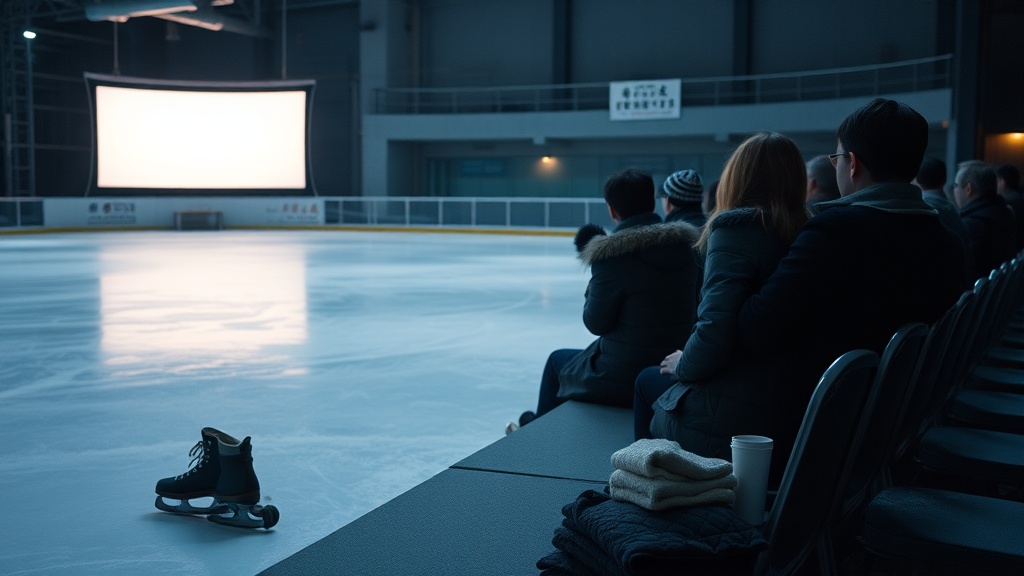
This kind of program also raises a larger question: what is a public space for?
When a sports facility is used for culture, the space becomes more flexible.
People are not only watching a movie.
They are also watching a place change its meaning in real time.
Why are more events trying to break the mold?
Because familiar formats are no longer enough.
Modern culture leans hard into experience.
It is not enough to say, “We are showing a film.”
With streaming, online platforms, and on-demand viewing now part of everyday life, audiences are not just consuming content.
They are consuming the setting, the mood, and the social moment around it.
Where you watch, who you watch with, and how the space feels can matter as much as the movie itself.
Ice Cinema sits right in that shift.
The event creates what a traditional theater cannot: place, atmosphere, and a sense of occasion.
The cold air, the skating rink, and the unusual path to the seat all help build a memory.
That does not make the movie better in a technical sense.
But it can make the experience more vivid.
Meanwhile, for a city outside a major metropolitan center, this kind of program can be a practical cultural strategy.
It gives the region a story that is its own.
A city does not always need a grand landmark to attract attention.
Sometimes a smart use of space is enough to make people look twice.
The real point of Ice Cinema is not just the film.
It is the rearranging of experience.
However, fresh ideas are not automatically good ideas.
The more unusual the event, the more care it requires.
People remember a clever concept for a moment, but they remember comfort and safety for much longer.
In the end, a successful cultural event is not defined by shock value.
It is defined by whether the whole experience works.
What supporters are hoping to gain
For supporters, Ice Cinema is easy to defend.
First, it can energize local culture.
An event that feels different naturally draws curiosity.
That curiosity often turns into attendance, and attendance gives public culture some life.
In a city-run program, even one visit can become part of the city’s image.
“They showed a movie on a skating rink in Gimhae” is the kind of sentence people remember.
Second, the event shows creative use of public space.
A rink is built for sports, but when used for a cultural program, it can serve a second purpose.
That is not just clever planning.
It is a way of increasing the value of a public asset without changing its size.
A larger footprint is not the goal here.
A richer use is.
Third, the format is family-friendly in a broad sense.
Movies are one of the few cultural forms that cross age groups easily.
Parents, children, couples, and friends can all take part without needing special knowledge.
That lowers the barrier to entry and makes the event feel open.
At a time when daily life is tightly packed with work, school, and screens, a shared outing like this can feel refreshing.
Fourth, the publicity value is real.
Unique concepts spread fast.
Tourism and culture often depend on a story people want to repeat.
Ice Cinema has that quality from the start because the idea itself makes people ask questions.
For a city trying to raise its profile, that kind of natural buzz matters.
There is also a psychological benefit.
Routine can wear people down.
A special setting for a movie gives people a small break from ordinary life.
When life feels heavy, unusual experiences can be oddly comforting.
Supporters see Ice Cinema as a pause button for the city.
What critics are worried about
But the concerns are real too.
The first issue is safety.
A skating rink is, by nature, a slippery and cold environment.
That matters when families, older adults, and children are part of the audience.
Walking paths, seat stability, entry and exit routes, and emergency response all need tighter planning than a normal theater would require.
No cultural program is worth much if safety is treated as an afterthought.
Second, comfort may suffer.
Movies depend on immersion, but the rink setting can interrupt that.
Temperature, clothing, and the feel of the floor all become part of the viewing experience.
For some people, that may be fun.
For others, it may simply be tiring.
Specialness has a cost, and not every audience wants to pay it.
Third, the question of sustainability is hard to ignore.
A one-time novelty can attract attention.
But local culture should be more than a photo opportunity.
The fact that this is the third edition helps, but it does not guarantee success every year.
Public events need budget, staff, insurance, and dependable planning to last.
There is also the matter of balance.
If a public sports facility is heavily used for one cultural event, regular users may feel pushed aside.
Public space has to serve more than one need.
Too much focus on novelty can make efficiency look good on paper while lowering real satisfaction on the ground.
Finally, critics ask a fair question about access.
Is the event really open to everyone?
Are people with mobility issues, older residents, and families with small children being fully considered?
Is the budget transparent?
Those questions may sound cautious, but they are part of what makes a public event trustworthy.
So the critical view is not simply anti-event.
It is asking what conditions must be in place for the event to deserve praise.
Without careful design, fresh ideas fade quickly.
A larger question about local culture
What makes Ice Cinema interesting is not just the movie.
It is the way it reflects a changing idea of local culture.
In the past, cities often focused on building better facilities.
Today, the bigger question is how those facilities are used.
In that sense, a cultural event tells us more than a building does.
Two spaces with the same size can have completely different value depending on how people use them.
Ice Cinema is a city experiment.
It may succeed, or it may need to be refined.
Either way, it shows a willingness to try something new in front of the public.
That matters because culture is not only about entertainment.
It is also about imagination.
When people gather, share an experience, and remember it together, a place gains cultural weight.

In the end, the lesson is simple.
Local culture does not last on novelty alone.
It lasts when safety, comfort, continuity, and public value are all handled well.
Still, it is worth noticing when someone asks a simple but smart question: what if we watched a movie on the ice?
Would you want to see Ice Cinema for yourself?
Or do you think public events like this should prove their practicality before chasing attention?
That tension is where the next chapter of local culture begins.
