The 48th UNESCO World Heritage Committee, held at BEXCO in Busan, left behind more than a headline on July 19.
G-Dragon's appearance helped push the conversation about heritage into a language more people could feel and understand.
Protecting heritage is not about clinging to the past. It is about preparing for the future.
World heritage and national heritage may move slower than development, but they last longer.
What we choose to preserve today helps shape tomorrow's peace and identity.
Protecting Heritage, Opening the Future
The opening ceremony of the 48th UNESCO World Heritage Committee in Busan gave the event a sharper meaning.
A global policy meeting suddenly had a pop-culture spotlight, and G-Dragon's attendance translated heritage preservation into everyday language.
In a time when fame fades quickly, the question becomes simple: what lasts?
World heritage and national heritage are not just relics of the past. They are signs that ask a community where it is going.
So the phrase heritage protection and future peace may sound like two separate ideas, but in practice they grow from the same root.
Cultural heritage is not just a scenic backdrop for photos.
It is the way a society understands itself.
Old buildings, traditions, records, and historic places tell a nation what it has lived through.
However, that value is not always recognized automatically.
Real estate pressure, budget limits, urban expansion, and tourism demand can all shake the ground under heritage sites, making it hard to balance preservation and use.
That is why this moment feels bigger than a ceremonial news item. It is a quiet statement about what kind of society people want to build.
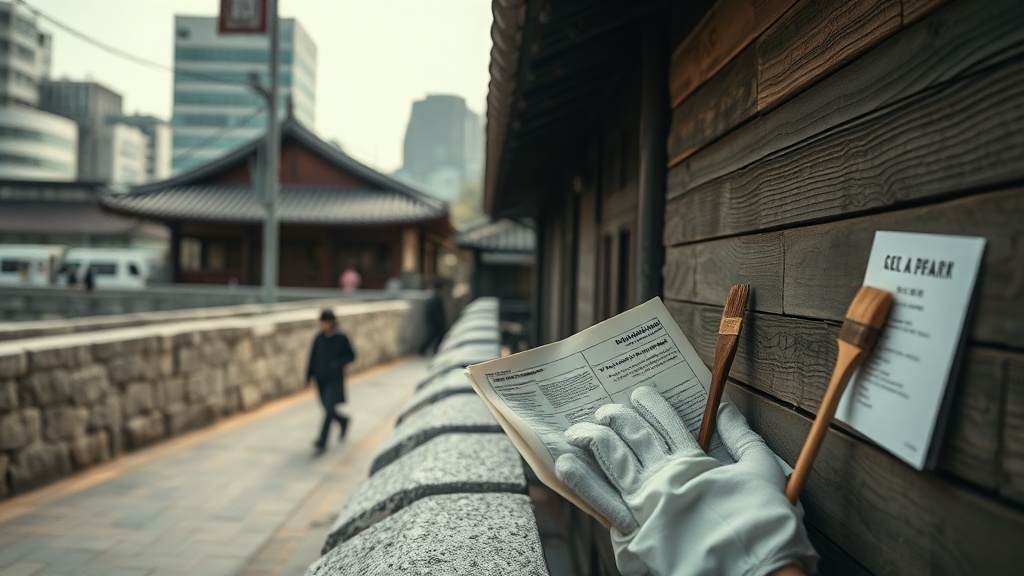
Are We Preserving the Past, or Preparing Tomorrow?
The Case for Protection
It is compelling.
Those who argue for preservation first make a strong point.
Once cultural heritage is lost, you may rebuild a structure, but you cannot restore the exact time that gave it meaning.
In that sense, preservation is less a preference than a duty.
World heritage is not just a local attraction. It is part of a shared human memory.
That is why cultural heritage protection is not only about taste or nostalgia.
It is also about history, education, and ethics.
An old temple, a fortress wall, a royal palace, or a historical document may be beautiful on its own, but what matters even more is the way of life inside it.
Future generations learn about war and rebuilding, exchange and isolation, prosperity and crisis through those traces.
In that sense, heritage can become a classroom more vivid than any textbook.
Children and young adults do not learn history only from screens; they learn it by standing in front of something still here.
Heritage also speaks the language of peace in international affairs.
Even in a world full of conflict, countries can cooperate around shared cultural memory.
And when war destroys monuments, museums, and historic places, the loss is not only artistic. It is also moral.
Protecting shared heritage is often the first step toward seeing one another as neighbors rather than enemies.
For that reason, the pro-preservation side is not simply idealistic. It is practical. A community that protects its memory is more likely to protect its future.
The Case for Change and Use
Still, the other side is also realistic.
Those who push for development and active use make a point that cannot be dismissed.
Cities are living spaces, and people need housing, transit, jobs, and public services.
If every site is locked down in the name of heritage, local growth and daily convenience may suffer.
And in many places, preservation is expensive. Skilled restoration, trained staff, and long-term maintenance all require money, not just good intentions.
This view is not necessarily against protection.
It argues that heritage should remain a living asset, not a frozen object.
Careful exhibitions, guided interpretation, online learning, and digital archives can help more people understand a site's value.
Tourism and cultural events can also support local economies.
When fires, aging structures, or natural disasters threaten heritage, practical tools such as insurance, taxes, and public budgets become part of the conversation.
So a simple cry to save everything can miss the details that keep a site alive.
There is also the question of scale.
Not every heritage site can be treated the same way.
Some places still hold their original form. Others have been heavily altered. In some cases, full restoration is not realistic, and documentation may be the smarter choice.
In that situation, the goal is no longer just to freeze the past. It becomes how to connect heritage to present life.
Sustainable preservation must leave room for local communities. It is like setting priorities in a family budget: save what matters most, spend carefully, and plan for the long term.

Different Arguments, One Goal
They clash, but they are not aiming at different futures.
The preservation-first camp wants to protect memory and identity.
The development-first camp wants to secure livable, sustainable communities.
If people frame the issue as right versus wrong, it becomes too simple. In reality, the question is tangled up with ethics, administration, cost, and emotion.
Should an old neighborhood be preserved in Seoul? Should a port district be redesigned in Busan? How should a regional site connect with tourism and education? These are not abstract questions. They are everyday policy decisions.
That is why the real task is not choosing sides but learning how to manage heritage wisely.
Preservation does not mean sealing things off. Use does not mean destruction.
With steady funding, clear rules, and community participation, heritage can become a living public good instead of a display case.
Government cannot do this alone. Schools, citizens, churches, companies, and media all have a role.
Above all, the next generation must be taught that heritage is not someone else's responsibility.
From a Christian perspective, this is not a strange lesson.
The idea of stewardship means caring for what has been entrusted to us and passing it on faithfully.
Heritage is not something to consume. It is something to hand down.
In that sense, the Busan meeting was more than a cultural event.
Its message was that protecting heritage is also a way of making peace, because a community's habits of care shape the dignity of its future.
Why Heritage Protection Speaks Peace Now
It is urgent.
The world is changing fast.
Climate change puts coastal and mountain sites at risk, while war and conflict directly threaten cultural landmarks.
Tourism can bring money, but it can also bring overcrowding and commercialization.
In that setting, heritage protection is no longer just about saving scenery. It becomes a way of protecting a community's spirit.
In particular, national heritage does more than symbolize pride.
It also shapes how a society relates to others.
A culture that cares only about its own assets can become closed and defensive.
But a society that respects the heritage of others leaves room for dialogue even when tensions rise.
That makes heritage both a record of the past and an agreement for the future.
Peace does not begin with slogans. It begins with respect for one another's history and wounds.
In that sense, cultural preservation may build a more lasting foundation for peace than any campaign speech.
The same principle works at home.
When parents pass stories on to children, family identity takes shape.
When a child remembers those stories in daily life, the family has something to hold onto.
The same is true in workplaces and communities.
When history and ethics are respected, stability grows.
So preservation is not just a museum issue. It is a practical philosophy for family, education, work, and public life.
Sometimes protecting something is not about speed. It is about direction.
That is the deeper echo of this event.
A nation's culture does not live only because a celebrity shows up, but public attention can help carry the message farther.
What matters next is action: management, education, documentation, preservation, cooperation, and responsibility.
Only then does heritage travel safely into the future.
The question then reaches the reader directly.
What are we protecting now, and what are we handing to the next generation?
What Should We Leave Behind
Both.
The conclusion is clear.
Protecting world heritage and national heritage is not only about saving a building.
It is about protecting memory, identity, education, and peace together.
Yet because reality is complex, preservation and use should be understood as a matter of balance, not enemies in a fight.
The opening ceremony in Busan reminded everyone why that balance matters.
Heritage is precious not because it is old, but because it helps explain who we are.
That means preservation is not a backward-looking act. It is future planning.
Development is necessary, and so is care. Profit matters, and so does ethics.
When that balance breaks down, heritage stops being a living presence and becomes a loss.
In the end, peace does not begin with grand slogans.
It begins with quiet decisions to respect what others have received and to pass it on whole.
So the final question remains simple.
What do you want to leave behind?
