In July 2026, a live National Theater Changgeuk performance moved onto the big screen.
CJ CGV's special screening series, Cinema Tour, is blurring the line between stage and cinema.
Traditional art is looking for a way to survive outside the theater.
Audiences gain convenience, but the intensity of live performance asks for a different kind of judgment.
This shift brings an old question back into focus: access or essence?
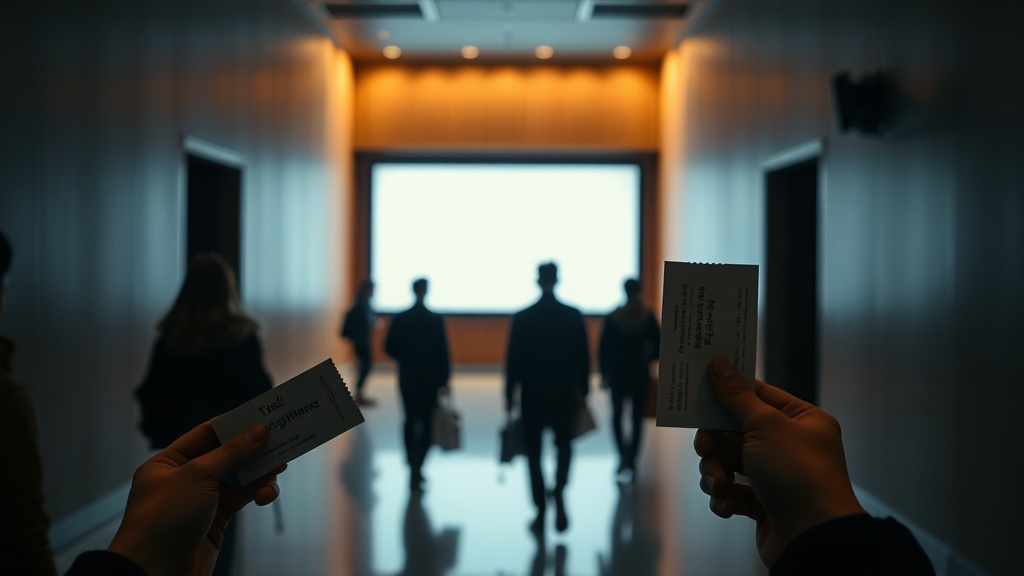
What changes when Changgeuk enters a movie theater?
Cinema Tour is not just another screening event.
It places a live recording of a signature National Theater production on the CGV screen, and in doing so, it tries to redraw how performance reaches the public.
The idea carries convenience, expansion, preservation, and transformation all at once.
That makes it both a cultural event and a kind of industry experiment.
Changgeuk is an art form built on live breath and shared space.
It comes alive when the performers and the audience meet in the same room.
But once that experience is moved into a movie theater, it is seen in a completely different setting.
The audience buys a ticket, walks in at a set time, and follows the performance through a screen.
That shift can make traditional art feel more approachable, but it also raises a hard question about what is lost when the live setting disappears.
At the center of this change is access.
For people who rarely go to theaters, a movie house may feel far less intimidating than a formal performance venue.
Where you watch a work often changes whether you watch it at all.
In that sense, Cinema Tour is not simply a screening. It is a way of rearranging the cultural map.
The upside of taking tradition beyond the stage
The potential is real
Movie theater screenings open a new door for traditional performance.
Changgeuk, like many art forms, benefits from repeated exposure and education, but live viewing opportunities are not always easy to find.
Live screening can give a wider audience a path into the work.
For younger viewers in particular, the screen may feel more familiar than the name of the National Theater itself.
One of the biggest strengths is how much it lowers the barrier to entry.
People often say they like performance art, but they also say it feels difficult.
Movie theaters solve part of that problem because the space is already familiar.
When Changgeuk is placed in that setting, viewers can engage with it without feeling that they must study it first.
There is also the value of recording.
A live screening prevents a single performance from vanishing after one night.
For theater, opera, and Changgeuk, live presence is the heart of the art, but records matter if the work is to reach future generations.
Preservation protects art, and preserved art can call new audiences back.

Just as important, a movie screening is not simply a copy of the stage performance.
The camera angle, sound design, and editing rhythm can reveal a second face of the work.
Creators can interpret the stage more broadly, and viewers can meet the performance through a more precise visual language.
Seen this way, Cinema Tour is not a compromise between old and new. It is one way tradition grows outward.
There is also a financial side to the story.
Performance art rarely has an easy or stable revenue model.
But cooperation with theaters creates new audiences and more exposure, which may give a production a longer life.
From a public-policy perspective, this kind of program also links the National Theater's public mission with the efficiency of private distribution networks.
Not a closed stage
The argument in favor is straightforward.
Traditional art should not stay sealed inside a closed hall if it can reach more people elsewhere.
From that angle, Cinema Tour works like a safety net for art, widening the ways it can survive.
More viewers, longer life, and a broader cultural footprint all seem possible.
Still, something is lost on the screen
The costs are real too
The counterargument is just as serious.
Changgeuk is an art of shared air, where performers and audience members feel one another in the same room.
On screen, you can see the scene, but the live pulse may fade.
In other words, movie theater screenings offer convenience, but they can also strip away some of the density that makes performance special.
Live performance depends on time that is alive in the moment.
A single breath from the actor, a silent pause from the audience, a slight tremor in the rhythm, all of it adds up to the experience.
Screen images, however, organize and smooth that experience.
That clarity helps comprehension, but it can also weaken the unpredictability that gives art its force.
There is also concern that more screenings could weaken the value of going to the theater itself.
People naturally choose the easier and cheaper option.
Then the performance hall can start to feel optional rather than essential.
That may widen cultural access, but it may also reduce the number of people willing to fill actual seats.
This issue feels a lot like choosing between renting and owning a home.
Both may give you a place to live, but the experience is not the same.
Likewise, live performance and screened performance may present the same work, yet they do not feel identical.
It is hard to argue that watching Changgeuk on screen is bad.
But it is equally hard to say it can replace the live experience.
The more people grow used to video, the more they may expect art to be shorter, lighter, or easier to sample in pieces.
So the full arc of Changgeuk, with its slow build and narrative weight, can become harder to absorb.
Art is often remembered because it resists convenience, and when convenience takes over, that stubborn beauty can begin to fade.
For that reason, the skeptical view is not simple conservatism. It is caution in defense of artistic depth.
The essence does not travel easily
That view comes down to one point.
Access matters, but access alone cannot explain the value of art.
Movie theater screenings can be a strong support, but they cannot fully replace the tension and shared emotion of the live stage.
So Cinema Tour becomes a question as much as a solution: expansion, or dilution?
Tradition and modernity test each other
What is interesting is that both sides are really asking the same thing in different language.
One side says, Let more people see it.
The other says, Watch what gets lost.
Both are speaking from care for performance art.
The difference is that one puts expansion first, while the other puts preservation first.
That split also reflects how society now handles tradition.
In the past, traditional art was often tied to a single place and a narrow audience.
Today there are streaming platforms, online clips, theater screenings, and mobile viewing options.
Changgeuk on the cinema screen asks a larger question: can tradition move?
The educational value is real as well.
For students or first-time viewers, a performance hall can feel intimidating.
A movie theater, by contrast, speaks in a language people already know: ads, tickets, seats, and a scheduled start time.
That familiarity can lower the entrance fee of culture itself.
But once the door is more open, the path forward has to be designed too.
If someone discovers Changgeuk in a cinema, there should be a next step that leads them to the National Theater itself.
Otherwise, the easy route may be all that remains, while the live ecosystem weakens.
So this program should be understood not as a final answer, but as one part of a larger viewing journey.
The key is not replacement. It is connection.
Moving Changgeuk into a movie theater should not erase the stage.
It should widen the roads that lead back to it.
Only then does Cinema Tour become not just a way to consume tradition, but a way to keep it alive.
Culture rarely stays in one place. It grows by moving through new channels.
What should be left behind?
Cinema Tour makes a live National Theater Changgeuk performance visible to far more people.
That advantage is clear, and the value for access and preservation is real.
But the concern that live density, shared atmosphere, and communal emotion may be reduced is also serious.
So the program remains both an opportunity and a question.
Put simply, screening traditional performance in movie theaters can bring in new audiences and extend the life of the art.
But it must remain a supplement, not a substitute, for the live experience.
The challenge is to lower the barrier to entry without flattening the depth of the performance itself.
Do you see this shift as a way to broaden cultural participation, or as a way to weaken the value of the live stage?
