The air at a World Cup final is always tight.
Put a BTS halftime show in the middle of it, and the mood changes fast.
Sports puts the match at the center. K-pop fills the gap with culture.
That meeting is bigger than entertainment. It asks who really shapes the world stage.
On the day Spain and Argentina chased the trophy, the performance created a ripple far beyond the stadium.
Some people focused on soccer and wanted the game to stay untouched.
Others saw a rare opening for Korean pop to stretch even farther.
The point is that neither side can claim a total win.
It is right at that boundary where the meaning of the World Cup and the meaning of K-pop both become clearer.
An image dated July 20, 2026 makes the scene feel even more concrete, but this is not just a performance update.
The fact that BTS appeared on the biggest sports stage in the world says a lot about how far global pop culture has moved.
A halftime show is brief by design, yet that short window gives it unusual power.
People do not leave their seats. They stay with the broadcast, catch their breath, and watch the next story unfold.
In that sense, the performance is not a side note. It becomes part of the main text.
That is why this crossover feels familiar to both soccer fans and K-pop fans.
Sports is never complete with competition alone.
It also needs national pride, emotion, chants, tension, and the heat of the crowd.
Meanwhile, pop music lives on immediate reaction.
When those two worlds meet, they can cover each other’s weak spots like two pieces of a puzzle.
The game creates suspense. The show turns that suspense into a shared roar.
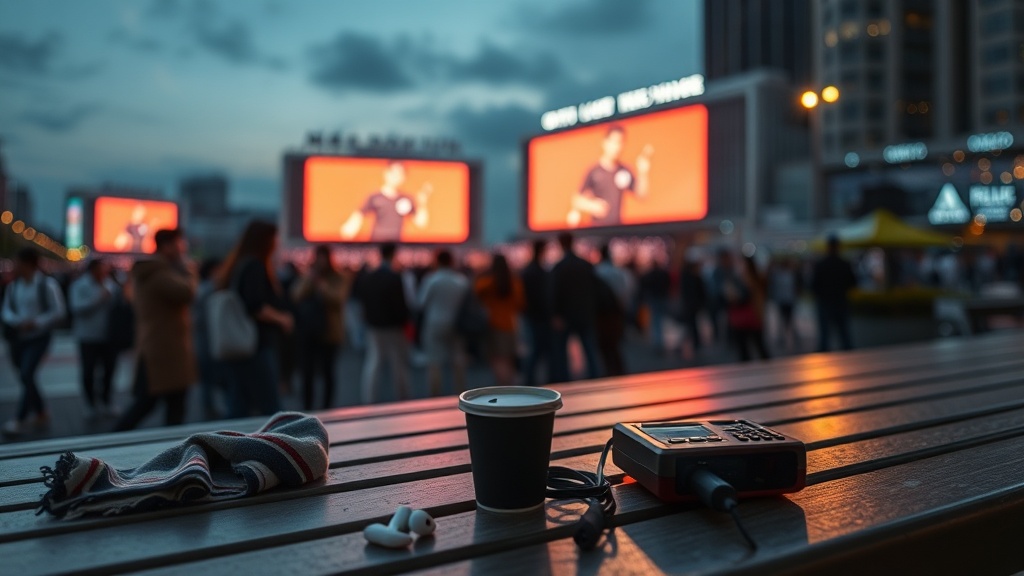
What does the world remember in 15 minutes?
A single moment
A single moment can feel surprisingly long.
A halftime show is short, but it can stay in memory for years.
When a group like BTS, already backed by a massive global fan base, steps onto a World Cup stage, the performance starts to speak the language of cultural diplomacy (using culture to build trust between countries).
It shows that Korean pop is no longer just a regional trend.
It has become part of the normal scenery of international sports media.
This shift did not happen by accident.
K-pop spent years building online distribution, fan communities, choreography-driven performance, and multilingual communication.
That foundation matters.
It is also why a halftime show can become more than a show.
It can feel like a marker of a new era, one where a music act is also a global symbol.
In that sense, the performance is about access as much as applause.
The same moment also changes how people watch the event.
Some came for soccer and ended up absorbing a cultural spectacle as well.
Others tuned in for BTS and stayed for the final itself.
This kind of attention is hard to measure with a simple number.
It is closer to how people remember a stressful day or a big celebration: by the intensity of the feeling, not just the facts of the schedule.
People may say they watched a game, but what they really carried away was the shared energy.
Does the show blur the point of the match?
Concern
The concern is reasonable.
Sports should still be judged by the game.
A World Cup final is one of the most important soccer stages on earth, so fans naturally want the rhythm of the match to stay intact between halves.
From that angle, a halftime show can look like a distraction.
And when the stakes are high, even a beautiful performance may feel like it steals oxygen from the game itself.
For many true soccer fans, 15 minutes of spectacle can never outweigh 90 minutes of play.
That is not an extreme view. It is a simple one.
There is also the issue of commercial pressure.
The bigger the event gets, the more it invites sponsors, ads, broadcast deals, and fan spending.
Once that machinery starts moving, the event can begin to look less like a sporting final and more like a packaged product.
If the show comes first, then the skill, tactics, and sweat of the players can fade into the background.
That is why the skeptical view matters.
It is not just old-fashioned resistance to change.
It is a real attempt to protect the center of the event.
World Cup tradition rests on competition and national stakes, so some argue that any performance must remain secondary.
A successful event is not automatically the same thing as a protected core.
Heavy fandom can also create imbalance.
When attention locks onto one superstar or one group, other teams, artists, and cultures can become less visible.
In that sense, the power of a single major act can also produce a quieter form of inequality.
Strong content tends to take up the most space.
That is exactly why critics ask whether the spotlight has gone too far beyond the pitch.
Why do so many people welcome it?
Expansion
Expansion has its own force.
Supporters of the idea see cultural reach first.
If BTS performs at a World Cup halftime show, that is a clear sign that K-pop is no longer standing outside the global mainstream.
Soccer crosses borders. Music crosses language barriers.
When they meet, the emotional effect can be enormous.
For the organizers, too, the logic is obvious.
A show like this can boost attention, draw younger viewers, and pull in online audiences who might not otherwise watch a full final.
The performance does not need a long explanation.
It explains itself.
It says that Korean entertainment has real staying power and is now strong enough to sit beside the most watched sporting event on the planet.
There is also a broader national message here.
Entertainment is not just amusement anymore.
It can shape how the world sees a country.
For many viewers, BTS is one of the clearest doors into Korean culture.
For others, it is the first time they see Korean pop presented not as a niche export, but as a major part of global culture.
That can lead to travel interest, consumer interest, language curiosity, and a deeper sense of familiarity.
Modern festivals are rarely built on one ingredient alone.
They need sports, music, visuals, fan response, and live digital reaction all at once.
In that larger system, a halftime show is not a side room.
It is part of the new center of attention.
Seen that way, the BTS performance is not only about pop music.
It is also about where global culture is moving.
And perhaps most important, music can bind people together even when they do not speak the same language.
People react at the same time, sing at the same time, and feel the same pulse.
That shared rhythm becomes memory.
Supporters of the performance believe that this collective energy is exactly what great global events should create.
Who is taking something away from whom?
Balance
Balance is the real answer.
The issue is not who wins the argument outright.
It is whether the event can be tuned well enough to hold both tradition and reinvention.
A World Cup final will always belong to soccer first.
However, today’s mega-events also carry music, story, and atmosphere.
The real question is not whether the halftime show exists, but whether it enriches the audience experience without damaging the match itself.
One side speaks for tradition.
The other speaks for innovation.
Tradition protects purity and competitive focus.
Innovation helps the event stay alive for new viewers and new generations.
Neither side is fully wrong.
In fact, the tension between them is what keeps international events evolving.
Too much commercialization can cheapen the experience.
On the other hand, a frozen format can push audiences away.
That is why a World Cup halftime show matters beyond one night.
It becomes a test case for how sports, entertainment, and global fandom can share a single stage.
Culture widens the center. Sports widens the meeting point.
Together, they move national image, fandom, and international exchange like one large wave.
That wave can be messy.
It can also be thrilling.
But it does not stop.
And that may be the most important part.
In the end, the show leaves a question
Takeaway
What remains is not just a performance clip.
It is the question behind it.
Did the halftime show protect the game, or did it crowd it?
Did it strengthen the World Cup, or did it turn the final into another content package?
There is no simple answer, and that is exactly why the topic keeps drawing attention.
At its best, the BTS halftime show shows how powerful the meeting of K-pop and sports can be.
Supporters see global reach, stronger viewership, and a wider role for cultural diplomacy.
Critics see fragmented focus, more commercial pressure, and a risk of weakening the event’s core.
Both views are persuasive.
That is why this story does not close with a clean yes or no.
Look closer, and the event also reveals how people consume culture now.
They do not just watch soccer.
They watch the story soccer creates.
When BTS enters that space, the performance becomes a symbol, and the match becomes part of a larger memory.
This will not be the last time the issue comes up.
Future global events will face the same debate, and each one will redraw the line between sport and spectacle.
So how should it be seen?
As a threat to the game, or as a new kind of shared festival?
Either way, the performance is more than a stage moment.
It is a mirror held up to the current age.
